The water wars: man vs machine
A sci-fi scenario writes itself.
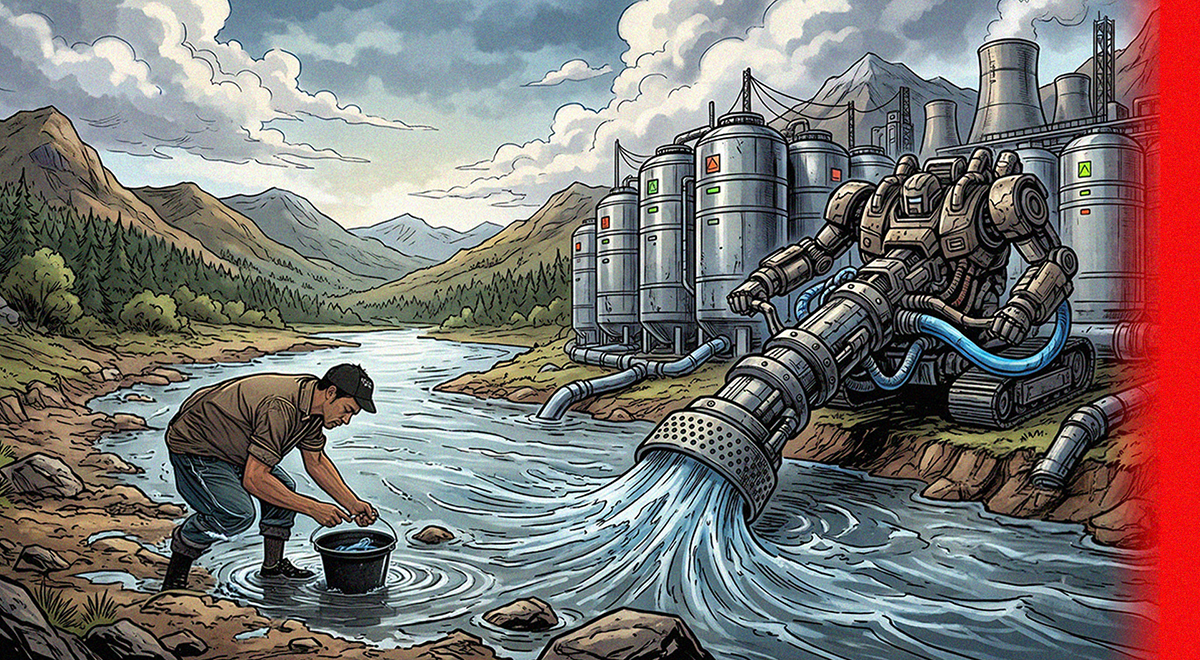
Competing for water. By Cybernews

 Follow us
- Data centers are drawing concern because they can use large amounts of water and rely on local supplies.
- A Meta-affiliated data center in Cheyenne reportedly contaminated wastewater with a rare drug-resistant pathogen.
- The bacteria did not reach drinking water, and officials reported no human infections in this case.
- This is our weekly LinkedIn newsletter. Subscribe on LinkedIn to join the conversation.
Key Takeaways by nexos.ai, reviewed by Cybernews staff.
Some executives are sick of AI. Ironically, you can actually get sick because of AI, as data centers may (and have) contaminated water.
Wars erupt because resources are scarce. We always knew that water would be the main catalyst for future conflict – with dwindling water reserves and rising sea levels, humans will migrate and compete.
I never imagined, though, that we would fight with machines over water. Well, for now, it’s data centers consuming and polluting our resources, but you get the gist.
AI, which has yet to show significant benefit to individual users or corporations, is becoming an enemy.






Unsurprisingly, Polaroid’s anti-tech campaign got plenty of attention. On Coney Island, a giant billboard rising from the ground read: “Go jump in some water before the data centers drink it all up.”

It resonates because:
- A large data center may use the same amount of water as a small city
- Around 75-90% of data centers worldwide rely on water-based cooling systems
- Many data centers use potable water for cooling
According to the Florida Water & Pollution Control Operators Association, many data centers simply hook up to local water mains, which naturally concerns local residents.
But there’s something even worse than scarce water resources. It’s water contaminated with deadly bacteria. Unfortunately, this is not a sci-fi scenario, though it’s one worthy of a Stephen King novel.

Here’s what happened.
A Meta-affiliated data center in Cheyenne, Wyoming, contaminated the city’s wastewater system with a rare, deadly, and multidrug-resistant pathogen, Cupriavidus gilardii. While human infections are extremely rare, the mortality rate for the infected immunocompromised individuals reaches over 30%.
Luckily, in this case, the bacteria didn’t get into the drinking water, and there were no human infections.
A lot is at stake here, including human life. What’s worse is that we are rushing AI development without a clear-cut answer on whether the benefits outweigh the hefty cost of the progress.
We envision AI discovering new treatments and drugs, maybe even alien life, and tackling poverty and inequality. But when agricultural breakthroughs allowed us to grow apples and tomatoes faster, did it solve the hunger problem? Or did it simply result in us paying the same price for mass-produced harvests as we once did for high-quality, home-grown potatoes and onions? [I’m mostly upset about the onion quality these days.]



Stay updated with our latest stories and follow us on social media
Be the first to discover new stories, ideas, and updates from our team.
With Meta and other big tech companies taking the lead, we don’t really stand a chance of slowing AI's evolution. And yet, it’s still heartwarming to read stories about people looking under the AI hood and asking an important question: Is it really necessary?
The conversation on this topic is live. Join in the discussion.
Apparently, there’s a sort of mass entrepreneurial discontent brewing, with quite a few executives turning against the wave of mass AI implementation.
