Browsing is not a hobby
Reading is.

By Cybernews

 Follow us
Reading is.
Do you browse-shop? Half of the things I see advertised online are so peculiar I couldn’t find them myself, since I’m not really sure what they’re called or what their function is.
Browsing the internet isn’t a hobby, nor is wandering through shops looking for something to buy for a serotonin rush.
Just because these little bites of happiness can be cheap and effortless, should we be continually microdosing them?





As with fast food, the answer here is quite obvious. However, we can’t always control what we consume. Colleagues suggest where we should have lunch by inviting us to a restaurant around the corner, media algorithms steer dinner-table conversation, pesky shopping-mall music plants a tune in our heads to hum in the shower.
Even your hobbies – browsing aside – may be influenced by a random Instagram story. That isn’t necessarily bad, but it makes me wonder whether humans are really that different from the AI we loathe.
Can we create something original and new, or is everything – from the poems we craft to the styles we put together – merely a regurgitation of patterns, sounds, and colours that have imprinted on us?
Our goal here at Cybernews is to draw back the curtain and reveal how technology is used to manipulate us.






Big tech promised that AI would save the world, but what we got is tailored shopping
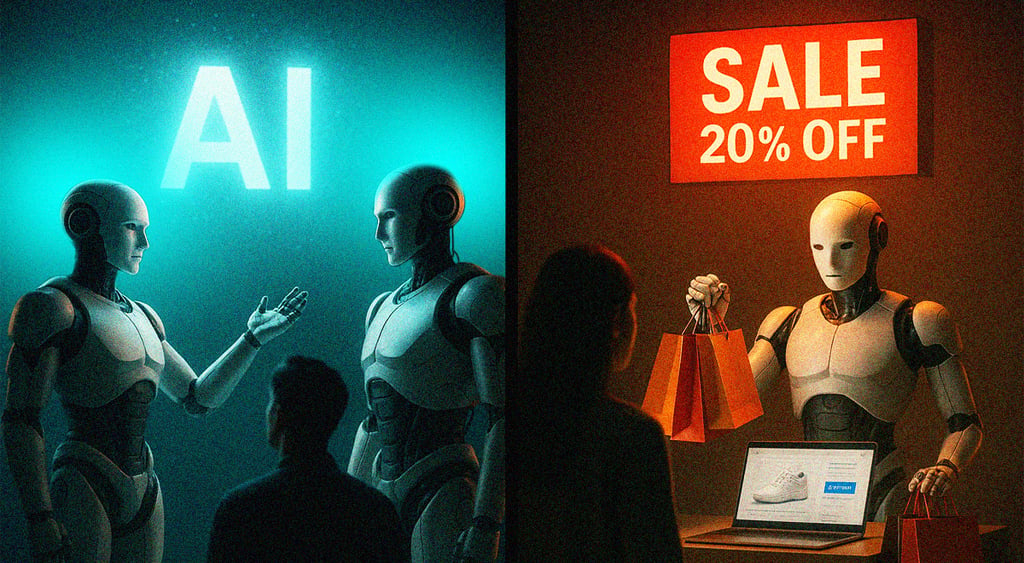
The discrepancy between the benefits of artificial intelligence (AI) promised by big tech and what’s actually been delivered reveals that profits will always come first. Yet, technology may still be the best hope in fighting climate change – even if it could spell the end of the human race.
Follow Eglė Krištopaitytė for more deep dives into the technology of AI.
Belgian stores are playing AI-generated music because it’s cheaper

Belgian hardware store Brico and supermarket chain Carrefour are playing AI-generated music in their stores. Not only is it cheaper, but it can also be adapted for promotions. The switch will mean a significant loss of income for the music sector, the copyright association Sabam argues.
Follow Anton Mous for more Europe-focused technology news.
Who profits from UFO/UAP hype? Inside the attention economy that drives alien fever
As online debate has become more about flaming the opposition than ever before, pouncing on the individual themselves can be more significant than the fact that they saw a flying saucer in the sky.
Follow Marcus Walsh for more UFO/UAP analysis.
The Military-industrial tech complex: GPUs matter more than jets

In the modern-day battlefield, advantage depends less on jets and more on GPUs, less on steel and more on software licenses, less on forward bases and more on cloud regions near undersea cables. Over the past decade, big tech has moved from the periphery of defense to its center. The tools of war now include mobile stacks, satellite links, and model governance checklists.
Follow Neil Hughes for more articles about the intersection of military and AI.
Japan asks OpenAI to protect its “irreplaceable treasures” from Sora 2

After OpenAI launched its most advanced version of its text-to-video model, Sora 2, the company’s CEO, Sam Altman, said that companies and other organizations could opt out of having their work used. The Japanese government has asked OpenAI to refrain from imitating anime and manga in the Sora app, as these genres of art are “irreplaceable treasures,” which the country prides itself on.
Follow Niamh Ancell for more social banter.