Spray-on shoes, flying taxis, AI, and other tech innovations at the Olympics
The Olympics will be the first to feature an AI agenda, while companies will introduce technological innovations to help athletes achieve peak performance.

Image by CoolMitt.

 Follow us
The 33rd Summer Olympics will be the first to feature an artificial intelligence (AI) agenda, bringing some of the advancements behind the scenes. Meanwhile, companies will introduce their own technological innovations to help athletes achieve peak performance, deter camera creeps, and stay cool.
We’ll take a closer look at some of the tech-related innovations used in Paris.
Will spray-on shoes help athletes go for gold?
At every Olympics, sportswear manufacturers race to develop new materials that help the athletes achieve the best performance. In professional competitions, sportswear can make all the difference.
A clear example of this happened at the 2008 Olympics in Beijing, where 23 out of 25 records were achieved by athletes using LZR Racer swimsuits, which reduced skin friction drag.





The following year, the swimsuit, made by the company Speedo, was banned from swimming competitions. However, Speedo didn't stop their efforts and continued experimenting with new materials.
This year, the company isn't shy about its swimming suits and calls them "the world's fastest" and the most water-repellent suits. The company produced them by closely working with Lamoral, whose original coatings were developed for use on satellites.
The ban on LZR Racers wasn't an isolated incident. There were more instances of sportswear banned from international competitions, including Nike's shoes Alphaflys.
Sciencefocus reported that peer-reviewed studies, albeit funded by Nike, revealed that the shoes, made from trio carbon plates and a cutting-edge midsole, served up to 4 percent in running efficiency and 3,4% greater speed.
In 2019, the pair of Alphaflys helped Kenya's Eliud Kipchoge do what no man had ever done before—run a marathon in under two hours. The following year, Alphaflys were banned from the Olympic games in Tokyo.
This year, Nike, Adidas, and other established sportswear companies are also providing athletes with top-of-the-line gear. However, perhaps the most intriguing shoe model comes from the less-known Swiss sneaker maker On.
The pair of Cloudboom Strike LS looks far from normal. They have no heel cap, tongue, or laces and weigh 170 grams, slightly less than the average professional running shoe.
The upper of these sneakers is sprayed by a robotic arm. On average, it takes 3 minutes to manufacture one shoe of Cloudboom Strike LS.
Hellen Obiri, the Kenyan long-distance runner and two-time Olympic silver medalist, will run with these sneakers. At first, she was skeptical of Cloudboom Strike LS. However, winning the Boston marathon has helped to change her mind, The New York Times reported.
Spray-on sneakers … Swiss brand On’s new Cloudboom Strike LS running shoes are created with spray-on plastic in just 5 minutes … 4 years in development, On is launching its LightSpray tech ready for the Olympics: https://t.co/o3ML1MdVBZ
undefined Peter Fisk (@GeniusWorks) July 15, 2024
The On story: https://t.co/ddJNtwG129 pic.twitter.com/X1nWvbBW3p
Sportswear to deter camera creeps
Sportswear designed to improve athletes' performance will not be the only gear at the Olympics. Some Japanese athletes will wear infrared uniforms aimed at deterring camera creeps.
In Japan, non-consensual photography is a big issue, as some people take pictures of athletes and later post them on social media. Infrared-capable smartphone cameras are increasingly used for that.
To protect athletes from unwanted attention, Japanese women's volleyball and table tennis teams will wear special clothes made by Japanese sportswear company Mizuno and a few partners.
They incorporate light-absorbing materials in the infrared range that prevent infrared photos from highlighting the underwear or bodies of female athletes.
Geothermal cooling and cooling mittens
Heat in these summer competitions is always an issue, especially in Paris, where brutal heat waves in July are common.
One place where the athletes usually cool themselves is in hotel rooms equipped with air conditioning systems. However, air conditioning didn't go with the organizers' plans to make the games as eco-friendly and sustainable as possible.
The whole Olympic Village was built without traditional air conditioning systems. The Village's location near the Seine River includes thick insulation, cross ventilation, a mini forest, and a geothermal cooling system that uses cool water pumped from deep beneath the ground, which was supposed to provide refreshing air.
However, national teams, including the US and the UK, weren't reassured, as some expect the Paris Olympics to be the hottest in history. After discussions with the organizers, athletes were allowed to bring 2,500 portable air conditioning units to the Olympic Village at their own expense.
To cool down during the games, the sportsmen will use time-proven old-school equipment like ice vests and frozen balloons.
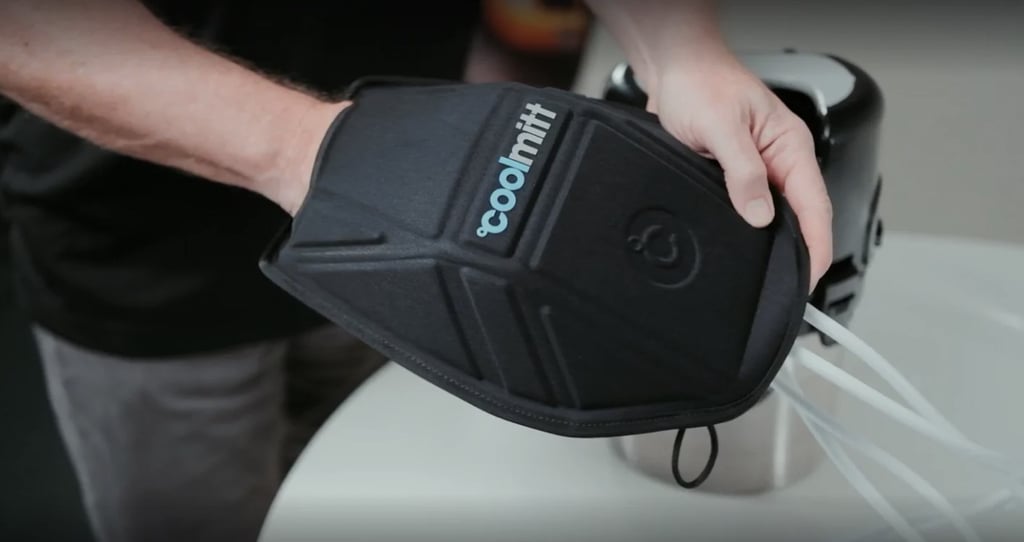
Some will use CollMitt, a device resembling an oversized mitten. According to Reuters, the device emits heat while cooling the athlete’s blood, which is then recirculated into the heart and muscles.
It is designed for use between sets and repetitions in the gym or during short breaks in training or competitions.
The device, developed by scientists from Stanford University, isn't new and has already been used by the US Team in the Olympics in Tokyo. Since then, its popularity among athletes has grown significantly.
AI to stop cyberbullying
These days, no major event takes place without the mention of AI, and the Olympics are no exception.
The International Olympic Committee will deploy AI to protect athletes from cyber abuse.
According to Thomas Bach, president of the IOC, the organization expects about half a billion posts during the Olympics. An AI tool will monitor these posts, covering the 15,000 athletes and officials participating in the competition.
The AI-safeguarding tool is designed to automatically erase abusive posts, shielding the athletes from unnecessary online mistreatment, Bach said.
According to IOC, AI will also be used by Olympic Broadcasting Services to improve internal workflows and enhance the viewer experience. A highlights generation tool will automatically compile key moments from 14 sports and disciplines into tailored highlight reels.
According to Tech Radar, users at Stade de France, the main Olympic stadium, will be able to try out a new system of talent identification created by Intel and Samsung.
Videos recorded by Samsung phones and tablets of people doing various sports will be processed by Intel's cloud-based AI to determine which sports the participants are the best at.
Samsung will also provide special edition smartphones to all of the Olympians.
Flying Taxis
While so-called flying taxes are not part of the official games, the Paris Olympics are set to be the first where this new futuristic technology will be tested.
These large drones, made by the German company Volocopter, are powered by 18 rotors and are capable of transporting two people, including the pilot.
The flying taxis will be operated by Groupe ADP, the manager of Paris airports. Four stations are built around the French capital, including the Charles de Gaulle Airport.
However, not everyone in France is excited about this innovation. According to Le Monde, Paris city representatives, along with some organizations fighting air pollution, are seeking to cancel the project, while Dan Lert from the Paris city hall called them "environmental aberrations for the ultra-rich."

No 350 million euro anti-drone system
Ensuring the security of athletes and the audience during the Olympic games is a top priority for organizers, as these events could become the target of terrorist attacks.
To ensure air security, France wanted to build an anti-drone system Parade, which received a 350 million euro tender from French authorities back in 2022.
However, as the Olympics neared, reports showed that possible flaws emerged. According to The Times, the system couldn't identify all the drones and also mistook air conditioning propellers for drones.
It was a clear sign that using the Parade in Paris would be too risky. Instead, the Parade and security of the Olympic games will be used with equipment from the Royal Air Force of the UK.
