Writers strike rocks Hollywood just like in 2007: what’s different this time?
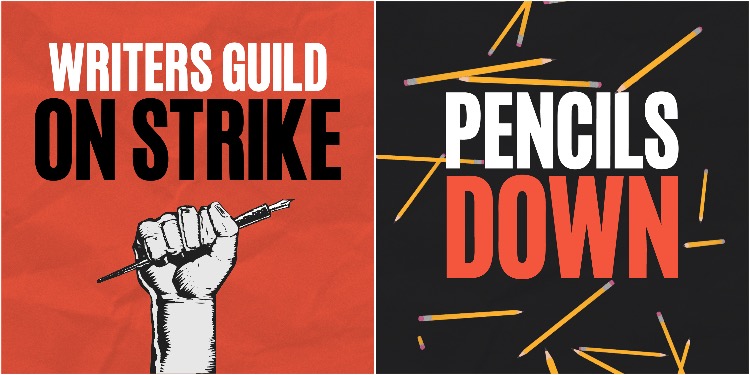
Thousands of members of the Writers Guild of America (WGA) are striking, just as they were in 2007-2008. But the world is a very different place now. This is reflected in the issues being negotiated today compared to back then.

By Shutterstock

 Follow us
Thousands of members of the Writers Guild of America (WGA) are striking, just as they were in 2007-2008. But the world is a very different place now. This is reflected in the issues being negotiated today compared to back then.
On the surface, the writers’ demands are pretty familiar and mostly include calls for higher compensation. The big studios and production companies didn’t budge for 100 days last time, and now they’re holding their ground in just the same way.
However, some of the issues being discussed now would have been completely unheard of 15 years ago. For example, the WGA wants the industry to restrict the use of generative artificial intelligence (AI) technology which was the stuff of fantasy in 2007.
The rise of streaming platforms, for many now the main path to content, is arguably an even more important matter. Netflix and other streamers have profoundly disrupted the writer’s market. What was then an unclear digital future is now a very active reality with all its consequences.




The future is now reality
To be clear, the striking members of the WGA were discussing the internet, which is how content is streamed to your devices nowadays. But the conversations were quite different.
It might be hard to believe that in 2007 the producers argued that writers should not be compensated for the use of their work on the internet because the latter was mainly for promotional purposes.
For writers, Netflix was not much of a threat – the startup was more known for mailing customers movie DVDs in red envelopes, even though it had launched streaming in January 2007.

In other words, new technologies were only emerging. But the writing was on the wall, and streaming changed the rules of the game – consumers can now stream and download content straight to their homes, tablets, or phones.
“No one, at that time, predicted that the business would be able to get consumers to pay for programming that was distributed via the internet. Everybody thought it was going to be an ad-supported business,” one executive who participated in the 2007 negotiations told the Los Angeles Times recently.
The Alliance of Motion Picture and Television Producers (AMPTP) now includes Netflix and tech giants Amazon Studios and Apple, as well as legacy producers such as NBCUniversal, Paramount Global, Sony Pictures Entertainment, and Warner Bros. Discovery.
Less work, less money
The truth is that the tech industry’s labor conditions and standards differ from those in Hollywood. Workers at Netflix or Amazon usually find it difficult to organize, and management resists unionization.
The WGA’s explanatory statement released this week reflects the writers’ concerns about the new kids on the block and the way they operate.
“The companies’ behavior has created a gig economy inside a union workforce, and their immovable stance in this negotiation has betrayed a commitment to further devaluing the profession of writing,” the Guild said.
“From their refusal to guarantee any level of weekly employment in episodic television to the creation of a “day rate” in the comedy variety and their stonewalling on free work for screenwriters and on AI for all writers, they have closed the door on their labor force and opened the door to writing as an entirely freelance profession.”
While streaming wars make it look like there's more content than ever, that’s not necessarily beneficial to the writers because TV seasons are now much shorter than they used to be.
Writers, for example, are unhappy about the size of residual payments, the money they get when their material is reused. The way deals are structured for streaming has negated much of the back-end revenue for writers and, actually, everyone else.
On streaming, writers get a fixed amount whatever happens with the show. But on traditional broadcast, if a TV show or a movie is a bigger hit, they can earn more from residual payments. Naturally, creators want more balance.
Finally, while streaming wars make it look like there's more content than ever, that’s not necessarily beneficial to the writers because TV seasons are now much shorter than they used to be.
Shows are now running eight to 10 episodes per season as opposed to 22-24 episodes not that long ago. Writers are paid based on the number of weeks they work, so a shorter season means less money.
For streaming giants seeking to carefully control their investments, these shorter stints have become a license to hire smaller writing staffs, known in the industry as “mini rooms.” And if a show is canceled (so many are killed that the Daily Telegraph recently called it a streaming apocalypse), the writer has to move on.

The AI headache
Last but not least, the demand to regulate the use of AI in Hollywood would have been unimaginable in 2007 but is perfectly reasonable today.
In recent months, with chatbots such as ChatGPT exploding in popularity, many artists, lawyers, and telemarketers have expressed concern about the future of their work. Now, Hollywood writers have joined their ranks.
In its list of proposals, the WGA demands that the use of AI in the Minimum Basic Agreement (MBA)-covered projects be regulated. For example, the union wants to ban AI from writing or rewriting literary material.
The WGA also wants to see studios committing to not using AI as source material. Finally, it wants the material, covered by the MBA, not to be used to train AI.
However, AMPTP wants to wait and see. According to the WGA, the other side “rejected our proposal” and “countered by offering annual meetings to discuss advancements in technology.”
It remains to be seen whether the possibility of using AI in Hollywood writing is just a fad that’s going to disappear in a year or two. Big streamers might even try to use AI to break the strike and wrangle creative control away from the writers.
On the other hand, the producers would probably quickly see that spitting out a screenplay on ChatGPT is entirely different than hiring professional writers who would understand the whole filming process, consider the budget constraints, and solve a bunch of other human-like problems algorithms cannot overcome. Yet, at least.