I walked out of Radu Jude's Dracula – but not for the reason you may think
It’s entertaining to watch people leave a movie theatre flustered and a bit upset after being rattled by a provocative flick such as Radu Jude’s Dracula. I also walked out before the end, but not for reasons you might think.
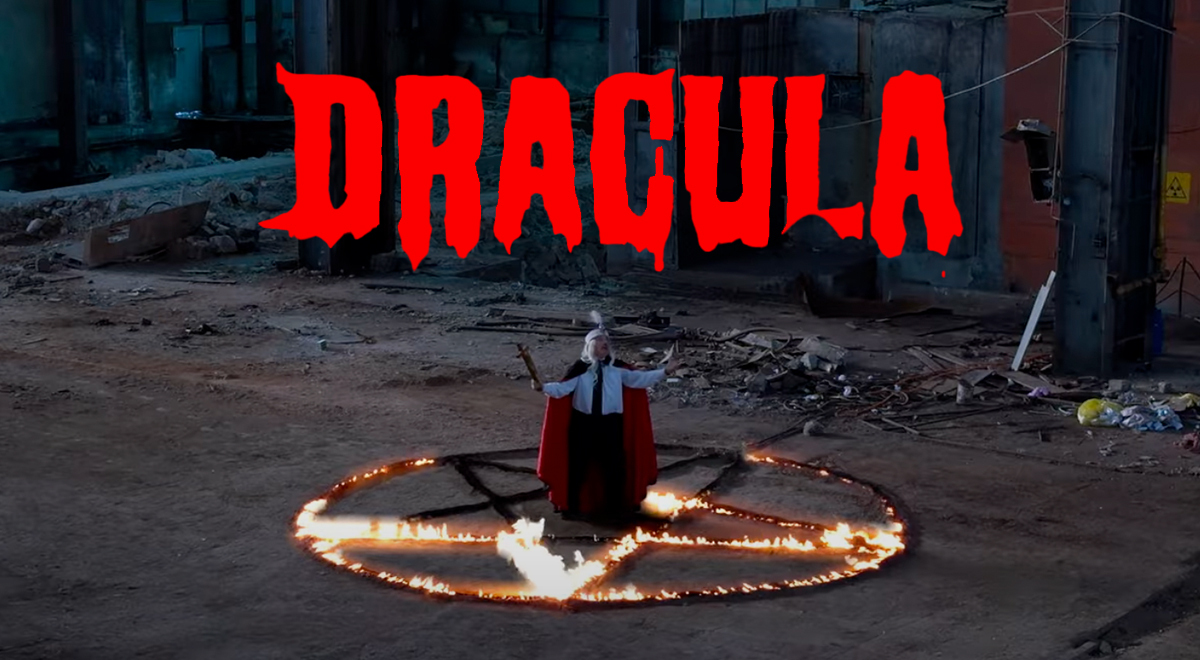
Image by Cybernews

 Follow us
It’s entertaining to watch people leave a movie theatre flustered and a bit upset after being rattled by a provocative flick such as Radu Jude’s Dracula. I also walked out before the end, but not for reasons you might think.
Director Radu Jude has re-envisioned the classic tale of Dracula, transforming the cult classic into a lusty cesspool of AI-generated content.
The plot follows fictional filmmaker Adonis Tanta, who is tasked with creating a rendition of Dracula using AI.
Brandishing an iPad, he fires up the latest generative AI technology and gets to work creating a hyper-sexual cluster fuck of a movie.
While watching the film, I noticed that it felt slightly indecisive, as if Jude was attempting to cram basic tropes into three hours of screentime.




Some moments felt belaboured, particularly scenes surrounding themes of romance.
However, the use of sloppy AI visuals was a really dynamic element that helped break up the slightly clumsy and, at times, monotonous storylines.
The opening scenes assault the senses with a wave of AI slop depicting a lust-filled vampire engaging in sexual activities.
A woman pays for sex with a vampire, where she demands that he “eat (her) pussy.” However, the moment was lost as Dracula was a bit “premature.”
Jude’s Dracula positions itself as a self-conscious arthouse movie that simultaneously lacks all self-awareness.
I guess that’s what happens when you approach a film from a metaphysical angle.
During the first half, some moments feel genius, while others get lost amidst the noise, the lights, and the various plots that all kind of homogenize into one big blob.
While the movie is incredibly low-budget and includes shabby costumes and some slightly mediocre acting, it definitely felt different from anything I’d ever seen before.
Jude’s Dracula feels less like a B-movie and more like something an improv theatre troupe might whip up in their spare time.
However, instead of a short and sweet matinee, the movie lasted a grueling three hours.
That’s why I walked out. Not because they mocked the war in Ukraine, or because of the deeply graphic sex scenes, but it just went on far longer than it needed to.






Jude’s Dracula: the critique
The New York Times review of Jude’s Dracula mentioned the director’s ”gleefully crude and vulgar go-for-broke provocation that is as grindingly repetitive as it is self-amused.”
Critics said that Jude has gone extremely meta, making a film about a director using AI to create a film about a director using AI.
The New York Times noted that Jude’s Dracula comprises various chapters that incorporate a range of AI imagery, combining the vampire myth with Vlad the Impaler.
The critic said that sometimes the chapters go here, there, everywhere, and nowhere all at once, and the film is comprised of whatever Jude came up with at the time.
I can agree, it did feel like an amalgamation of various ideas that didn’t tend to complement each other, but instead, clashed at times, making the film feel clunky.
Critics have said that Jude’s “carefree” attitude to filmmaking is reflected in Dracula as not a lot lines up, and little makes sense.
Radu Jude’s use of AI in Dracula
Since the release of OpenAI’s Sora last year, Hollywood has been battling against AI infiltrating the sacred space of modern cinema.
Actors have been fighting vehemently against Tilly Norwood, an AI bot seeking to break into Hollywood, alongside AI giants like OpenAI, which once allowed users to create deepfake versions of famous celebrities, such as Scarlett Johansson, without their consent.
Johansson actually warned the industry of a “1000-foot AI wave” that was set for Hollywood following a surge in non-consensual deepfake images.
However, Jude’s film started out with him playing around with ChatGPT and attempting to make a vampiric porn movie set in the Holocaust.
In an interview with Slant, Jude said that he would input prompts into a text-to-image model and would choose the worst images the AI created.
Jude also said that he views AI as just another tool, and in a place like Eastern Europe, where there isn't a massive film scene, anything that lowers the barrier for entry should be utilized.
“While I leave the serious people like Guillermo del Toro or others to really suffer and be unhappy about this, for me, it’s just another tool,” Jude told Slant.
When discussing the controversial use of AI for filmmaking, Jude said that he “happily took advantage of it” and would “take advantage of anything that’s on the market.”
Despite criticism, Jude’s Dracula might not be the end of cinema.
Instead, it demonstrates that the barrier to entry is much lower than we originally thought.
There's no need to rely on nepotism or big budgets. If you have a camera, a subscription to a text-to-image model, and an idea, then, really, anything is possible.
Unlock more exclusive Cybernews content on YouTube