Xbox spent billions buying game studios. Now, 3200 jobs are going: What went wrong?
Xbox also lost 64 cents for every dollar invested in a typical year

Image by Bryan Thomas | Getty Images

 Follow us
- Microsoft is cutting 3,200 gaming jobs (20% of division workforce) and spinning off four studios after its Game Pass subscription service failed to deliver expected growth and profits.
- Game Pass price increase from $20 to $30 per month in October 2025 backfired dramatically, causing millions of subscribers to cancel and exposing weak consumer appetite for higher subscription costs.
- Xbox operates at profit margins 3-10 times lower than competitors and loses 64 cents per dollar invested, revealing severe management inefficiency despite $76 billion spent acquiring gaming studios.
- The restructuring signals a major strategy shift from growth through studio acquisitions toward fewer, bigger franchises and leaner operations after years of disappointing returns.
Key Takeaways by nexos.ai, reviewed by Cybernews staff.
Microsoft has spent much of the past decade building the Netflix of gaming through acquisitions and studio expansions. In a transparent attempt to level the playing field, it attempted to change both its position in the gaming industry and the economics of game distribution.
Looking back, Microsoft's ambition has grown through massive acquisitions, including $7.5 billion of ZeniMax Media and $68.7 billion of Activision Blizzard. This brought franchises such as Call of Duty, Warcraft, Diablo, Candy Crush, Fallout, and Elder Scrolls into Microsoft's ownership. Fast forward to now, and that expansion is being partially reversed.
For longtime Xbox users, describing the current situation as another Red Ring of Death seems tempting. But this time around, failure is not hardware; it is the business model around Game Pass that’s faltering.
Microsoft recently announced it will cut 3,200 jobs, roughly 20% of the division's workforce, and that 1,600 people will leave immediately.






Four studios are also departing Microsoft's gaming business. Double Fine Productions and Compulsion Games will return to independence with their intellectual property, catalogs, and financial support for future projects, while Ninja Theory and Undead Labs are moving to new ownership with funding to continue work on Senua and State of Decay 3. Arkane Lyon has also entered a consultation process in France to consider its options.
The restructuring, part of 4,800 job cuts across Microsoft, has been described by Xbox CEO Asha Sharma as the most significant in the division's history. More importantly, Sharma has offered an unusually candid assessment of why it has become necessary.
In a message to employees, Sharma said the Xbox business was "not healthy," acknowledged that profit margins were between three and ten times lower than those of comparable platform and publishing companies, and explained that the company's investments had failed to produce the growth management expected.
These admissions create a much larger story than another round of layoffs in the technology industry. But where did it all go wrong?
Xbox bought the studios. Game Pass needed the hits
Microsoft entered the current console generation from a weaker position than Sony. Xbox had a smaller installed console base and, according to Sharma, a higher cost structure. Attempting to close that gap by selling more consoles would have meant competing with PlayStation on terms that already favored Sony, so Microsoft pursued a different model based on subscriptions, cloud distribution, PC gaming, and eventually publishing more games on competing platforms.
Game Pass was at the heart of this strategy. Instead of relying primarily on consumers purchasing games individually, Microsoft wanted millions of players to pay recurring subscription fees for access to an expanding catalog.

In theory, this offered benefits to both sides. Microsoft could build a more predictable source of recurring revenue while players gained access to hundreds of games without paying the full retail price for each release.
The difficulty was that Game Pass wanted to be the Netflix of gaming, and that would require a continuous supply of games capable of attracting new subscribers and convincing existing customers to continue paying.
Owning developers gave Xbox greater control over its content pipeline, reduced its dependence on negotiations with external publishers, and provided a growing collection of intellectual property to support Game Pass for many years. But the economics of producing games created problems that could not be solved simply by acquiring more studios.
AAA games can require hundreds of employees, development cycles lasting five years or longer, and budgets reaching hundreds of millions of dollars. Smaller games may cost less to produce but are unlikely to attract enough subscribers individually to justify the enormous investments Microsoft was making in its gaming business.



Stay updated with our latest stories and follow us on social media
Be the first to discover new stories, ideas, and updates from our team.
Xbox needed both a broad catalog of smaller titles and a reliable pipeline of major releases capable of attracting large audiences. But the expected growth did not materialize quickly enough.
The company responded by adding teams, increasing investment, and allowing more time for results to improve. In retrospect, that decision appears to have increased the eventual cost of restructuring because Microsoft continued to expand the organization after evidence emerged that its strategy was not delivering the financial returns originally anticipated.
Game Pass growth exposed the limits of subscription economics
The dream turned sour in October 2025 when Microsoft raised the price of its Xbox Game Pass Ultimate from $19.99 to $29.99 per month. The 50% price increase led to millions of subscribers canceling their subscriptions en masse. Microsoft reacted by reducing the price, but it was too late; the damage was done.
Xbox management misjudged how much consumers were willing to pay, highlighting the difficulty of applying subscription economics to an industry where many players continue to purchase individual games and spend years playing a relatively small number of titles.
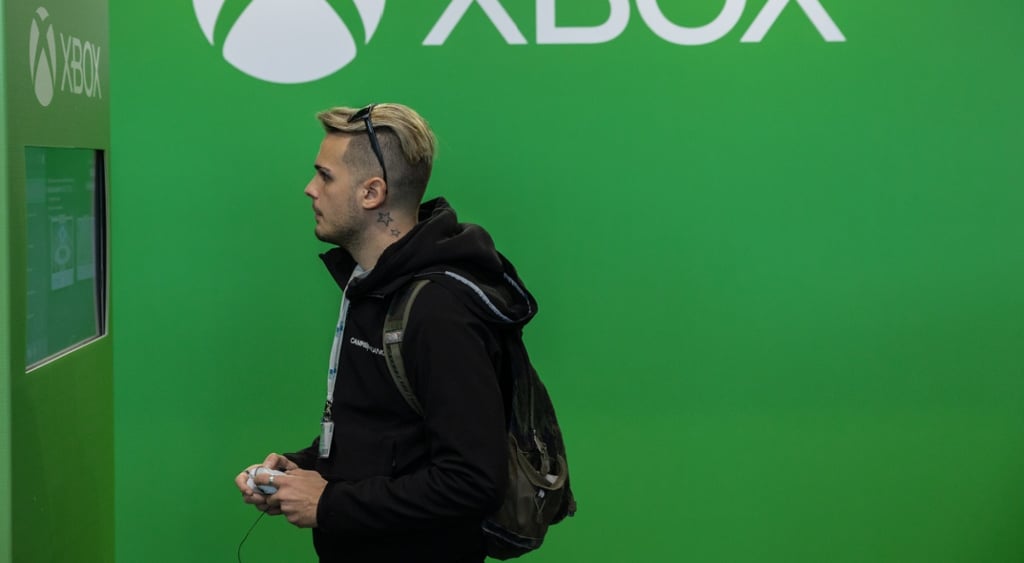
There is also a question about whether Game Pass itself failed or whether Microsoft failed to provide the games required to make the service successful. A broad catalog of smaller titles can encourage players to experiment with games they would not otherwise purchase, which creates opportunities for independent developers and niche studios.
However, smaller releases cannot carry the economics of a gaming division that has absorbed tens of billions of dollars in acquisitions and operating costs.
Redfall became one of the most visible failures, while Halo struggled to maintain the commercial and cultural position it enjoyed during earlier console generations. Microsoft spent billions assembling the studios and franchises required to strengthen Game Pass, but Xbox never consistently produced the first-party releases needed to finish the fight.
Ultimately, the subscription strategy depended on content, and Microsoft's decision to spend billions on studio acquisitions was intended to solve precisely that problem. So apart from the price increases, where else did it all go wrong?
Did Microsoft buy too many studios, or mismanage them?
Microsoft aggressively expanded its studio portfolio. But it acquired companies with different cultures, commercial expectations, development models, and audiences. Some faced financial or operational challenges, while others specialized in games that attracted loyal audiences unlikely to yield financial returns, such as the Call of Duty franchise.

Double Fine built its reputation by producing distinctive games for relatively specific audiences, and financial stability was among the reasons it joined Microsoft in 2019. However, a game that represents commercial success for an independent developer may appear less attractive when competing for investment inside one of the world's largest companies.
One interpretation is that Microsoft assembled a portfolio of too many studios that were unlikely to justify the level of investment required to own and operate them. From this perspective, Xbox confused variety with sustainable growth and bought companies primarily to provide Game Pass with a steady supply of content, without sufficiently considering whether permanent ownership was the right relationship.
Smaller developers were acquired to broaden Game Pass, but they were never expected to carry the economics of Microsoft's gaming business. This placed a massive responsibility on Xbox's largest studios and franchises to deliver the wow factor. If franchises, including Halo and major Bethesda projects, had consistently produced exceptional commercial results, this story could have had a very different ending.
Xbox's own numbers point to management problems.
The financial performance of Xbox provides the clearest indication that the restructuring cannot be explained solely by difficult conditions in the gaming industry.
Sharma said Xbox operates at margins between three and ten times lower than comparable platform and publishing businesses. At the same time, reports suggest the division finished its last fiscal year with margins of approximately 3%. But there was worse to come.

Xbox also lost 64 cents for every dollar invested in a typical year. Ironically, Xbox's platform teams grew by 40% during the current console generation while its player base and total playtime declined. In some parts of the organization, work passed through 14 management layers. For a company that helped popularize the idea of unlocking achievements, Xbox had created a corporate structure in which accountability for results was difficult to identify.
Middle management bloat is a familiar tale. Microsoft is now attempting to reverse those problems by reducing management layers to no more than five and, where possible, three. Vendor spending will be reduced by 50%, technology platforms will be simplified, and shared services will be expanded. Helen Chiang has been appointed chief operating officer with end-to-end P&L responsibility across content, hardware, platforms, and services.
Who pays for management's mistakes?
Management approved the acquisitions and set growth expectations for Game Pass. These teams also expanded the workforce, allocated development budgets, added management layers, and continued investing even as results disappointed. They are also the ones who increased subscription prices before reversing course when customers left.

Check if your data was exposed
Find out if your email and related personal information have appeared in known data breaches.
The new structure indicates that Xbox will concentrate more of its resources on businesses with the largest audiences and strongest financial performance. This represents a different philosophy from the expansion strategy pursued during the previous several years.
Microsoft is moving away from the idea that owning a larger collection of studios will necessarily strengthen Xbox and toward a model based on fewer management layers, greater financial accountability, external relationships with independent developers, and heavier investment in franchises capable of reaching global audiences.

Xbox could become more efficient, developers outside Microsoft may retain greater independence, and management may allocate capital more carefully after years of disappointing returns. A smaller portfolio could also allow Microsoft to concentrate resources on improving the quality and consistency of its largest releases.
An industry dominated by sequels, established intellectual property designed to reach the largest possible audiences, could be financially safer for publishers. But it would arguably offer far less value to subscribers who want more than a new set of Call of Duty maps.
Power your dreams
Microsoft had almost every advantage available. It possessed the financial resources to acquire major publishers and one of the world's largest cloud platforms, and the ability to absorb years of losses while building its gaming strategy. But those advantages were not enough to guarantee success.
It is a classic example of a company scaling its portfolio faster than the economics can support. Game Pass failed to meet management's expectations, major releases did not consistently attract the audience Xbox needed, management complexity increased, and investment returns disappointed.
Microsoft continued adding resources in the hope that more time and money would eventually improve the outcome, but the restructuring suggests that patience has finally run out.
Xbox has spent years telling players to "Power Your Dreams." Its challenge now is proving that its ambitions were built on a sustainable business model rather than on the belief that Microsoft could keep spending until the strategy eventually worked.