Red light therapy for weight loss and fat reduction: 5 Cybernews recommendations
Being behind major reports like The Mother of All Breaches and RockYou2024, our in-house cybersecurity experts and journalists provide unbiased, real-world testing and in-depth analysis.
We maintain complete transparency by openly sharing our testing methodologies with our audience.
Learn more
Some red light therapy (RLT) brands claim their devices can support weight loss and fat reduction. As interest in the best red light therapy for weight loss grows, many products now promote localized fat reduction, a claim widely circulated across major social media platforms. However, the scientific evidence supporting these claims remains very limited.
To better understand what is real and what is marketing, I, a Cybernews writer, together with the Cybernews research team, reviewed and investigated five leading RLT devices that claim to support weight loss or fat reduction. Our evaluation focused on available scientific research, manufacturer information, and user experiences.
The goal was to examine these claims while relying on published studies, official specifications, and real user feedback. By the end, you will have a clearer understanding of what top RLT devices can realistically support and how each one may fit your needs.
Best red light therapy devices for weight loss – shortlist
- NOVAA LIGHT PAD XL – best large RLT pad for use alongside diet and exercise
- MitoMAT Full Body Red Light Therapy Mat – top full-body RLT mat with medical-device safety standard
- HigherDose Full Body Red Light Mat – best RLT mat for relaxation sessions with the largest coverage
- Hooga Red Light Therapy Belt – portable RLT belt with high irradiance
- MitoQUAD Wavelength Belt – high-tech quad-wavelength RLT belt claiming weight loss
The best red light therapy devices for weight loss compared
Before getting into my individual reviews, it’s useful to compare these devices. I’ve noted their features, target areas, and suitability in the comparison table below.
| Device | Type | LEDs | Wavelengths | Irradiance | Treatment time | Charging | Target areas | Wireless | Claimed benefits |
| NOVAA LIGHT PAD XL | Pad | 400 LEDs | 660 nm red, 850 nm infrared | 200 mW/cm2 at contact | 5-20 min per area | US wall plug | Back, knees, joints, larger areas | No | Recovery sessions |
| MitoMAT Full Body Red Light Therapy Mat | Full-body mat | 1280 LEDs | 660 nm red, 810 nm and 830 nm NIR | 30 mW/cm2 at surface | 1-20 min (built-in timer) | AC adapter | Full body while lying on mat | No | Full-body recovery, yoga, daily wellness |
| HigherDose Full Body Red Light Mat | Full-body mat | 1000 LEDs | 660 nm red, 850 nm NIR | 90 mW/cm2 | 20/30/40/60 min presets | USB-C to wall plug | Full body (lying on, under, or hanging) | No | Mood, skin, recovery, circadian support |
| Hooga Red Light Therapy Belt | Belt | 405 LEDs | 660 nm red, 850 nm NIR | Over 70 mW/cm2 at surface (100% brightness) | Up to 15 min per area (1-20 min timer) | Direct power supply or 15,000 mAh battery | Waist, back, shoulders, knees | Yes (with included battery) | Waist/back comfort |
| MitoQUAD Wavelength Belt | Belt | 405 LEDs | 630 and 660 nm red, 810 and 850 nm NIR | 18 mW/cm2 | 10-15 min per area (1-20 min timer) | Wall plug or optional 15,000 mAh power bank | Waist, abdomen, limbs | Yes (with power bank) | Quad-wavelength sessions |
5 Best red light therapy devices for weight loss – our detailed list
Below is my full detailed list with my top five RLT devices for potential weight loss and fat reduction support. You’ll see why I picked each one, who it’s for, and explore key specifications.
1. NOVAA LIGHT PAD XL – overall best red light therapy device for potential weight loss in 2026
| Type: | Pad |
| Target areas: | Back, hips, thighs |
| Price: | High-tier |
| Best for: | RLT sessions for large areas |
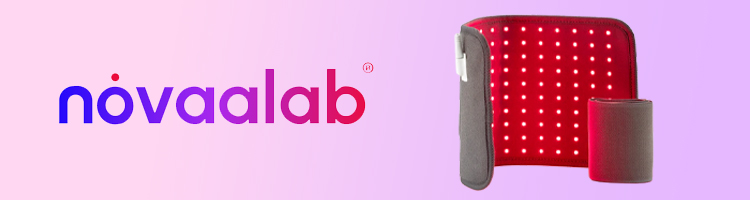
NOVAA LIGHT PAD XL is a large 19.7” x 23.6”, flexible RLT pad with a “patented remote control” that covers most of your back, or wraps around wide areas like hips or thighs. I picked it because of its soft materials, and its dense array of 400 LED modules (660nm and 850nm wavelengths), and high stated irradiance. Novaalab claims it can help “reduce arthritis symptoms, inflammation, and chronic pains.” Some people may choose to use it to support diet and exercise in order to reach their weight loss goals.
2. MitoMAT Full Body Red Light Therapy Mat – best full-body RLT mat to support weight loss routines
| Type: | Mat |
| Target areas: | Full body |
| Price: | High-tier |
| Best for: | RLT sessions combined with yoga and training |
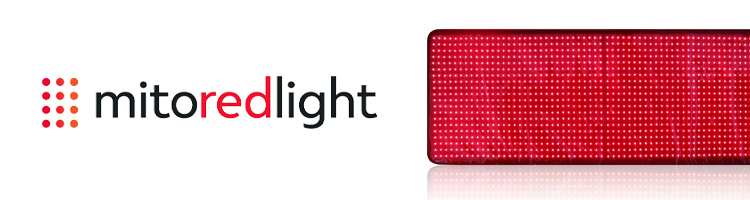
MitoMAT Full Body Red Light Therapy Mat is a long 62” x 24” neoprene full-body mat with 1280 LEDs – 660nm red, 810nm and 830nm near infrared (NIR). I picked it for people who want to lie down and cover most of their body.
Mito markets it as a “powerful, portable solution” for “yoga, meditation, and recovery.” What I liked most is that it’s IEC 60601-certified for home RLT therapy. Some may use it alongside a weight loss plan.
3. HigherDose Full Body Red Light Mat – extra large mat for full RLT coverage

| Type: | Mat |
| Target areas: | Full body |
| Price: | High-tier |
| Best for: | Recovery and mood sessions for tall people |
HigherDose Full Body Red Light Mat is a massive 78.7” x 41.37” mat with 1000 LEDs (660nm red and 850nm NIR). I picked it for tall and wide people, and its 20-60 minute session presets and 40Hz NIR pulsing feature.
It’s ideal for when you want spa-like sessions to help “elevate mood & supercharge recovery” – as the company puts it. You can also hang it on your door. Some might hope this device may support circulation and affect fat burn.
4. Hooga Red Light Therapy Belt – top cordless belt for waist and back sessions
| Type: | Belt |
| Target areas: | Waist, back, knees |
| Price: | Mid-tier |
| Best for: | Portable midsection RLT sessions |
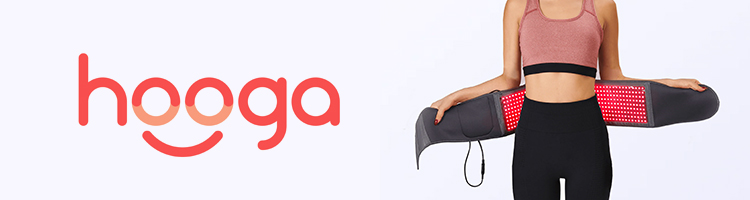
The Hooga Red Light Therapy Belt is a 51.18” x 7.09” flexible RLT belt with 405 LEDs – with 660nm and 850nm wavelengths. I picked it because it’s truly wireless and portable. Another plus is its 15,000mAh battery – for up to 150 minutes of use. It can also be plugged in at home.
Hooga says it “wraps where you need it most” – which could be your shoulders, knees, back, and other spots. Some may wrap it around their midsection to support their weight loss plan.
5. MitoQUAD Wavelength Belt – highly configurable quad-wavelength belt to support weight loss routines
| Type: | Belt |
| Target areas: | Waist, abdomen, limbs |
| Price: | Mid-tier |
| Best for: | RLT enthusiasts who want four wavelengths |
The MitoQUAD Wavelength Belt is a 50” x 7” RLT belt with 405 LEDs. It’s a quad wavelength device with 630nm, 660nm, 810nm, and 850nm wavelengths – which is why I picked it. It’s great for RLT tech enthusiasts who desire the fourth wavelength.
Mito markets it as a way to “level up your weight loss program,” claiming that the 810nm wavelength “ensures deep penetration.” Some users may want to use its claimed penetration abilities to support diet and exercise.
Our methodology
The Cybernews team and I evaluated RLT devices for weight loss and fat reduction using extensive research – without hands-on testing. I only used official manufacturer data, published research, and real user reports. I used a weighted scoring system for transparency and fairness:
- Potential to aid in weight loss (30%): I measured by research data, customer feedback, and infrared wavelength range. I looked at how each device claims to approach body contouring or weight management.
- Device design and comfort (20%): I considered how well the device’s materials, flexibility, and coverage area are designed for use in a weight loss routine. I also evaluated how comfortable they appear.
- Safety and certifications (20%): I looked for FDA clearance, medical-grade LEDs, and safety standard certifications, such as IEC 60601.
- Ease of use (15%): I assessed ease of use, setup and portability. I also checked controls, presets, portability, and battery options.
- Value for money (15%): I noted pricing versus features, durability, and warranty information. Build quality, trial periods, and what users reported also played into this.
This framework allows me and my team to identify the best-performing red light therapy devices for weight loss without bias or promotional influence.
What is red light therapy?
RLT – a type of photobiomodulation – is a non-invasive form of treatment that uses low-level red and near-infrared (NIR) light to potentially influence how cells function. The light is absorbed by cell structures, and RLT brands often say the light acts on cell mitochondria – which may affect energy production within the cells, resulting in potential improvements of circulation and inflammation in the tissue level.
Most RLT devices on the market use wavelengths in the red (625 - 780 nm) and NIR (780 - 1400 nm) range. RLT brands market red light as interacting with surface tissues like skin, while NIR is claimed to pass deeper – into muscle and other tissues. RLT brands usually combine at least these two ranges.
Today, there are numerous devices on the market: RLT panels, pads, belts, wands, masks, full-body mats and pods. RLT is commonly marketed for helping improve skin appearance, recovery, and chronic pain relief – now increasingly hyped as supporting weight management. However, clinical evidence for that is extremely limited.
How can red light therapy support weight loss?
According to a review published in Lasers in Surgery and Medicine, red light therapy may target fat cells. A very small study that’s almost 20 years old has suggested that RLT might have the potential to reduce the circumference of a treated region, such as the waist. Another small study has also examined the potentially beneficial effect of RLT on weight loss.
Most of the research on light therapy supporting weight loss has been done with in-clinic low-level laser therapy (LLLT) systems – professional medical devices. In a small study, LLLT lasers, when combined with a behavioral intervention, produced modest reductions in body weight and body fat mass in overweight individuals – the best-performing group lost about 1.1KG body fat mass in six weeks. However, we must note that this study used green, not red, laser light.
To our knowledge, there are no studies linking weight loss to at-home consumer RLT devices, and the overall evidence on light therapy for weight loss is preliminary and extremely limited. In real life, RLT therapy for weight loss is typically used alongside diet and exercise – not as a standalone solution.
Benefits of red light therapy for weight loss
When people use RLT together with a weight loss routine, they often expect several potential benefits – like reduction in fat, pain relief, improved circulation, and mood boosts. However, direct evidence of any benefits is minimal. Here’s the reality:
- Body composition support: A study reported some reductions in body fat and waist circumference in one group using green light. This doesn’t automatically translate to home RLT devices.
- Muscle and joint pain relief: In a trial on exercise-induced soreness, 830nm LED light was tied to muscle pain relief. This could mean that it was easier to keep moving after exercise.
- Improved circulation and reduced inflammation: In a very small study with healthy participants, NIR photobiomodulation was shown to increase microvascular blood flow and tissue perfusion. This suggests potentially improved circulation.
- Mood and energy boost: In adults with sleep complaints – according to one small study, 850nm NIR exposure in the morning during the winter months was associated with improved mood and reduced drowsiness. This may be viewed as an indirect benefit for weight management.
It’s critical to be cautious around these claims. Consistency and proper usage are key for any of these indirect, potential results.
Can red light therapy help with fat loss?
A placebo-controlled low-level body-contouring study using 635nm light on the waist, hips, and thighs suggested that participants lost about 3.5 inches in total circumference after six sessions in two weeks. The sham group changed by less than an inch – and some inch loss was regained later. Small improvements in body image and quality of life were noted.
In conclusion, there’s little evidence on RLT’s impact on fat reduction. If you’re still interested, keep in mind that these devices might be more of a supportive tool rather than a quick fix.
A healthy weight loss plan should include a lifestyle with balanced eating patterns, regular physical activity, and sufficient sleep, all while managing stress. If you're concerned about your weight, you’re not sure where to start or you’re curious about giving RLT a go, talk with your doctor.
Key features to look for in a red light therapy device for weight loss
Choosing an RLT device to support a weight loss plan means focusing on core specifications. Here’s what to check:
- Wavelength range: Look for red and NIR light (around 630–850nm). This is the common range in red and infrared light photobiomodulation research.
- Power density: Higher irradiance (at contact/surface) might mean more light reaches your tissues. The brand should clearly display this.
- Treatment area: Check the physical dimensions and number of LEDs. Dense LED structure may be favorable – especially for belts and pads that irradiate small areas.
- Timer settings and safety controls: Check for built-in timers and auto-shutoff. Your user manual must include safety guidelines to avoid overuse.
- Build quality and warranty: Look for quality materials – good stitching or casing. A one-year warranty at the minimum.
Try to choose based on your lifestyle. Portable belts are great for movement. Larger pads/mats are generally for lying down at home.
How to incorporate red light therapy into your weight loss routine?
There’s not enough evidence that would allow us to know how exactly you should use RLT for weight loss. The LLLT-based clinical research that I’ve analyzed generally uses short blocks of 6-12 RLT sessions. That’s roughly 2-3 treatments per week over 2-6 weeks.
Specifically, in the clinical studies/trials mentioned earlier – clinicians used 2-3 treatments per week over 2-6 weeks. Each session typically lasts 20-60 minutes while the user’s skin is close to the light source.
For example, the body-contouring trial used six sessions over two weeks – at three times a week. The weight reduction study used 12 sessions over six weeks – at two times per week.
I highly suggest you combine RLT with exercise, nutrition, and hydration. Remember, consistency matters more than intensity – and most RLT brands align with that. Most importantly, it’s best to consult a healthcare professional before starting any form of light therapy.
How to maximize red light therapy weight loss results?
If you’re venturing into RLT, it’s better to maximize any potential results. Here’s what you can do to optimize your RLT experience:
- Follow a consistent schedule, per the user manual. Most brands recommend sticking to the same days and times.
- Use the correct distance and timing per manufacturer instructions. Exceeding limits may cause unnecessary skin irritation or other issues.
- Combine your RLT experience with calorie management and regular movement. RLT devices are an add-on to a balanced way of life.
- Track your progress over time using photos or body measurements. Take photos and measurements before using the device, and several weeks/months later to note any changes.
Always stick to manufacturer’s and your healthcare provider’s instructions. Those contain critical safety information and information on how to use the product.
Precautions doctors recommend if you want to use red light therapy at home
RLT is generally considered safe, but use it responsibly. Here’s how to stay safe while using RLT devices:
- Avoid exceeding session and exposure limits. Over-exposure might cause irritation.
- Protect your eyes with safety goggles if you’re using a bright panel or mask near your face. Never stare at the LEDs.
- Clean skin before sessions. RLT is meant to be used on bare skin, so remove makeup, or any other skin products before use.
- Stop immediately if you notice irritation or discomfort. If you notice too much warmth, redness, or worsening of an existing issue, stop and speak to a professional.
- If you have certain skin conditions or take medications that may make you more sensitive to light, you might not be a good fit for RLT.
Remember, consistent, moderate use tends to yield the best results. Always use RLT responsibly and after consulting your doctor.
Final verdict: the best red light therapy for weight loss
More research is needed to allow us to know whether RLT could help with weight loss. If you’re curious about giving it a go, RLT is best applied as a gentle supporting wellness tool together with an evidence-based weight loss routine. The best RLT devices combine research-backed wavelengths, durable and comfortable design, safety certifications, and warranties. You can pick from a wide variety of them – full-body mats, belts, masks, handhelds, and more.
I gave NOVAA LIGHT PAD XL the win because of its balance of irradiance, comfort, safety, quality, and price. Feel free to come back to this article for the best tips on the best red light therapy for weight loss.
Other red light therapy devices:
Best red light therapy for skin: potential benefits, safety, and how to choose the right device
Red light therapy for acne: does it really work?
Best red light therapy for pain: what to look for
Best red light therapy belts: what works, what’s hype, and what to avoid
FAQ
Does red light therapy actually burn fat?
That’s unlikely. There’s extremely limited evidence on this. While some small studies that used clinical-grade light devices suggest modest weight loss in some participants, the research is minimal. RLT devices – such as the NOVAA LIGHT PAD XL haven’t been proven to “melt” fat.
How often should I use red light therapy for weight loss?
Some clinical laser light studies used 2-3 sessions per week for several weeks – but that was with medical-grade devices in a clinical setting. It’s unknown how to use a consumer RLT device for weight loss.
Is red light therapy safe for all skin types?
Some people might be more sensitive to RLT, including those with darker skin tones or those with skin conditions associated with increased sensitivity. Always consult with a professional before use.
Can I use red light therapy along with other treatments or supplements?
That depends on what treatment/supplement it is. RLT may interact with other treatments or supplements and put you at a higher risk of side effects. Consult with a healthcare professional before stacking RLT with other forms of treatment or supplements.
How long does it take to see visible results from red light therapy weight loss?
There’s no guaranteed timeline. There is no conclusive evidence that consumer RLT devices help with weight loss.