Experian vs LifeLock: which protects your identity better in 2026?
Our in-house experts test identity theft protection services themselves, using real-world scenarios and established testing methods. We look at how well each service monitors personal information, how quickly and clearly it sends alerts, what recovery support it offers, and how it handles customer data.
We assess every provider using the same criteria and explain our testing process clearly, so readers can compare services and make a more informed choice.
Learn more

So much of our personal and financial information is now online. It’s no wonder that so many people are looking into identity theft protection services. They can help you keep track of your vulnerable data and alert you when potential signs of fraud appear. And when it comes to identity theft, the quicker you react, the less damage can be done.
In this Experian vs LifeLock comparison, I compare two well-known providers that take different approaches. Experian focuses on credit monitoring, while LifeLock offers broader identity and financial monitoring, along with higher insurance coverage on its top plans.
Together with our in-house research team, I compared Experian vs LifeLock across identity and personal data monitoring, credit and financial protection, identity theft recovery, additional security features, ease of use, and overall value. I’ll break down where each provider performs best and help you decide which one better fits your needs.
Experian vs LifeLock overview
Experian combines credit and identity protection in one service, with a free tier that makes basic monitoring accessible without a subscription. LifeLock takes a more comprehensive approach to identity protection, with a wider range of monitoring and recovery features across its plans. Let’s have a look at how these services compare in terms of key features and pricing:
| Experian | Norton Identity Theft Protection | |
| ⭐ Rating: | ||
| 🥇 Overall rank: | #12 out of #20 | #3 out of #20 |
| 💵 Price: | From $20.75/month | From $10.42/month |
| ✂️ Free version: | Yes, basic free plan | Yes, 30-day free trial |
| 🖥️ Platforms: | Web, iOS, Android | Web, iOS, Android |
| 💰 Credit monitoring: | Yes (1 or 3 bureaus depending on plan) | Yes (up to 3 bureaus) |
| 🔒 Insurance: | Yes, up to $1M (Premium) | Yes, up to $3M (Total plan) |
| 🔥 Coupons: | Experian now starting at $20.75/month | Norton LifeLock coupon 16% OFF! |

About Experian
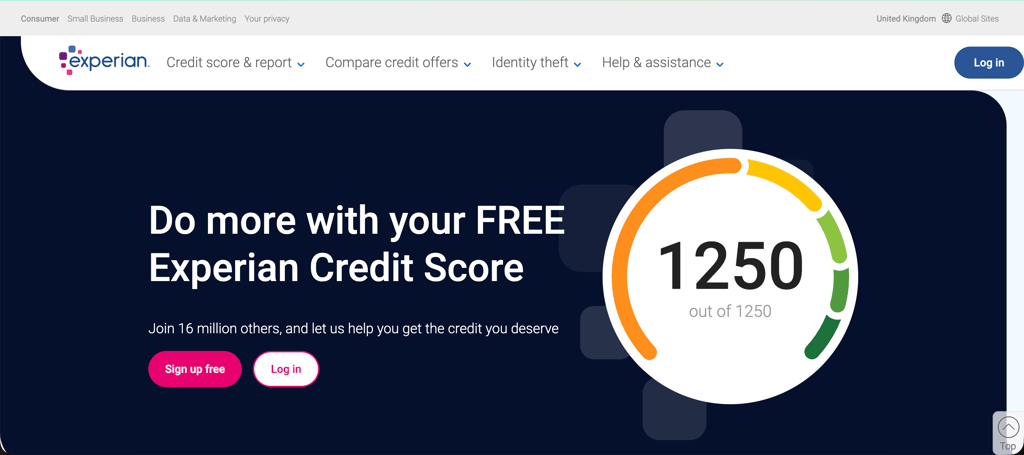
Experian’s main focus is on comprehensive credit and identity monitoring. As one of the three major US credit bureaus, Experian offers all three-bureau credit monitoring on its paid plans. On top of that, you get useful features like SSN monitoring, dark web surveillance, financial account alerts, change of address alerts, court record monitoring, and social network monitoring.
What’s unique about Experian is that it offers a free plan with credit monitoring, FICO Score tracking, a dark web surveillance report, and a personal privacy scan. And that’s something you rarely see with identity theft protection services. Of course, the free tier is rather limited compared to the paid plans. These add three-bureau monitoring, ongoing identity monitoring, CreditLock, fraud resolution support, and up to $1 million in identity theft insurance.
Another thing I like about Experian is that it includes CreditWorks and IdentityWorks services under one dashboard. These are two separate credit and identity protection tools, and you get access to both with one subscription. On the downside, I noticed that its dashboard is more complex than those of other competitors. Read more about this provider in our full Experian review.
About LifeLock

LifeLock was created by Gen Digital, the same company behind Norton. As an identity theft protection service, LifeLock focuses on financial and fraud monitoring. It tracks credit activity, financial accounts, dark web exposure, and personal information and sends alerts when it detects suspicious activity. And if your vulnerable information is compromised, you can get help from its experienced identity restoration specialists.
One of LifeLock’s main strengths is its extensive financial monitoring, particularly on its higher tiers. Depending on the plan, you can get three-bureau credit monitoring, investment and 401(k) alerts, home title and phone takeover monitoring, and unlimited alerts for credit, checking, and savings accounts. If you want to reduce your digital footprint, you can also use its automatic data broker removal.
The provider also offers one of the highest insurance limits I’ve ever seen, with up to $3 million in identity theft reimbursement. And because it’s part of the Norton family, you can bundle LifeLock with Norton 360 to add security features, such as antivirus, a VPN, and broader device and online protection. Read more about this provider in our in-depth LifeLock review.
Experian vs LifeLock: feature comparison
What Experian and LifeLock have in common is that they both offer identity, credit, and dark web monitoring. But they’re built around different strengths. Looking closer, you’ll see that Experian is more credit-focused, with strong FICO tools, three-bureau monitoring, and detailed credit reports. LifeLock puts more emphasis on financial activity, identity alerts, and recovery support. Here’s an overview of both of their key features:
| Feature | Experian | LifeLock |
| Identity monitoring | ✅ Yes | ✅ Yes |
| Credit monitoring | ✅ Yes, up to 3 bureaus | ✅ Yes, up to 3 bureaus |
| Dark web monitoring | ✅ Yes | ✅ Yes |
| SSN monitoring | ✅ Yes | ✅ Yes |
| Bank/account monitoring | ✅ Yes | ✅ Yes |
| Investment account monitoring | ❌ No | ✅ Yes |
| Identity restoration | ✅ Yes | ✅ Yes |
| Identity theft insurance | ✅ Yes, up to $1M identity theft insurance | ✅ Yes, up to $3M identity theft insurance |
| Data breach alerts | ✅ Yes | ✅ Yes |
| Credit lock | ✅ Yes | ✅ Yes |
| Stolen wallet protection | ✅ Yes | ✅ Yes |
| Address change monitoring | ✅ Yes | ✅ Yes |
| Court/public records monitoring | ✅ Yes | ✅ Yes |
| Social media monitoring | ✅ Yes | ✅ Yes |
| VPN | ❌ No | ✅ Yes (on its Norton 360 with LifeLock plans) |
| Antivirus | ❌ No | ✅ Yes (on its Norton 360 with LifeLock plans) |
| Password manager | ❌ No | ✅ Yes (on its Norton 360 with LifeLock plans) |
Experian puts credit monitoring at the center while also offering a solid range of identity protection tools. It monitors all three major credit bureaus and provides FICO Score tracking, credit reports, and alerts for changes to your credit files. Its identity monitoring also covers SSN, financial accounts, payday and non-credit loans, address changes, court records, and social media monitoring.
You also get recurring privacy scans to find your personal information on people-search sites, dark web surveillance, CreditLock for your Experian file, fraud resolution support, and up to $1 million in identity theft insurance.
In comparison, LifeLock pairs broad identity monitoring with financial activity alerts and identity restoration support. This includes dark web and breach monitoring, address change alerts, synthetic identity theft detection, and financial account activity monitoring. Depending on the plan, you can also get three-bureau monitoring, investment and 401(k) monitoring, bank account takeover alerts, home title and phone takeover monitoring, and unlimited financial account monitoring.
LifeLock also includes automatic data broker removal, helping reduce your exposure on people-search sites by submitting removal requests on your behalf. Its Total plan also provides up to $3 million in combined eligible reimbursement for stolen funds, personal expenses, and legal fees. This makes it one of the more generous coverage options in this comparison.
One more thing I like about LifeLock is that you can bundle it with Norton 360, which lets you add broader online security features, including antivirus protection, a VPN, and a password manager. These tools may not match the capabilities of dedicated premium services, but they provide useful protection alongside LifeLock’s identity monitoring. Meanwhile, Experian remains more focused on credit and identity protection.
To sum up, LifeLock is the better choice if you want broader monitoring of financial activity and identity-related risks. Experian is a better fit if your main priority is tracking your credit, FICO Scores, and credit reports alongside basic identity protection.
Experian vs LifeLock: pricing and plans
Pricing is important, but it’s also important what you get for that price. Therefore, I compared each provider’s available plans and its offerings. I found that both Experian and LifeLock offer multiple tiers with generous offerings. Their higher-priced plans add even broader credit monitoring, identity protection, financial alerts, and insurance coverage.
Experian plans
Experian offers a completely free plan – an unusual yet generous offering for an identity theft protection service. This plan can be a good starting point if you only want access to credit monitoring and basic credit-related tools. If that’s not enough, Premium and Family plans add more comprehensive identity and credit protection, including three-bureau monitoring and up to $1 million in identity theft insurance.
On the downside, Experian’s paid plans come with a high price tag. The cheapest Premium plan starts at $24.99/month, while the Family plan is from $34.99/month. It’s almost twice as much as LifeLock’s plans and doesn’t add more protection or useful features. Plus, although it offers a 7-day free trial, it’s not as much as LifeLock’s 30-day free trial and a 60-day money-back guarantee. Here’s an overview of Experian's plans and its offerings:
| Experian plan | Basic | Premium | Family |
| Starting price | Free | From $24.99/month | From $34.99/month |
| Credit bureaus monitored | ❌ No | ✅ Yes, 3 bureaus | ✅ Yes, 3 bureaus |
| Identity monitoring | ❌ No | ✅ Yes | ✅ Yes |
| Insurance | ❌ No | ✅ Yes, up to $1M identity theft insurance | ✅ Yes, up to $1M identity theft insurance |
| Key features | Credit monitoring, FICO Score tracking, dark web report, privacy scan | 3-bureau monitoring, identity monitoring, dark web alerts, privacy scans, CreditLock, $1M insurance, fraud resolution | Premium features + 1 additional adult + monitoring for up to 10 children |
LifeLock plans
Unlike Experian, LifeLock doesn’t offer a free option, but its plans are generally more affordable and offer generous coverage. Each plan expands the scope of credit and financial monitoring, with the higher tiers covering all 3 credit bureaus and increasing identity theft and scam reimbursement limits to up to $3 million. The Total plan also adds features such as an investment account, a home title, and phone takeover monitoring.
In terms of pricing, LifeLock is pretty affordable. Its Core plan starts at $10.42/month, the Advanced plan is from $16.67/month, while the Total is from $29.17/month – when billed annually. Plus, as I mentioned above, it offers a 30-day free trial and a 60-day money-back guarantee, which is great if you don’t want to commit before trying out the service.
There’s also an option to combine LifeLock with Norton 360, which adds even more cybersecurity features, including antivirus, a VPN, and protection against malware and other online threats. This can be worth considering if you want identity theft protection alongside broader device and online security. Here’s an overview of LifeLock's plans and its offerings:
| LifeLock plan | Core | Advanced | Total |
| Starting price | From $10.42/month (annual plan) | From $16.67/month (annual plan) | From $29.17/month (annual plan) |
| Credit bureaus monitored | ✅ Yes, 2 bureaus | ✅ Yes, 3 bureaus | ✅ Yes, 3 bureaus |
| Identity monitoring | ✅ Yes | ✅ Yes | ✅ Yes |
| Insurance | ✅ Yes, up to $1.05M identity theft insurance | ✅ Yes, up to $1.2M identity theft insurance | ✅ Yes, up to $3M identity theft insurance |
| Key features | 2-bureau monitoring, identity monitoring, dark web monitoring, data broker removal, 2-account alerts, $1.05M coverage | 3-bureau monitoring, 5-account alerts, scam support, $5K scam reimbursement, $1.2M coverage | 3-bureau monitoring, unlimited account alerts, investment/401(k) monitoring, home title and phone takeover monitoring, $10K scam reimbursement, $3M coverage |
LifeLock offers better value than Experian, thanks to its affordable plans, more generous features, and higher insurance limits. I do appreciate Experian’s free plan and simpler tier structure, though. In a nutshell, LifeLock’s higher tiers focus more heavily on financial and identity monitoring, while Experian places greater emphasis on its credit ecosystem.
Experian vs LifeLock: identity protection
Identity theft is a serious online threat that can cause severe damage. Stolen personal details can be used to open accounts, take over financial accounts, commit fraud, or create a synthetic identity. When it comes to protecting your identity, LifeLock offers stronger protection than Experian, with a more extensive approach to monitoring for potential identity theft. Experian also provides solid identity protection, but its offering is more closely connected to its credit monitoring tools. Here’s how the two providers compare:
| Experian | LifeLock | |
| Dark web monitoring | ✅ Yes | ✅ Yes |
| SSN monitoring | ✅ Yes | ✅ Yes |
| Address change monitoring | ✅ Yes | ✅ Yes |
| Court record monitoring | ✅ Yes | ✅ Yes |
| Social media monitoring | ✅ Yes | ✅ Yes |
| Synthetic identity monitoring | ❌ No | ✅ Yes |
| Data breach monitoring | ✅ Yes | ✅ Yes |
| Data broker removal | ✅ Yes, removal assistance | ✅ Yes, automatic removal |
| Identity theft recovery | ✅ Yes, fraud resolution | ✅ Yes, restoration specialists |
When comparing these services, I noticed that LifeLock offers broader identity monitoring and financial fraud protection. Its monitoring scope includes data breaches, suspicious financial activity, address changes, synthetic identity theft, new accounts, and other activity that could indicate someone is using your information without permission.
I particularly appreciate its synthetic identity theft detection because this type of fraud involves combining real and fabricated information to create a new identity. This type of fraud can be harder to spot as it doesn’t involve the direct takeover of an existing identity.
In comparison, Experian mainly monitors for potential changes involving your SSN, address, court records, social networks, and other personal information. One of its standout features is identity validation, which can help you verify whether a certain activity is actually associated with you. While its scope is not as broad as LifeLock’s, you get all the essential identity theft protection features.
Another difference is how the services handle exposed personal information. Experian offers privacy scans and removal assistance, while LifeLock can automatically submit data removal requests to participating data brokers. Although neither approach prevents your information from appearing online in the first place, both can help reduce your exposure.
All in all, LifeLock comes out ahead because it covers a wider range of identity-related risks, including synthetic identity theft. Experian is still a strong alternative if you want identity monitoring alongside its broader credit-focused tools, which I cover in the next section.
Experian vs LifeLock: credit monitoring
Credit monitoring tracks changes to your credit reports and alerts you to potentially fraudulent activity, such as new accounts or credit inquiries. Experian is stronger at helping you keep a close eye on your credit, while LifeLock takes a broader approach to identity protection. Here’s how the two providers compare:
| Experian | LifeLock | |
| Credit monitoring | ✅ Yes | ✅ Yes |
| Credit bureaus monitored | All 3 on Premium and Family plans | 2 on Core plan; all 3 on Advanced and Total plans |
| FICO Score tracking | ✅ Yes | ❌ No |
| Credit score/report updates | Daily Experian updates; paid plans add Equifax and TransUnion monitoring | Monthly on Core/Advanced; daily one-bureau on Total |
| Credit file lock | Experian CreditLock | TransUnion credit lock |
| Credit score simulator | ✅ Yes | ❌ No |

Credit monitoring is where Experian has a clear advantage, offering more tools to actively understand your credit. Even its free plan includes credit monitoring and FICO Score tracking, while paid plans expand monitoring to Equifax and TransUnion. I especially like its FICO Score Simulator – a useful feature that shows how potential financial changes could affect your score, not just simply showing you the current number.
Compared with Experian, LifeLock takes a more tiered approach. Its Core plan monitors two credit bureaus, while Advanced and Total cover all three. The main difference between the higher tiers is how often you can access credit information: Advanced includes an annual three-bureau report, while Total adds a daily one-bureau report and score, alongside an annual three-bureau report.
Another difference is the credit information they provide. Experian offers FICO Scores and credit reports, while LifeLock uses VantageScore 3.0 and emphasizes alerts for potentially fraudulent activity.
In conclusion, Experian offers stronger credit monitoring, with three-bureau monitoring on its paid plans, FICO Score tracking, and additional tools to help you understand your credit. LifeLock includes credit monitoring as part of a broader identity protection package rather than making it the main focus of its service.
Experian vs LifeLock: financial monitoring
Financial monitoring can help you spot suspicious activity involving your existing bank and other financial accounts, not only detect changes to your credit file. Both Experian and LifeLock offer this type of protection, but LifeLock can give you more extensive coverage. Here’s how they compare:
| Experian | LifeLock | |
| Bank account monitoring | ✅ Yes | ✅ Yes |
| Financial account takeover alerts | ✅ Yes | ✅ Yes |
| Investment account monitoring | ❌ No | ✅ Yes |
| Number of financial accounts monitored | Unspecified | Up to unlimited accounts |
| Bank account takeover alerts | ✅ Yes | ✅ Yes |
Experian’s paid plans include financial and bank account monitoring. This means that you’ll be immediately alerted if someone attempts to open or take over financial accounts in your name. Combined with its credit monitoring, it gives another layer of protection for your financial accounts.
LifeLock extends its financial monitoring, particularly on its high tiers. Core lets you monitor up to two financial accounts, while Advanced covers up to five. Total removes this limit and also adds investment and 401(k) account monitoring, giving you more visibility into different types of financial accounts.
LifeLock also includes additional protections against financial fraud on its Total plan, including bank account takeover, investment account, and 401(k) alerts. It can also monitor home title and phone takeover activity, although these features are more closely related to broader identity protection than financial account monitoring.
Another difference is the number of accounts you can monitor. Experian doesn’t clearly specify a limit for its financial account monitoring, while LifeLock explicitly increases the number of supported accounts with each tier, up to unlimited accounts.
Overall, Experian provides useful financial account monitoring alongside its credit tools, but LifeLock offers broader coverage, especially for users with multiple accounts or investments and retirement savings to protect.
Experian vs LifeLock: device and online protection
Identity protection focuses on your personal information, while device security helps protect the devices you use every day. LifeLock offers stronger device and online protection than Experian, especially when combined with Norton 360. Here’s how the two providers compare:
| Experian | LifeLock | |
| Antivirus | ❌ No | ✅ Yes, available with Norton 360 |
| VPN | ❌ No | ✅ Yes, available with Norton 360 |
| Password manager | ❌ No | ✅ Yes, available with Norton 360 |
| Device security | ❌ No | ✅ Yes, available with Norton 360 |
| Online threat protection | ❌ No | ✅ Yes, available with Norton 360 |
| Ad/tracker blocking | ❌ No | ✅ Yes, available with Norton 360 |
Experian doesn’t offer a dedicated suite of security tools. Its privacy features can help identify personal information exposed online, but the service primarily focuses on identity and credit monitoring – not protecting your device from malware or unsafe websites. So, if you want to strengthen your security, you’ll need to purchase these services separately.
In comparison, LifeLock can be paired with Norton 360 to add a broader layer of online security. Depending on the bundle, you can get antivirus protection, a VPN, a password manager, and device security alongside LifeLock’s identity monitoring. I like how Norton 360 complements LifeLock’s identity protection, adding useful security tools to protect your devices and accounts.
For device and online protection, LifeLock offers considerably more functionality, including access to a wider range of security tools. Experian is better suited for users looking for a bare identity and credit monitoring without needing a broader cybersecurity suite.
Experian vs LifeLock: customer support
Having access to expert customer support is crucial when dealing with identity theft. LifeLock has an advantage in this category, offering more accessible support for users who need help dealing with suspicious activity. Here’s how Experian and LifeLock compare in terms of customer support:
| Support channel | Experian | LifeLock |
| 24/7 live chat | ✅ Yes | ✅ Yes |
| Email support | ✅ Yes | ✅ Yes |
| Phone support | ✅ Yes, available during office hours | ✅ Yes, available 24/7 |
| Help center | ✅ Yes | ✅ Yes |
| FAQ | ✅ Yes | ✅ Yes |
| Identity theft recovery support | ✅ Yes | ✅ Yes |
Both Experian and LifeLock offer several support options, but LifeLock has an advantage with its 24/7 phone support. Experian offers 24/7 access to its virtual assistant, while phone support is available Monday through Friday from 8 AM to 8 PM CT and on weekends from 8 AM to 6 PM CT. Additionally, you can make use of its dedicated resources for identity theft assistance, including a phone line and online guidance.
In comparison, LifeLock provides 24/7 customer phone support with trained specialists, while its higher-tier plans include priority phone support. You can also rely on its 24/7 virtual assistance for help with suspicious emails or websites, or try its member portal for self-service options.
All in all, LifeLock wins this category for its 24/7 phone support and dedicated identity protection assistance, although Experian still offers a solid range of support options.
How we tested these identity theft protection services
When writing this comparison, our research team and I evaluated each provider’s features, protection, ease of use, and pricing based on our strict identity theft protection testing methodology. We also analyzed official provider information alongside industry research, expert reviews, and customer feedback concerning the product’s pros and cons. Here are the key factors we considered:
- Identity and personal data monitoring (25%). First and foremost, we compared how extensively each service monitors personal information for signs of identity theft. This included all sorts of identity monitoring features: dark web monitoring, SSN, and personal data alerts, data breach notifications, and address change alerts.
- Credit and financial protection (20%). We then addressed the credit and financial safeguards, including credit bureau monitoring, credit reports and scores, account alerts, credit locks, and monitoring for suspicious financial activity.
- Identity theft recovery and insurance (20%). Considering the available support in case of identity theft is also important. We checked the included identity restoration services, fraud resolution assistance, stolen wallet protection, identity theft insurance, and reimbursement for eligible losses and expenses.
- Additional security features (15%). We checked the extra tools each provider offers beyond core identity and credit monitoring. These included data broker removal, family protection, scam protection, and device security.
- Ease of use (10%). I personally tested each solution, from initial setup to actual use, including account management, dashboard navigation, access to monitoring, and the clarity and usefulness of alerts.
- Pricing and value (10%). Finally, we evaluated the value of each service – the price of its plans and the features and protection it offered. We also paid attention to free options, free trials, money-back guarantees, plan limitations, and whether higher tiers provide additional value.




Our in-house experts test identity theft protection services using real-world scenarios and consistent criteria. We assess monitoring, alerts, recovery support, and data handling to help readers compare providers confidently. Learn more about our testing process.
Experian vs LifeLock: which one should you choose?
After comparing Experian vs LifeLock, I can confidently say that both are capable identity theft protection services. The main difference between them is that they offer different types of protection and focus on different priorities.
Experian is a strong option if you mainly need credit monitoring. Its paid plans include three-bureau monitoring, FICO Score tracking, credit reports, and identity protection tools. I’d consider it if you want to keep a close eye on your credit while also getting protection against common forms of identity theft.
LifeLock is better suited if you need broader identity and financial protection. It offers more extensive monitoring for financial activity and identity-related risks, stronger restoration and reimbursement benefits, and additional security tools if you add Norton 360.
Personally, I’d choose LifeLock for identity protection combined with broader financial monitoring and recovery support. However, Experian can also be a good option if credit is at the center of your needs.
FAQ
Is LifeLock better than Experian for identity theft protection?
Yes, LifeLock is better than Experian for identity theft protection if you prioritize comprehensive monitoring, identity restoration, and higher insurance coverage. However, Experian can be a better choice if credit monitoring and access to FICO scores are your main priorities.
Is Experian cheaper than LifeLock?
No, Experian’s Premium plan costs $24.99/month, while LifeLock’s individual plans start at $10.42/month when billed annually. Though LifeLock’s higher-tier plans can cost more than Experian's.
Does Experian offer identity theft insurance?
Yes, Experian’s IdentityWorks Premium plan includes up to $1 million in identity theft insurance, which can cover eligible expenses such as legal fees, lost wages, and identity restoration costs.
Does LifeLock offer credit monitoring?
Yes, LifeLock offers credit monitoring on all three of its current plans, with Core monitoring two credit bureaus and Advanced and Total providing three-bureau monitoring.
Does LifeLock monitor all three credit bureaus?
Yes, but it depends on the plan. LifeLock’s higher-tier plans include three-bureau credit monitoring, while its entry-level plan monitors two.
Can I use Experian and LifeLock together?
Yes, you can use Experian and LifeLock together, although their features overlap in areas such as credit and identity monitoring. Using both may provide broader coverage, but it also means paying for overlapping services.