Zander identity theft vs LifeLock: which protection service is better?
Our in-house experts test identity theft protection services themselves, using real-world scenarios and established testing methods. We look at how well each service monitors personal information, how quickly and clearly it sends alerts, what recovery support it offers, and how it handles customer data.
We assess every provider using the same criteria and explain our testing process clearly, so readers can compare services and make a more informed choice.
Learn more
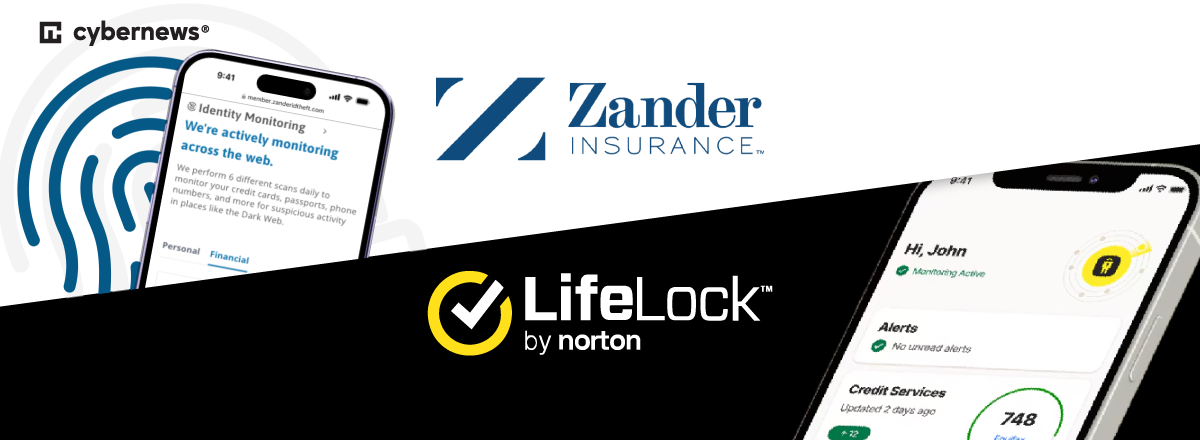
If you have to choose between Zander identity theft vs LifeLock, it comes down to what kind of protection you actually need. Some people want affordable identity restoration support in case anything goes wrong, while others want aggressive credit monitoring, real-time alerts, and broader digital security coverage.
Zander markets itself as a cost-effective, restoration-first identity theft protection service. It is very focused on hands-on recovery support and reimbursement support after fraud occurs. However, LifeLock (by Norton) focuses more on layered monitoring, such as credit bureau tracking, dark web surveillance, and cybersecurity integration, as well as restoration services.
To help you make a clear and confident decision, I, together with the Cybernews research team, reviewed official plan details, monitoring disclosures, insurance policies, and recurring user feedback to compare Zander vs Norton LifeLock side by side.
As of October 2026, I recommend LifeLock because it offers broader monitoring coverage, deeper integration with credit bureaus, and a more comprehensive protection ecosystem than Zander.
Zander identity theft vs LifeLock
To make your decision easier, here’s a quick, side-by-side comparison table to help you see what you’re actually paying for and what you’re getting.
| Norton Identity Theft Protection | Zander | |
| ⭐ Rating: | ||
| 🥇 Overall rank: | #3 out of #20 | #18 out of #20 |
| 💵 Price: | From $10.42/month | From $6.75/month |
| ✂️ Free version: | Yes, 30-day free trial | No |
| 🖥️ Platforms: | Web, iOS, Android | Web, iOS, Android |
| 💰 Credit monitoring: | Yes (up to 3 bureaus) | No |
| 🔒 Insurance: | Yes, up to $3M (Total plan) | Yes, up to $1M/adult |
| 🔥 Coupons: | Norton LifeLock coupon 16% OFF! | Zander now starting at $6.75/month |
Overall, I’d say Zander’s identity theft protection is a simpler, restoration-first service designed to help you recover from identity theft after it occurs. However, LifeLock is the more developed ecosystem.

About Zander
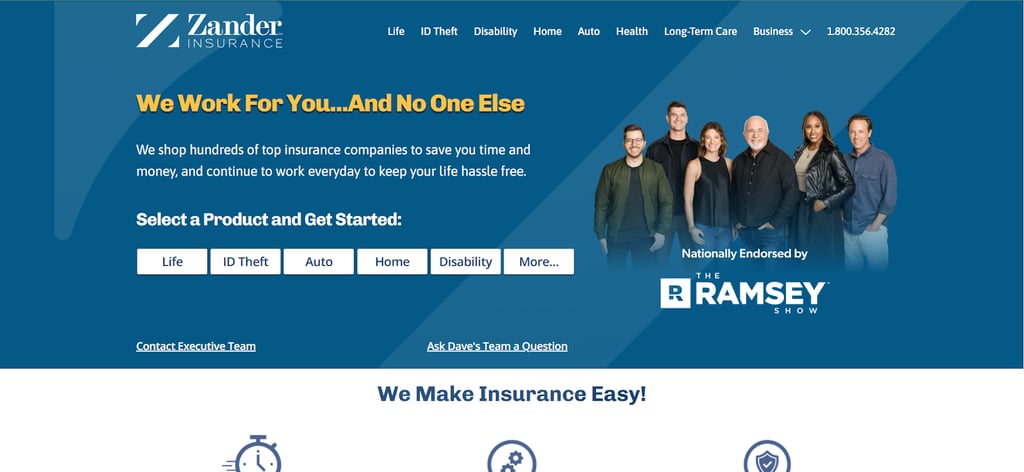
Zander is an affordable, restoration-first identity theft protection service built around recovery help and insurance-style reimbursement. Zander says it’s the only identity theft protection company endorsed by Dave Ramsey, which is why you’ll see searches such as “identity theft protection Dave Ramsey” and “Dave Ramsey identity protection” whenever comparisons are made.
It offers up to $1M for individuals and up to $2M for families to cover stolen funds and expenses. However, its basic monitoring is lighter than you’d get with an identity theft protection service. This is one of the major differences between LifeLock vs Zander, especially if you want in-depth credit monitoring.
About LifeLock
LifeLock is a monitoring-heavy service thanks to Norton’s comprehensive security package (brand popularity, app maturity, and optional Norton 360 extra). The Norton ecosystem is one of the main reasons most people choose LifeLock.
The new LifeLock standalone lineup is structured into three tiers: Core, Advanced, and Total. Core offers essential identity protection with 2-bureau credit monitoring and key security alerts. Advanced adds 3-bureau credit monitoring and provides extra scam support tools, including AI-powered assistance and up to $5,000 in scam reimbursement. Total provides even more extensive protection, featuring enhanced scam support and up to $10,000 in reimbursement coverage.
Across all plans, LifeLock also includes automated data broker removal, which helps identify exposed personal data on people-search and data broker sites and initiates removal requests to reduce public exposure.
Zander identity theft vs LifeLock: features compared
To understand which product offers more value, I compared their key features with the Cybernews research team.
| Zander | LifeLock | Why it matters | |
| Credit monitoring | Not the core focus; credit monitoring options are limited | Core: 2-bureau, Advanced and Total: 3-bureau | Credit monitoring helps you catch new accounts, hard inquiries, and suspicious changes to your credit file early |
| Identity restoration | Strong restoration-first model and guided recovery support | Restoration support included | Restoration determines how fast you can fix the damage |
| Identity theft insurance | Insurance-style reimbursement | Higher-tier plans offer larger reimbursement/coverage limits; varies by plan level | Insurance/reimbursement can reduce out-of-pocket losses and cover certain expenses tied to recovery |
| Dark web monitoring | Offered as part of baseline monitoring | Offered, often paired with broader monitoring signals across the Norton ecosystem | Dark web alerts can warn you if credentials are exposed before fraud escalates |
| Bank account alerts | More limited overall | Included on many plans; breadth depends on tier and connected accounts | Bank alerts can quickly flag suspicious transactions or account activity |
| Social security alerts | Included as part of identity monitoring | Included as part of identity monitoring | SSN alerts help detect misuse tied to loans, benefits, or identity records |
| Mobile app | Simpler app experience and fewer tools | More mature app ecosystem and tooling via Norton integration | A good app makes it easier to review alerts, manage settings, and act fast |
| Family coverage | Family plans available | Family plans available | Family coverage matters if you also want to protect your kids |
What this means
- LifeLock provides broader monitoring. LifeLock’s identity theft protection suite includes credit monitoring (with higher-tier multi-bureau monitoring) and more robust alerts for financial activity and digital signals to improve proactive identification.
- Zander focuses more on restoration services. Zander’s identity theft system focuses heavily on recovery and restoration, including special-case support and insurance reimbursement at a better price point.
LifeLock focuses on proactive monitoring and credit insights through a larger security ecosystem, while Zander focuses on simple identity monitoring and powerful restoration/insurance for users who care more about recovering from fraud.
Similarities between LifeLock and Zander
Since we’re comparing Zander’s identity theft protection to LifeLock’s, it’s important to highlight their similarities as well. Both services are subscription-based identity protection services designed to help you monitor for identity fraud, restore your identity if it’s compromised, and provide reimbursement support.
Despite their different outlook, they both offer identity theft insurance to help cover some of the financial losses associated with identity theft, and they provide access to specialists who can advise you on the recovery process. You also get access to social security number monitoring and dark web monitoring to alert you if your personal information is being sold in illicit online marketplaces.
These shared features mean that both services cover the basics of identity protection, such as signal detection, expert assistance in the event of a data breach, and financial support mechanisms. While the depth of those protections differs by provider and plan tier, the basic protections are available in both.
Differences between Zander and LifeLock
The major differences come down to how much monitoring you want and if it’s worth the cost. LifeLock is the more well-rounded option overall, because it offers credit monitoring across its plans. However, Zander takes a more straightforward approach and doesn’t offer credit monitoring.
On the credit side, LifeLock’s coverage increases by tiers. It includes credit monitoring at all levels, and expands to three-bureau credit monitoring on the high end, offering more comprehensive credit and financial protections, and adding more functions as you move up the plans. Zander’s identity protection is more restoration-driven and budget-oriented. LifeLock widens the gap in ecosystem integration, thanks to the larger suite of offerings from Norton.
It’s important to distinguish between monitoring alerts and proactive credit-freezing tools, as they serve different purposes. Monitoring alerts inform you when they detect something suspicious, so you can respond more quickly. Credit-freezing/locking tools make it more difficult for someone to open new credit in your name in the first place. LifeLock offers credit lock/loan lock-style controls as part of its credit-focused total protection package.
Monitoring capabilities
Here’s what I found out about the monitoring capabilities of both protection services.
- Dark web monitoring. Both LifeLock and Zander offer dark web monitoring, though the depth and exact data types monitored can vary by plan tier.
- Financial account monitoring. LifeLock offers financial monitoring across its plans, while Zander offers it in a more limited way. Broader financial monitoring in LifeLock is tied to higher-tier coverage.
- Payday loan monitoring. LifeLock includes payday loan-related alerts in its monitoring stack, while Zander doesn’t emphasize payday loan monitoring as a standard feature.
- Court records. LifeLock includes monitoring designed to detect certain types of identity misuse tied to criminal fraud, while Zander’s monitoring is more focused on identity signals and recovery support.
- Address change monitoring. Both services include address change monitoring, which helps spot suspicious mail-forwarding activity that can signal an attempted takeover or fraud.
Monitoring features are valuable because they can shorten your response time, but they don’t automatically prevent fraud. For true prevention, you still need proactive steps such as locking/freezing your credit, securing your accounts, and acting quickly when an alert appears.
Credit protection
LifeLock offers credit monitoring across all plans. Core includes 2-bureau monitoring, while Advanced and Total include 3-bureau monitoring, along with broader scam support and reimbursement coverage. However, Zander doesn't market itself as a credit monitoring service.
It’s also important to explain the difference between credit monitoring, credit freeze, and credit lock. Credit monitoring informs you when changes occur to your credit file. A credit freeze limits lenders’ access to your credit file, so it’s much more difficult to open new accounts in your name fraudulently. A credit lock is similar to a freeze, but it’s sometimes implemented through an app. LifeLock has credit lock-like controls in its ecosystem, while Zander doesn’t offer proprietary credit lock tools.
There are also free credit monitoring services available directly from the credit bureaus and many banks. These services are free and can provide score updates or alerts, as well as the ability to freeze your credit. However, free tools are usually divided.
Paid services such as LifeLock bundle credit and identity monitoring (in tiers), restoration specialists, and reimbursement protection into a single subscription. If you decide to go with Zander, you’ll need to pair it with separate free credit-tracking tools.
Which identity theft protection service is more secure?
To evaluate security objectively in this Zander identity theft vs LifeLock comparison, I focused on public disclosures, account protection controls, and ecosystem strength. Here’s what I considered.
- Data encryption disclosures. LifeLock, as part of the Norton/Gen Digital ecosystem, provides better security and privacy documentation to end users, covering technical and organizational safeguarding measures. Zander has privacy policies, but its public-facing disclosures are less detailed about specific encryption standards or controls implemented to keep accounts safe.
- App security. LifeLock is part of Norton’s broader cybersecurity system, which means it has improved backend maturity. By comparison, Zander offers a simpler app experience with fewer publicly documented details about the security layer.
- Multi-factor authentication (MFA). Norton accounts support multi-factor authentication, which provides an additional layer of protection for the login. Zander doesn’t mention MFA capabilities.
- Brand track record. LifeLock benefits from Norton’s cybersecurity reputation, but Zander is more of an insurance-focused provider.
All things considered, LifeLock demonstrates stronger ecosystem-level security maturity.
Pricing and cancellation
While both services use subscription models with monthly and annual billing options, their long-term costs, renewal increases, and cancellation terms differ.
| Zander | LifeLock | Notes | |
| Entry (individual) | $6.25/month | $10.42/month | Zander tends to undercut on entry cost; LifeLock includes credit monitoring by tier |
| Premium (individual) | $11.99/month | $16.67/month | LifeLock tiers scale faster with added credit/monitoring features |
| Family coverage | Offered | Offered | Zander provides better value for larger households |
- Monthly vs annual pricing. Annual billing usually reduces the effective monthly cost for both providers, cutting costs substantially compared to month-to-month billing.
- Renewal rate differences. LifeLock is widely noted for higher renewal pricing after the first year
- Cancellation transparency and refund basics. Zander’s annual subscriptions are refundable on a prorated basis (you can cancel mid-term and receive a refund for any unused months). LifeLock’s refund policy offers a 60-day money-back window.
Our methodology
This Zander identity theft vs LifeLock comparison is based strictly on research and structured evaluation. Our evaluation followed a weighted framework that reflects what matters most in identity protection.
- Monitoring coverage depth (25%). We assessed how broadly and deeply each service monitors identity signals, including dark web exposure, financial activity alerts, address changes, and (where applicable) credit bureau coverage by tier.
- Identity restoration services (20%). We examined how recovery support works in practice, including access to specialists, case management structure, and reimbursement positioning.
- Credit protection features (15%). We reviewed the availability of credit bureau monitoring, credit score access, and credit lock/freezing capabilities, where applicable.
- Security and data protection transparency (15%). We evaluated public disclosures about encryption practices, multi-factor authentication support, app security maturity, and ecosystem-level security signaling.
- Pricing and long-term value (15%). We compared entry pricing, renewal differences, family identity protection costs, and refund/cancellation clarity to determine sustainable value beyond introductory promotions.
- User sentiment consistency (10%). We analyzed patterns in verified user feedback, common complaints, and overall brand trust signals to identify recurring strengths or weaknesses.
Zander identity theft vs LifeLock: which one to choose?
If you’re budget-focused and want restoration-first coverage, choose Zander. It is the simpler, lower-cost path if you’re comfortable combining separate/free credit tools for credit visibility.
If you want broader monitoring coverage and deeper security, choose LifeLock. The monitoring depth and Norton ecosystem integration justify the higher price and make it a better fit for proactive detection.
Buyer’s checklist. Before choosing, ask yourself the following practical questions:
- How much credit visibility do I actually need?
- Do I want integrated cybersecurity tools within the same ecosystem?
- What will this cost me after year one?
- Am I protecting just myself or my whole household?
Other articles you might like
LifeLock review: features, pricing, and real-world protection
Best identity theft protection services: top picks compared for 2026
How to protect against identity theft: practical tips to prevent fraud
FAQ
Is Zander cheaper than LifeLock?
Yes. Zander has a lower starting monthly price and a simpler plan structure. LifeLock’s higher tiers, especially those with three-bureau monitoring, cost more, and renewal rates are often higher after the first year.
Does LifeLock monitor all three credit bureaus?
LifeLock monitors all three credit bureaus on its top-tier plan. Lower tiers offer one-bureau credit monitoring, while the premium plan expands to three-bureau monitoring (Experian, Equifax, and TransUnion).
What does identity theft insurance actually cover?
Identity theft insurance covers certain out-of-pocket expenses related to identity recovery, such as reimbursement for stolen funds, legal fees, lost wages, and administrative costs.
Can Zander prevent identity theft?
No service can fully prevent identity theft. Zander primarily focuses on monitoring key identity signals and providing robust remediation support if fraud occurs.
Which is better for family identity protection: Zander or LifeLock?
Zander is more cost-effective for larger families, while LifeLock offers broader monitoring depth depending on the selected plan.