Similarweb vs Semrush: which platform delivers better marketing insights?
Being behind major reports like The Mother of All Breaches and RockYou2024, our in-house cybersecurity experts and journalists provide unbiased, real-world testing and in-depth analysis.
We maintain complete transparency by openly sharing our testing methodologies with our audience.
Learn more

When people talk about competitor analysis and online performance tracking, two names regularly pop up: Similarweb and Semrush. These tools have been the go-to choices for a while now, and for good reason. Their market intelligence and SEO capabilities have made them indispensable for anyone in the marketing industry.
But how do you choose which one belongs in your marketing stack?
To answer that and find out which tool takes the crown in a Similarweb vs Semrush showdown, I put the two platforms side by side. But before I could do that, I first had to team up with the Cybernews research team to conduct an in-depth review of both tools. Below is a breakdown of their pros, cons, pricing, accuracy, beginner-friendliness, SEO performance, and more.
Semrush vs Similarweb overview
Let’s first take a quick peek at the basics before I compare these tools across the most crucial marketing aspects:
| Tool | Similarweb | Semrush |
| Rating | ||
| Market segments | Digital marketers, market intelligence teams, and deep traffic analysis needs | SEO professionals, content marketers, and PPC specialists in need of keyword tools |
| Key features | Enterprise-grade traffic intelligence, robust competitor benchmarking, and strong website analytics | SEO tools and audits, robust keyword research features, and traffic and market analysis |
| Free trial? | Yes ✅ (7 days) | Yes ✅ (7 days) |
| Price | From $129/month when billed annually ($199/month otherwise) | From $139.50/month when billed annually ($199/month otherwise) |

Semrush pros and cons
Similarweb pros and cons
Our methodology
For this Similarweb vs Semrush comparison, the team and I relied on a structured evaluation approach based on provider information, expert online sources, and verified user reviews. Here’s how we weighted each aspect:
- Data accuracy (25%). First, we looked at each platform’s reported metrics, paying close attention to reliability and consistency.
- Features and insights (25%). Then, we investigated what each tool offers in terms of SEO, keyword, referral, and engagement analysis tools, as well as the level of insights it provides.
- Ease of use (20%). Next up, we took a deep dive into user interfaces to gauge how accessible and beginner-friendly these tools really are.
- Pricing and value (15%). To determine the tools’ value, we also reviewed the number and quality of features available with each plan.
- Customer feedback (15%). Lastly, we examined verified reviews across multiple platforms to assess how users felt about each platform.
Semrush vs Similarweb: plans and pricing
When it comes to pricing, both platforms offer a wide range of plans to meet different needs.
Semrush One kicks things off with the Starter plan, which will set you back $165.17 every month. Its Pro+ plan ups the ante with keyword cannibalization analysis, multi-location tracking, and historical SEO data for $248.17/month. Last up, we have the Advanced plan, which introduces API data integration and share-of-voice metrics at $455.67/month.
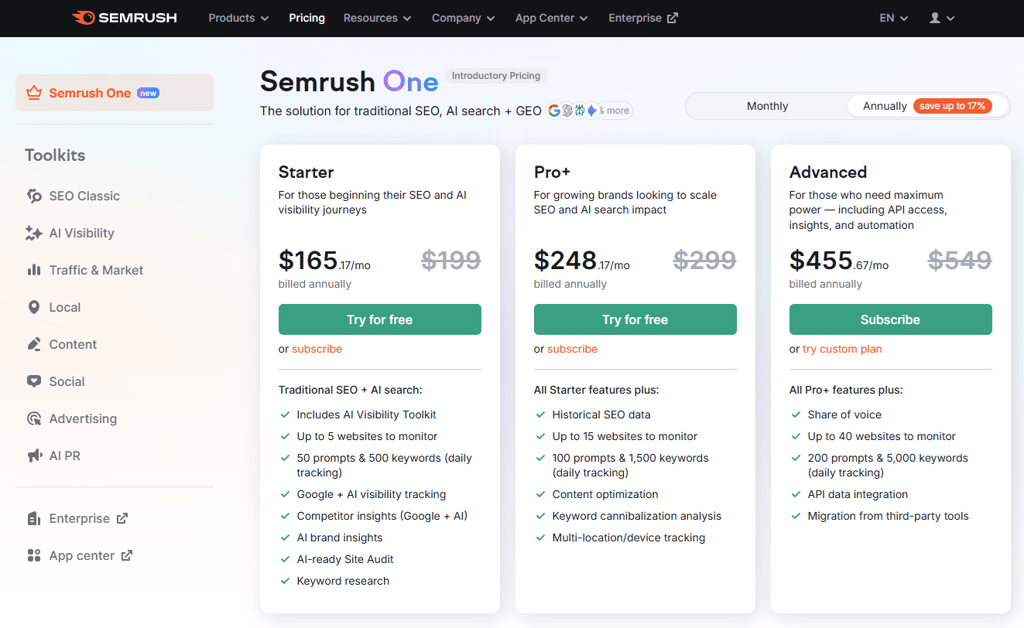
You can try any of these plans for free, as there is a 7-day free trial. Those older plans, now called SEO Classic, are also available. They’re more affordable, with the Pro plan starting at $117.33/month, but they also exclude valuable AI search-focused features.
The same 7-day free trial is also available on the Similarweb side of things, and there are even a few tools you can access entirely free of charge. That includes a website traffic checker and a keyword generator, among others.
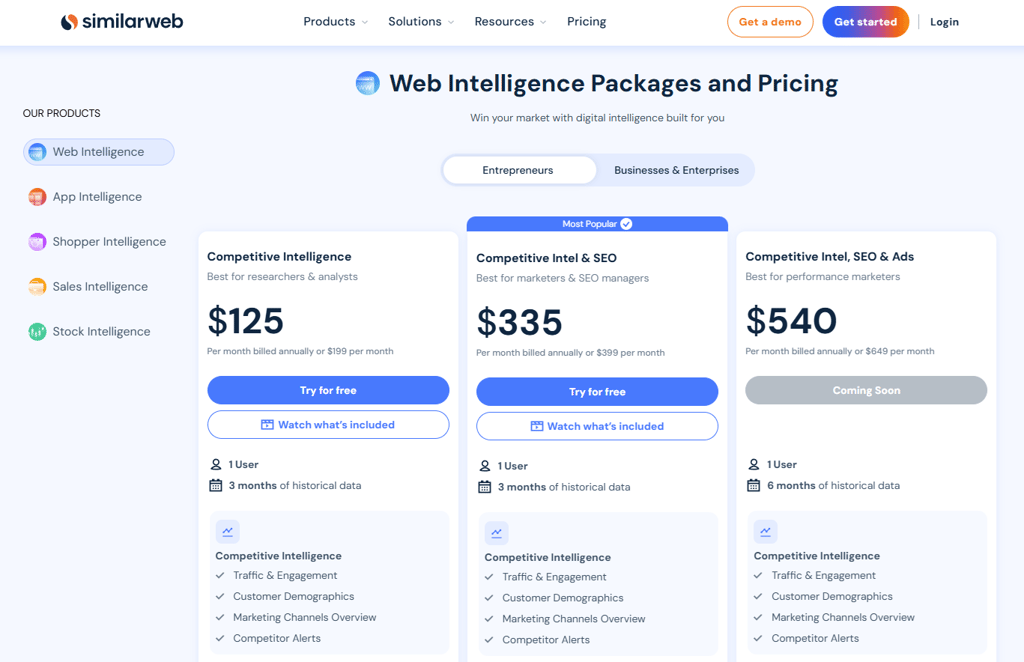
As far as pricing goes, the most comparable plans to Semrush are within the Web Intelligence segment, where the entry-level Competitive Intelligence plan starts at $125/month. That said, if you’re an SEO manager, you’ll probably have to shell out more money for the mid-range Competitive Intel & SEO plan at $335/month.
Semrush vs Similarweb: data analysis
Before I compare the accuracy and depth of Semrush and Similarweb’s data, I must first note that these two platforms rely on different collection methods.
Semrush uses both its own data and that of third parties, but it doesn’t tell you which ones. It primarily relies on indexed pages, which it uses to focus on organic traffic. Moreover, it also refreshes keyword data daily, which is certainly an advantage.
However, Semrush also has one major drawback. It can be wildly off when you’re dealing with low-traffic websites.
On the other hand, searches like “Is Similarweb accurate?” and “How accurate is Similarweb?” were quite common just a year or so ago. However, 2024’s update to the service has fixed most of Similarweb’s data accuracy issues, with data being updated each month.
And even if it doesn’t fare much better than Semrush on websites with fewer than 5,000 visits, Similarweb at least discloses its sources. They include public data, estimates, contributor networks, and partnerships with global companies that share their data with Similarweb.
Similarweb vs Semrush: SEO and keyword research
If we’re talking optimization, one of these tools is undoubtedly the better choice.
Similarweb entered the market as a provider of high-level traffic insights. And while market intelligence remains at the forefront of its services, the platform has also added additional features, such as paid search tracking and eCommerce analytics over time.
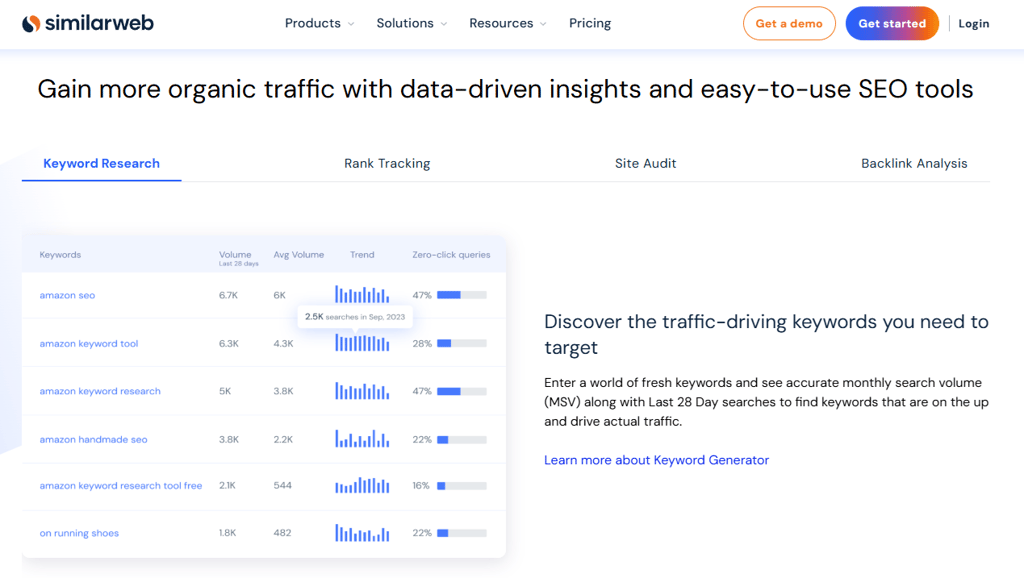
Its database also contains about 5 billion keywords. The primary focus here is on competitive context, as Similarweb lets you quickly see which terms drive the most traffic.
Semrush, on the other hand, claims its database has a whopping 26+ billion keywords. Enter any of these, and you’ll get volume, difficulty to rank, search intent, and countless long-tail variations of the word. Meanwhile, the various filters for country and language effectively narrow down these long lists.
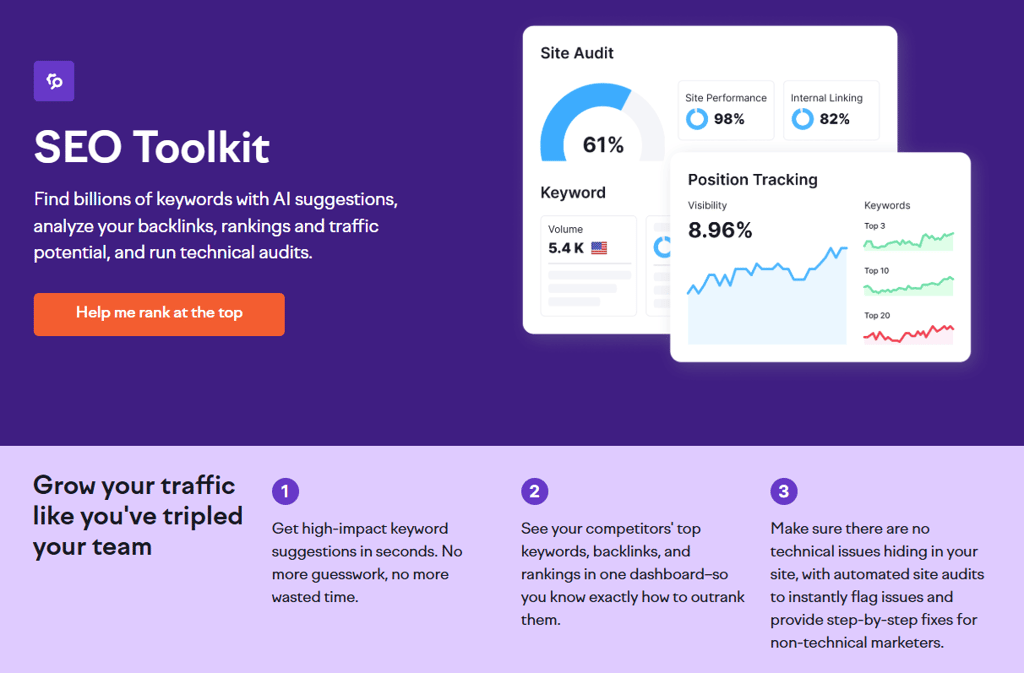
And this makes perfect sense, since Semrush actually began its journey as a dedicated SEO toolkit. Since then, it has grown into a fully-fledged digital marketing suite. Today, it offers an all-in-one platform for keyword research, ranking, writing, and promoting.

Similarweb vs Semrush: competitor analysis
Learning more about your rivals is crucial in marketing, and these two tools approach the job a bit differently.
Similarweb puts website traffic behavior front and center. When you give it a competitor’s website or app, it’ll return with estimated website visits, average duration on site, pages per visit, devices being used, terms being searched that led to your rival’s site, PPC ads, and detailed audience demographics.
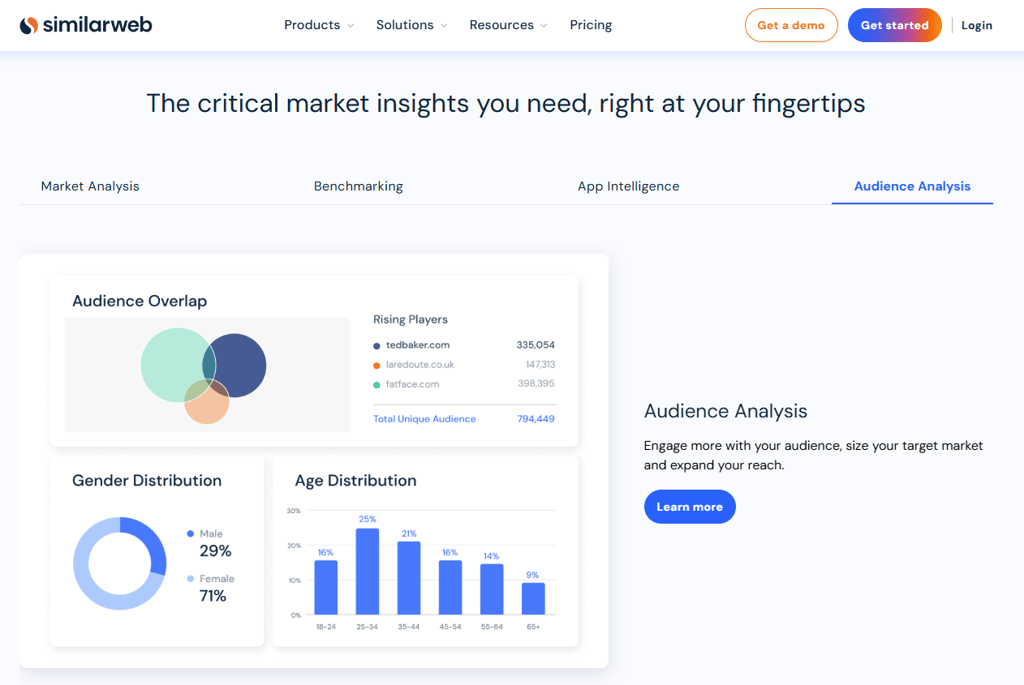
If you’re looking into specific industries, Similarweb also offers data on both top competitors and up-and-coming rivals, as well as popular topics, recent market trends, and more.
Conversely, Semrush leans more toward search-based competitor research. Its domain comparison reports include the rival’s paid vs organic traffic, the keywords they’re ranking for, the kind of ads they’re running, and their overall authority score.
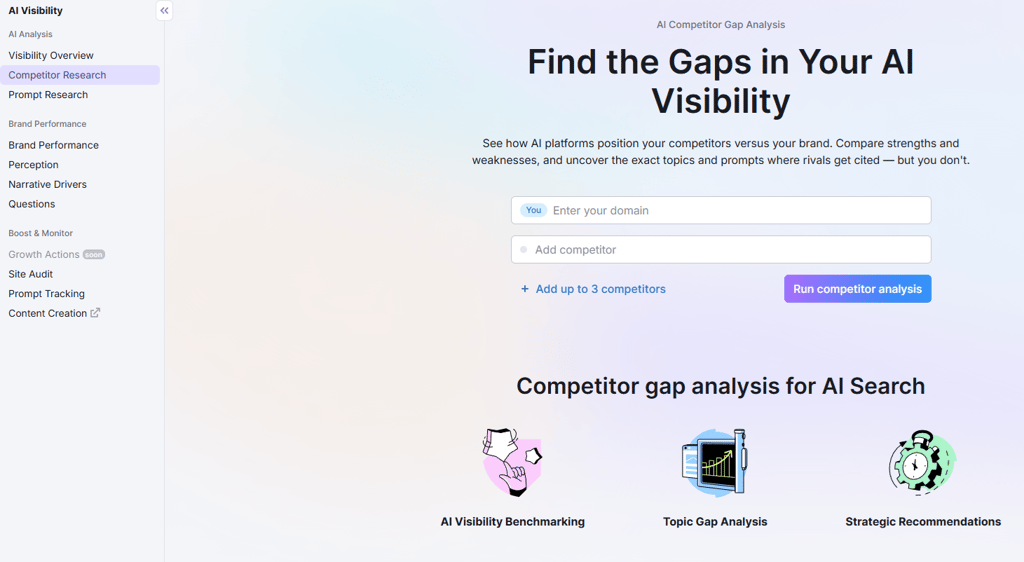
You can also learn about your biggest rivals through Semrush’s industry overviews and top player lookups. Meanwhile, its Keyword Gap tool lets you compare your website to your competitors and see what you might have missed.
Semrush vs Similarweb: content marketing
In addition to market intelligence and keyword research, you’ll also want to rely on content marketing to connect with your audience, and only one of these tools provides a way to do so.
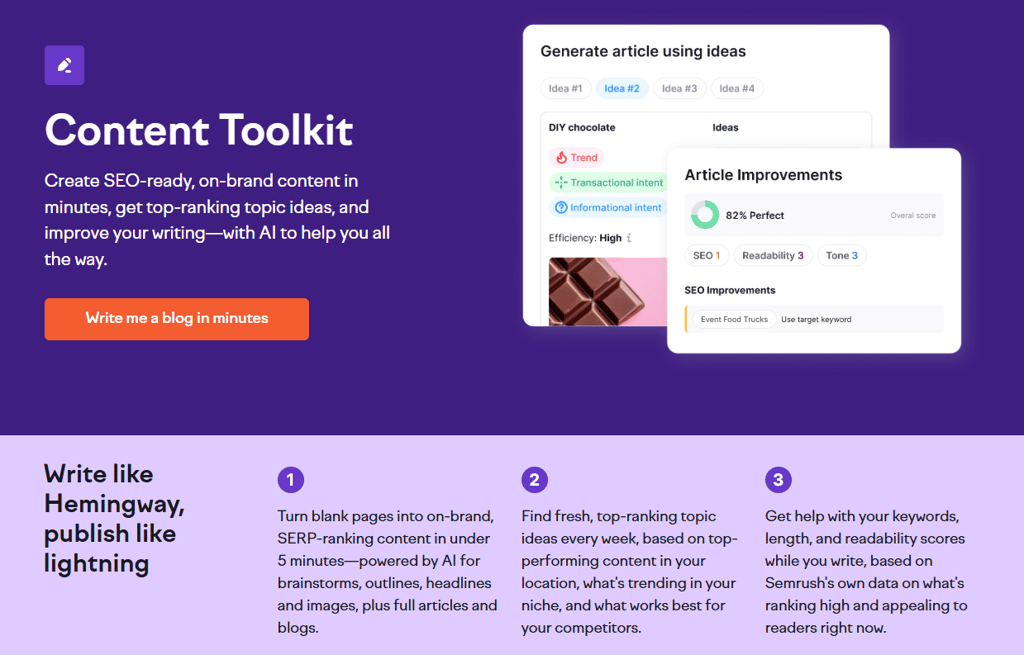
Semrush does remarkably well in the content automation department. Its Content Toolkit does cost an extra $60/month, but it comes with a Topic Finder with weekly and country-specific topic ideas and an SEO Brief Generator that drastically simplifies the process.
You also get access to an AI-powered Article Generator, which will speed things up.
Unfortunately for the other camp, no such functionality is available within Similarweb. However, it does have a few other tricks up its sleeve.
Similarweb’s Keywords by Industry tool allows you to filter out the most popular search terms in your niche, which can put you on the right track in terms of content generation. Meanwhile, Keyword Seasonality lets you see what’s trending at the moment, so you can plan your articles.
Similarweb vs Semrush: ease of use
Shift the conversation to dashboards and navigation, and you’ll find that both platforms excel in this area. That said, one of them is more beginner-friendly, whereas the other is just generally better after you get used to it.
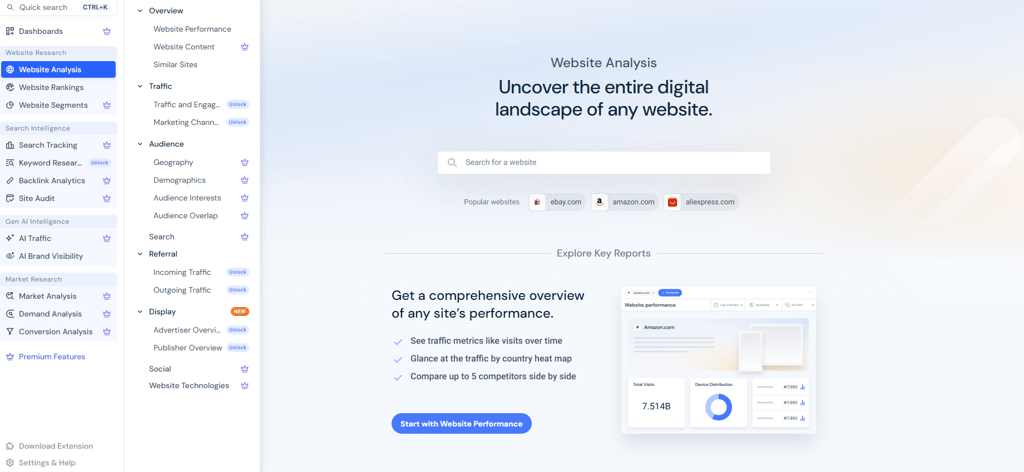
Similarweb comes with a spotless interface that’s really easy to navigate. Finding your way around can take some time, though, as reports are often a bit deeper inside cascading menus. But once you get the hang of it, everything flows smoothly.
Semrush’s interface, on the other hand, is just as easy to use as it was a few years ago. In fact, it hasn’t had a significant redesign for a while now. And to be honest, it doesn’t need one. It puts everything you need into a left-hand sidebar, where you can click on SEO, and then choose any of the related items like the Keyword Magic Tool in the submenu.
Semrush vs Similarweb: user reviews
As the final piece of the Semrush or Similarweb puzzle, I took a peek at feedback across a few review platforms.
Semrush’s users seem to appreciate its robust SEO toolkit and keyword features the most. However, there have been more than a few complaints here. Some call it “a frustrating experience”, while others note the provider’s customer service is slow.
On the other hand, Similarweb’s reviewers highlight the platform’s accurate metrics and enterprise-grade insights as its strongest points. What they don’t like, however, is the fact that most of Similarweb’s plans are available only with an annual subscription.
Semrush vs Similarweb: final verdict
Based on the data the Cybernews crew and I compiled for this research, I firmly believe that both platforms deserve a spot in your marketing stack. That said, they serve vastly different audiences.
Semrush is a top choice for any SEO expert, as its optimization and keyword research tools are unmatched. Meanwhile, Similarweb is better for analysts and businesses looking for enterprise-grade traffic and market intelligence.
As long as you understand the differences between these two platforms and know what you need in the first place, you’ll have no issue choosing.
Other guides from Cybernews:
Similarweb vs Ahrefs: which platform delivers more accurate insights?
Alexa vs Similarweb: which one offers better website insights?
Best white-label SEO software for agencies in 2026
Best SEO monitoring tools in 2026: ranked and compared
FAQ
Can I use both Semrush and Similarweb together?
Absolutely! In fact, most professionals end up using both tools simultaneously. This allows them to take advantage of both Semrush for its execution and strong SEO toolkit, and Similarweb for its high levels of market intelligence.
What’s the main difference between Similarweb and Semrush?
The former primarily focuses on traffic benchmarking and market intelligence, which can be instrumental for understanding how the competition is performing and what their audience looks like. Conversely, the latter is built for SEO and marketing execution. That means excellent keyword research features and multiple content automation tools.
Is Similarweb data more accurate than Semrush?
Not necessarily. Both platforms struggle with data accuracy when estimating for smaller websites that don’t see much traffic. In fact, Similarweb won’t even show any data if the site has fewer than 5,000 visits. That said, as the website size increases, both tools start providing more accurate numbers.
Which tool is better for competitor tracking?
If we’re talking insights into rivals’ traffic, Similarweb is undoubtedly the way to go. While Semrush offers plenty of search-based data that focuses on organic traffic, Similarweb takes it up a notch with an in-depth overview that also includes your competitors’ detailed audience demographics.