Apple loses fight to keep rivals out as Europe forces App Store open
Apple can no longer favor its own apps over rivals.
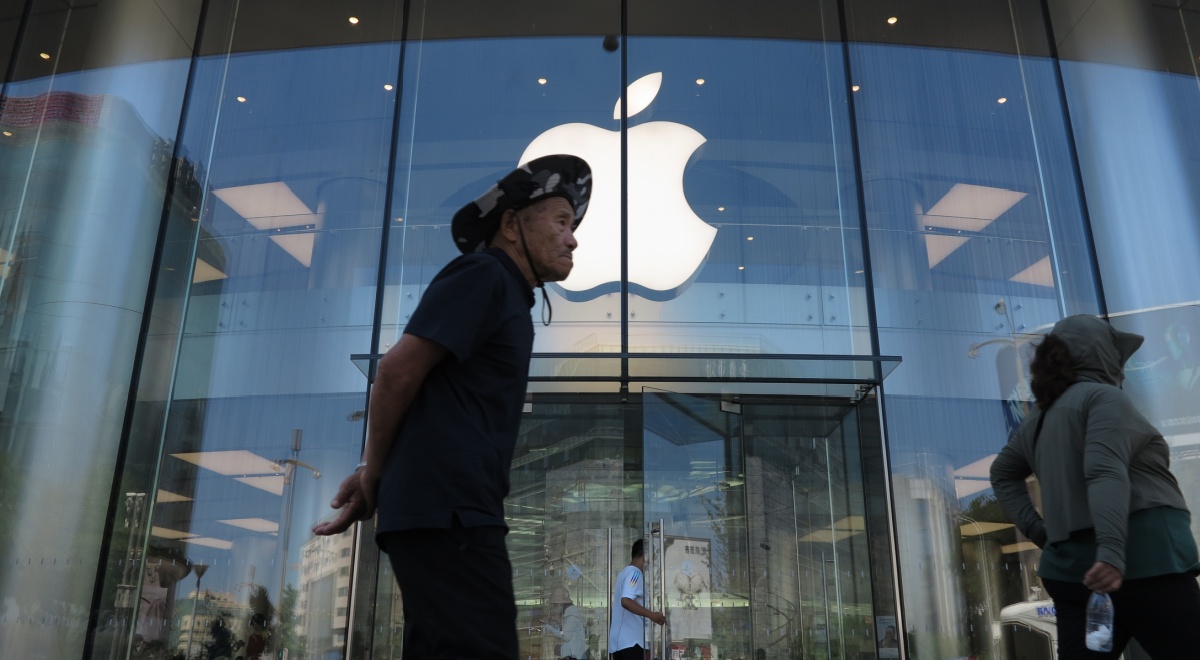
Pedestrians pass by an Apple store in Beijing, China. CFOTO/Future Publishing via Getty Images.

 Follow us
- Europe's highest court rejected Apple's appeal against being designated a gatekeeper, forcing the company to open its App Store and operating systems to rivals.
- Apple must now allow third-party apps and services to work with its devices and cannot give preferential treatment to its own products.
- The Free Software Foundation Europe called the ruling a major win, giving developers legal certainty to build alternatives to Apple's ecosystem.
- Apple warns the ruling threatens privacy and security protections, claiming the Digital Markets Act goes beyond what is lawful and proportionate.
The Court of Justice of the European Union has rejected Apple's attempt to avoid strict tech competition rules, forcing the company to open its App Store and operating systems to rivals. The ruling means Apple must allow third-party apps and services to work with its devices and cannot favor its own products over competitors.
According to Europe’s highest court, Apple has developed two proprietary mobile operating systems (iOS and iPadOS) and operates 5 application stores, namely iOS App Store, iPadOS App Store, watchOS App Store, macOS App Store, and tvOS App Store.
On September 6th, 2023, the European Commission designated the first 6 gatekeepers under the Digital Markets Act (DMA), including Apple for its dominance of the App Store, iOS, and Safari. The very same day, the Commission announced a market investigation into Apple.
The Cupertino-based tech company decided to appeal the European Commission’s decision to designate it as a gatekeeper in relation to the App Store and iOS.







Stay updated with our latest stories and follow us on social media
Be the first to discover new stories, ideas, and updates from our team.
On Wednesday, the Luxembourg-based General Court permanently dismissed Apple’s appeal, confirming the company’s status as a gatekeeper and imposing far-reaching obligations.
For example, gatekeepers must offer users interoperability with third-party software and systems. Furthermore, large providers aren’t allowed to give preferential treatment to promote their own products and services.
The Free Software Foundation Europe (FSFE), an independent, non-profit organization that promotes freedom of software in Europe, is pleased with the court’s verdict and calls this “a major win for computer users and developers.”

Check if your data was exposed
Find out if your email and related personal information have appeared in known data breaches.
“This ruling confirms what we have argued from the start: interoperability is not optional under the DMA, it is the law. Developers finally have legal certainty to build competitive alternatives to Apple's ecosystem, and we remain committed to monitoring enforcement of today’s decision,” Lucas Lasota, Senior Program Manager at the FSFE, said in response.
The conversation on this topic is live. Join in the discussion.
After the verdict, Apple reiterated its stance on the DMA.
“We firmly believe the DMA’s mandate goes beyond what is lawful and proportionate, threatening to erode decades of privacy and security protections we’ve built, and leaving our users vulnerable to new risks. We will continue advocating for the innovation and privacy our European customers deserve,” a company spokesperson said.