EU accused of censoring the internet and banning VPNs
Talks of “internet passports” and VPN bans are fueling online upheaval.
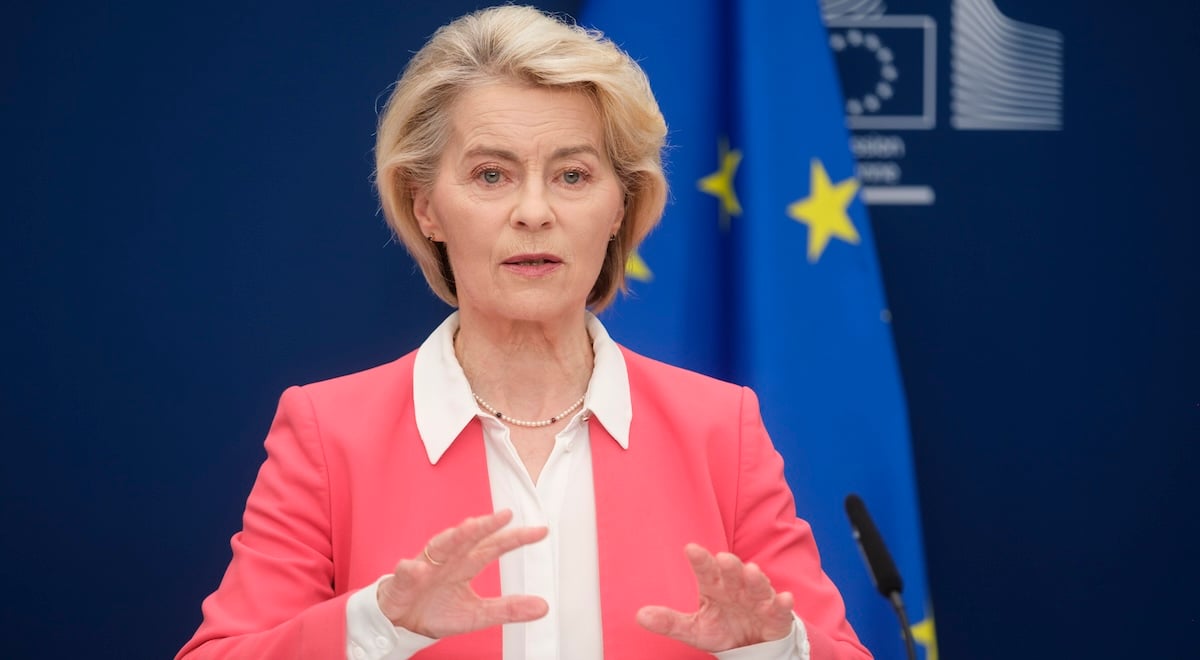
Ursula von der Leyen by Getty/Thierry Monasse

 Follow us
- Ursula von der Leyen backed EU-wide age checks to limit children’s access to social media and digital services.
- Online posts falsely claim the EU plans internet passports and VPN bans, but no such plans are confirmed.
- Critics warn that age verification could enable surveillance, while the Commission says its app protects privacy and limits shared data.
- Security concerns remain after consultant Paul Moore said the EU’s age verification app had serious design flaws.
Key Takeaways by nexos.ai, reviewed by Cybernews staff.
The European Commission’s latest announcement has sparked a wave of conspiracy theories and online misinformation.
European Commission President Ursula von der Leyen unveiled plans for an EU-wide crackdown on social media platforms, including age restrictions, earlier this week.
This comes after a study ordered by the Commission confirmed what officials already knew: that predatory social media algorithms are a threat to the health and development of minors.
While the debate on what to do about social media isn’t new, von der Leyen has cemented her pledge to protect children by implementing EU-wide age verification.






This system is designed to ensure that children under 13 won’t have access to social media or other digital services.
But this new normal won’t just affect how children use the internet – it will also affect how adults navigate the online world.
Adults will also need to prove they’re adults by verifying their identities with a passport, third-party banking services, or by visiting their local post office to verify their age.
The verification process takes place on the EU’s dedicated app, which was introduced in July last year.
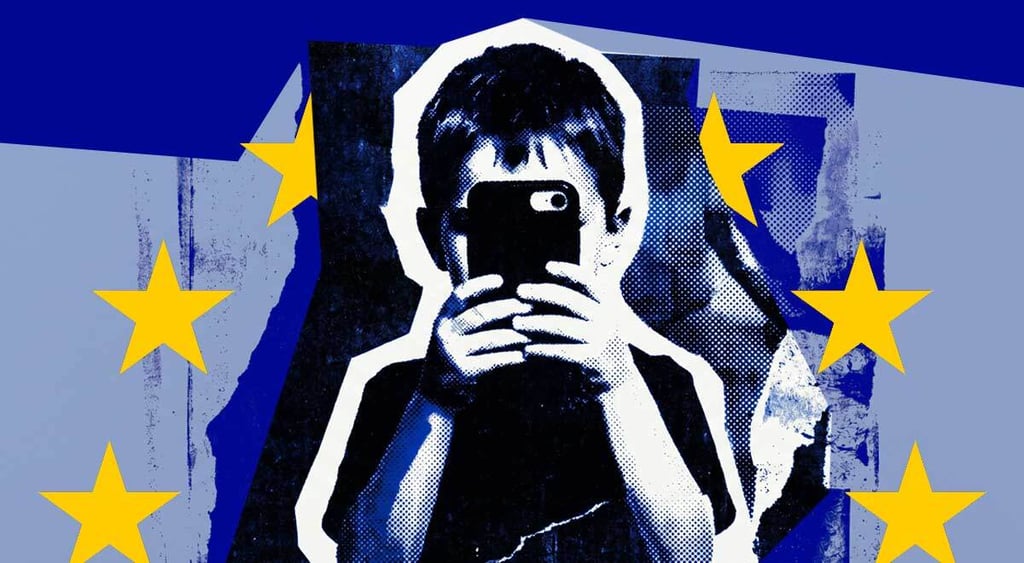
The Commission president’s public statement sparked a wave of misinformation and online controversy, with users interpreting its age verification plans as EU-wide censorship and mass surveillance.
Numerous X posts report how the EU is planning to implement “internet passports,” which grant users permission to go online.
One of the posts states that the “braindead proposal” will require users to apply for internet passports, and “they” want to block VPN access to enforce age verification.
The post included a video with all the “facts” surrounding the EU’s age verification system.
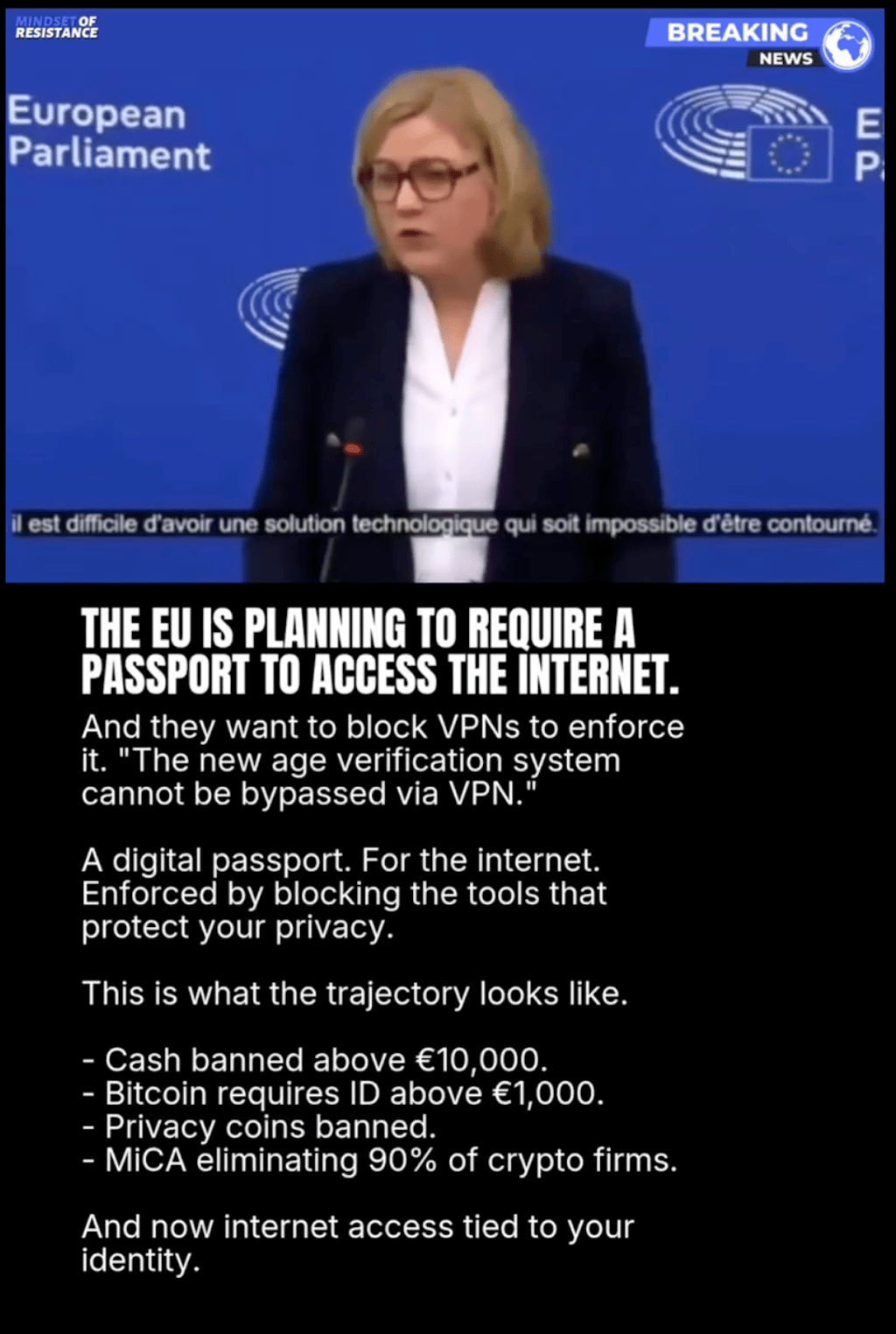
As far as we know, the EU is not planning to adopt “internet passports” nor is it planning to ban VPNs.
Many of these posts also include false claims that the EU is planning to ban virtual private networks (VPNs).
One user, “Crypto Tice,” claims that “the EU is planning to require a passport to access the internet…and they want to block VPNs to enforce it.”
This concern comes from the statement made by a European Commission official who said apparently said that “the new age verification system cannot be bypassed via VPN."
While these reports have garnered millions of views, they aren’t reliable, and users are likely confusing age verification (which can be verified using a passport) with an “internet passport,” which allows you to get online.
“Experts” are stoking the flames
As it stands, the EU is following the UK and Australia, which have implemented a similar age-verification system and don’t require users to apply for a digital passport to use social media and other online services.
However, X users are stirring the pot by introducing the idea that EU-wide surveillance is the overarching motive for this approach to age verification.
Curious what others think about this story? Contribute your thoughts to the debate below.
Online safety expert Paul Walsh stoked the flames, saying that this move is straight out of George Orwell’s 1984.
Walsh also compares the EU’s child safety rhetoric to a “Trojan horse,” as he believes that online safety for minors is actually a vehicle for the EU’s “absolute digital surveillance and control.”
German financial expert Marc Friedrich also compared the EU’s plan to Orwell’s 1984.
“Von der Leyen confirms that everyone in the EU must use an EU app for identity verification before they can access social media and post there,” Friedrich said.
The comparison with Orwell’s novel suggests that users believe the EU’s approach to age verification is one of control and surveillance instead of protection.
The fact that users must verify their identity with government documents might ring alarm bells, as people likely assume their online activity is directly linked to their real-world identity.
EU’s Age verification app is “privacy-preserving”
The EU’s approach to age verification claims to be “privacy-preserving,” as its app is open source, meaning users can check the code to ensure there’s no malicious intent behind it.
This process also “allows users to prove they are over 18 without sharing any other personal information,” according to the European Commission.
While this sounds reasonable, the app, which von der Leyen praised as “technically read” and having “the highest privacy standards,” was hacked in just 2 minutes.



Stay updated with our latest stories and follow us on social media
Be the first to discover new stories, ideas, and updates from our team.
Security consultant Paul Moore detailed what he described as fundamental design flaws in the EU’s age verification system.
“Seriously, von der Leyen – this product will be the catalyst for an enormous breach at some point. It's just a matter of time,” he said.