Peter Thiel suggests morals are overrated, and evil people are actually quite good
This is what we’ll call The Thiel Paradox.

 Follow us
- Peter Thiel said society “moralizes way too much” during an interview about AI, democracy, and technology.
- Thiel argued evil can be “quite good” if it produces results and speeds up progress.
- He separated moral goodness from functional competence, saying evil people may still get things done.
- The article frames his comments as part of his broader, controversial views on technology and power.
Key Takeaways by nexos.ai, reviewed by Cybernews staff.
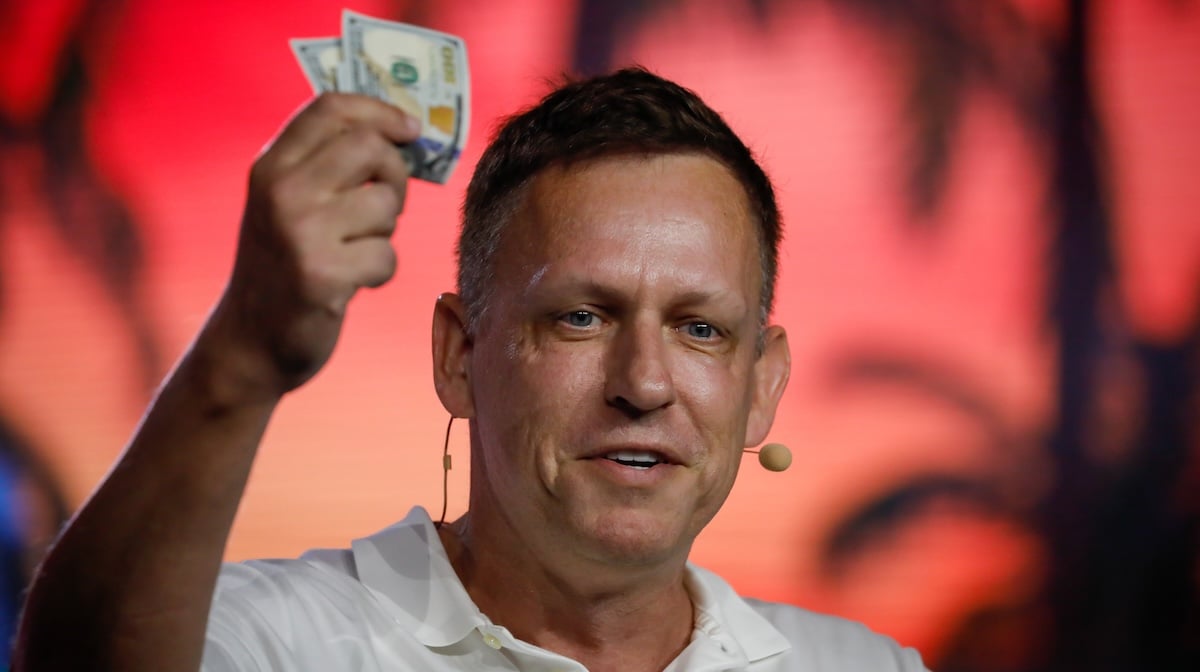
Billionaire Peter Thiel believes that being evil can “actually be quite good” if you’re focused on efficiency and acceleration.
Thiel, co-founder of the spytech firm Palantir, was asked by Mathias Döpfner, head of the Berlin-based media group Axel Springer SE, to share opinions on AI, the state of Europe, democracy, and other things.
Eventually, the interview took a philosophical turn, as the pair began musing on the ethics of AI and who or what should really be blamed when technology goes rogue.
Döpfner’s opinion is that AI is a tool, something that isn’t inherently good or bad, but can produce positive or negative effects depending on how it's used.





“With a knife you can prepare the most wonderful food and have a great dinner, and with a knife you can kill a person,” Döpfner said.
“If you don’t want killings, you criticize murders, but you don’t bend the knife.”
It seems the Palantir founder couldn’t think of a better way to agree with Döpfner’s point, as what follows is a strange response that may have confirmed how all tech overlords think.
If you’re evil, you’re kind of good
Thiel is known to share his rather unorthodox opinions on a range of subjects, from Pope Leo XIV being a “Chinese communist agent” to closed-door lectures on the antichrist.
The tech oligarch is also taking his antichrist lectures on tour, where he’ll likely lament his opinions on global techno-authoritarianism that defies Christian morals and values.
For a man so concerned with Christianity, what he said in conversation with Döpfner might come as a surprise, with Thiel admitting:
I’m going to get in trouble for what I’m about to say,said Peter Thiel in an interview with media mogul Mathias Döpfner on the MD Meets podcast.
He believes that we as a society “moralize way too much,” while providing no concrete justification for this claim.
Thiel then gives Döpfner a vocabulary lesson, asking, “What is the antonym of good?”
The moral antonym of good is evil, yet the “functional antonym” of good is bad, said Thiel.
The entrepreneur, who’s made millions of dollars from his defense tech used by the US government to bomb targets in Iran, and accidentally killed 168 people, most of whom were children, argues that being evil isn’t so bad.
“If you’re evil, you’re not bad, and therefore you’re maybe actually quite good because you’re at least getting something done.”
According to Thiel, if you’re evil, you’re arguably competent, as you’re achieving something and pushing for progress that may yield positive results in the very end.
The German-American entrepreneur then goes on to discuss Goethe’s Faust and Marlowe’s Faust, seemingly justifying his point that people can commit morally reprehensible acts to achieve positive results.