Best GDPR software in 2026
-

-
Contribution by
Sara Mircevska


Back in 2018, the European Union adopted a new law to protect how businesses and websites collect, use, and store the personal information of EU citizens. The General Data Protection Regulation (GDPR) initially seemed like a set of recommended guidelines, but it quickly became a legal imperative.
If you’re a website or business owner, you simply have to abide by these regulations to avoid legal consequences. Thankfully, I’ve found several instances of the best GDPR software for compliance automation to help you stay aligned with the law with minimum effort.
Together with my team of Cybernews experts, I’ve crafted this all-around guide to explain why you should be using these tools in the first place. I’ve also created a top 5 list of what I consider to be the most effective, affordable, and user-friendly GDPR compliance software, and I’ll tell you all about it in this guide.
Best GDPR software - shortlist
- Usercentrics – best for comprehensive GDPR solutions for businesses of all sizes
- Secure Privacy – best for automated consent collection with custom banners
- Termly – best for automated compliance, cookie, and privacy policy generation
- Iubenda – best for compliance widgets directly embedded on websites
- Cookiebot – best for bulk consent and compliance management
5 best GDPR software – our detailed list
To make things easier on your end, I’ve already reviewed each GDPR compliance tool that our research here at Cybernews pointed to as a solid solution. I’ll break down the key traits of each to help you pick a tailored option for your website or business:
1. Usercentrics – best GDPR tool for businesses of all sizes

| Best for | Startups, mid-size companies, and enterprises |
| Free trial | Available for one domain (14-day free trial) |
| Starting price | From $8/month |
| Top features | Unlimited privacy regulations, up to 60 banner languages, and custom banner styling |
Usercentrics is the most comprehensive GDPR compliance solution I’ve found, suitable for businesses of all sizes. What I liked the most about it is the automated cookie scanning and categorization. It frequently monitors your site and classifies cookies and collected data in accordance with GDPR.
It also allows you to use custom compliance banners with branding options. The convenient compliance dashboard provides data collection and consent analytics, so you can optimize your website’s cookie, privacy, and data protection policies accordingly.
2. Secure Privacy – best AI-powered compliance tool with an advanced consent toolkit

| Best for | International businesses in need of comprehensive compliance coverage |
| Free trial | Available (30-day trial) |
| Starting price | From $14/domain/month (free plan available) |
| Top features | Custom logo and banner designs, unlimited users with top plans, and detailed audit logs |
This GDPR tool stands out for its simple, convenient user dashboard, which even new data compliance users can use to manage consent and data collection.
It does way more than just scan cookies, though. You can use its comprehensive site scanning toolkit to ensure compliance across all data points. I particularly liked its data-mapping feature, which helps businesses visualize data flows, making it easier to showcase regulatory compliance.
3. Termly – all-round compliance tool for businesses without legal teams

| Best for | Small businesses and startups looking for an affordable all-around compliance solution |
| Free trial | Available |
| Starting price | $0.47/website/day, billed monthly |
| Top features | Convenient questionnaire-type policy generation, detailed reports of data tracking patterns |
Termly is a certified CMP partner, which means it’s approved and vetted by Google. This is particularly important for small business owners with websites that require a trusted solution for data compliance, without the need to hire legal help.
The tool integrates with Google’s advertising and analytics suite and features handy privacy policy and cookie policy generators, as well as T&Cs templates. You could say it’s a complete solution for businesses looking to ensure compliance with all consent, data collection, and privacy laws.
4. Iubenda – automated policy generation and compliance scans
| Best for | Small and mid-size businesses/websites with global operations |
| Free trial | Available (14-day trial) |
| Starting price | From $6.99/site/app/month |
| Top features | Custom privacy controls, automated scans, and compliance updates |
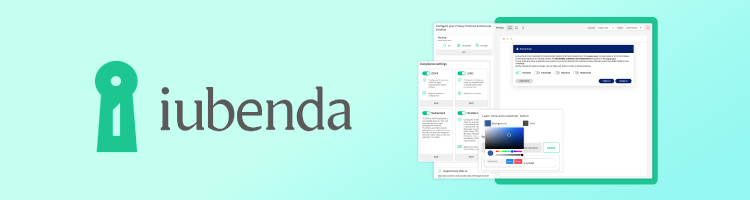
I’ve added Iubenda to the list as a comprehensive solution for businesses with global audiences. It’s an all-in-one tool that ensures compliance not just with GDPR, but also with other data privacy and compliance laws and regulations worldwide.
What I liked most about it is the automated scan process, which ensures your website stays up to date with the latest compliance changes. It scans your site’s traffic, data trackers, cookies, and other privacy compliance aspects to ensure you’re protected from every angle. Plus, it offers customizable consent and compliance banners that align with your brand voice.
5. Cookiebot – deep scanning system with bulk consent management

| Best for | Companies and websites of all sizes |
| Free trial | Available (14-day free trial) |
| Starting price | From $8/month |
| Top features | Bulk consent management, automated compliance updates, and a deep scanning toolkit |
Cookiebot is the best option for bulk consent and compliance management. Interestingly, this tool is run by Usercentrics but works a bit differently.
It’s among the best GDPR compliance services with deep-scanning options. This means you can scan your website for cookies and categorize them based on your consent and privacy policies. If any cookies are deemed non-essential, they aren’t activated until the user gives consent. Besides automated cookie declaration, this one also comes with Wix and WordPress plugins, and it supports Google’s Consent Mode.
How did we select the best GDPR software?
While reviewing the best GDPR compliance software, I didn’t test all these tools myself. The Cybernews experts and I analyzed user reviews, ratings, and detailed breakdowns of each, which helped me evaluate and rank them. Here’s a glimpse into our ranking methodology:
- Compliance capabilities (30%). I first looked at the compliance capabilities of each tool on my list to ensure they all tick crucial boxes like consent management, automated GDPR compliance updates, and cookie categorization in line with data privacy laws.
- Ease of use (20%). Up next, I explored the intuitiveness of each, as I wanted to find both simple solutions like Termly and more complex options with a steep learning curve like Usercentric for higher-capacity users.
- Automation and integration (20%). Moving on, I confirmed which tools include automated GDPR compliance scans and integrations with platforms like WordPress, Wix, and Google Analytics.
- Pricing and value (15%). I’ve also ranked my top picks based on their pricing structures, aiming to bring you the perfect mix of price and value based on the features they offer.
- Customer support, feedback, and reputation (15%). Finally, I tested the responsiveness of the customer support channels for each of these tools. I also checked customer feedback and reputation on platforms like Trustpilot and forums like Reddit.
What is GDPR, and why is it necessary?
GDPR is a data protection law that applies to all online businesses and websites that store the personal information of EU citizens and aims to give EU citizens greater control over the use of their personal data.
So, why is it necessary for websites even outside the EU? Well, the thing is, data breaches, identity theft, and fraud have become more common in the past few years.
As a solution, the EU implemented this law to protect user data and to separate high-profile businesses that comply with GDPR from shady sites that don’t. In other words, GDPR compliance is mandatory for all companies and websites that store EU customer data.
What is GDPR compliance software?
GDPR compliance services are software platforms designed to automate, manage, and monitor website compliance. They’re mainly used by businesses operating multiple domains, or B2B businesses, to handle cookie and consent management, data collection, privacy policy automation, and similar tasks.
Tools like Secure Privacy and Iubenda can also create custom consent and cookie collection banners tailored to your brand. Most importantly, these tools are powered by AI and automation, enabling them to report data breaches or issues that could lead to non-compliance with GDPR.
What types of data does the GDPR protect?
I know that understanding software for GDPR compliance can be a challenge, but it gets easier once you figure out which types of data the law protects in the first place. Here’s an overview of each type:
- Personal details. In this category, GDPR laws cover personal addresses, contact details, and names of customers and clients.
- Online identifiers. This mainly refers to national identification numbers, postal addresses and codes, and even email or phone contact details.
- Financial or health-related data. The GDPR also applies to financial reports and health records. That includes bank account numbers, credit card and payment history details, invoices, income details, and others. Health-wise, it expands to medical records, behavioral data, and disability information.
- Protected employee or customer data. Personal information can also be found within employment and educational records, so GDPR also covers those.
- Location data. Location data obtained from Wi-Fi positioning and personal information provided during account registration are also covered by the act.
An important thing to note is that GDPR applies to any business that processes the information of EU citizens. That includes offshore companies operating worldwide, as long as they have clients or customers based in the EU.
Best practices for selecting GDPR software
Since choosing the right GDPR compliance platform can be a bit tricky, I’ve crafted a guide to help you choose one that meets your needs. You can follow this list and check each item, leading you to a perfect, tailored solution:
- Assess your needs. First, identify your compliance gaps and needs. These depend on the size of your business, the number of website domains, and the type and volume of personal data that you process. For instance, I recommend Cookiebot if your focus is mainly on cookie-based data, Termly if you’re running a startup, or Secure Privacy if you’re running an international business.
- Check integration capabilities. Moving on to integration capabilities, I recommend checking options such as Iubenda for WordPress and Shopify, and Usercentrics for Joomla, Wix, and other platforms.
- Review automation levels. This one focuses on automating your cookie policy, generating and updating your privacy policy, and conducting general GDPR compliance checks. As the best option with automation capabilities, I’d highlight Termly.
- Prioritize transparency. You should also be looking for vendors with clear privacy practices and third-party audits. If they have certifications like ISO 27001, SOC 2, or Google Partner CMP certification (like Termly), it’s a sign they’re doing things right on the legal side.
- Evaluate support and updates. Data compliance and privacy laws are definitive, and they’re subject to change, just like your business’s compliance level. For that reason, I’d recommend going with an option that has prompt support and regular updates like Secure Privacy.
- Compare pricing models. You should also be comparing pricing models, as they are often tailored to specific types of companies, from small businesses to enterprises and major websites. I recommend going with Iubenda for an affordable starter plan, or Usercentrics for scalable pricing options.
Conclusion
Overall, the significance of GDPR solutions just keeps growing with all the regulatory updates. With potential penalties and legal implications for those who do not comply with the law, you’re better off using a GDPR software compliance toolkit to stay up to date with regulatory changes.
That includes everything from privacy policy management to cookie collection and tracking, as well as consent and banner management. After analyzing available platforms, the Cybernews research team and I believe that selecting the right GDPR software depends on your business size, technical needs, and compliance goals. This guide will help you pick the perfect option for your business and the scale of your website's operations.
FAQ
What does GDPR software actually do for businesses?
A GDPR solution automates and streamlines tasks related to compliance with the EU’s data privacy protection laws. It handles everything from cookie scanning and management to data collection tracking and displaying compliant consent banners.
Can GDPR software help manage cookie consent automatically?
Yes, GDPR compliance tools can help you manage cookie consent with automated updates and even self-updating banners.
Do I need GDPR software if my company is not based in the EU?
If your company or website operates with clients or customers from the EU, you still need to use a GDPR platform for compliance, even if it’s not based in Europe.
What’s the difference between GDPR compliance software and privacy management platforms?
GDPR compliance software specializes in GDPR compliance, while privacy management platforms handle more comprehensive privacy tasks such as data mapping, data rights automation, and privacy policy updates.
How often should GDPR compliance tools be updated?
GDPR compliance tools should be updated at least once per year, or more frequently if they offer automated updates.