16-hour scroll puts social media engagement algorithms on trial
The head of Instagram recently stated that when a user spends sixteen hours a day using the app, it is a "problem" but not an addiction in a bid to clarify the difference between heavy use and clinical dependency.

An image of a teenager being "sucked in" to his smartphone. Image by Cybernews.

 Follow us
The head of Instagram recently stated that when a user spends sixteen hours a day using the app, it is a "problem" but not an addiction in a bid to clarify the difference between heavy use and clinical dependency.
The distinction between a problematic user and someone addicted to social media will be defined through a six-week trial that may determine the extent to which a social media platform can be held responsible for its users' activities amid growing European social media bans.
The usual suspects, Meta and YouTube, face claims that their algorithms are engineered to keep young users scrolling at the expense of their mental health. Snapchat and TikTok opted to settle before the trial.
“I'm going to show you evidence that these companies built machines designed to addict the brains of children, and they did it on purpose." - Lead plaintiff attorney Mark Lanier






The case now unfolding in a Los Angeles courtroom will help set the legal playbook for what follows. The plaintiff, Kaley G.M., is being kept away from the proceedings to avoid reliving the trauma her lawyer says shattered her ability to filter stress, arguing that forcing her to sit through weeks of testimony would be like asking someone with a broken leg to run a marathon.
The big question is whether describing sixteen hours of continuous scrolling through a smartphone app is the same as binge-watching a television show on Netflix or playing sixteen hours of a video game. Another question is whether there are limits to how long an individual can continue to pay attention in our current economy, built on attention.
The line between problematic use, digital dependence, and addiction
The distinction between "problematic" and "addictive" feels more like a legal strategy rather than a neutral diagnosis. We have been here before with the tobacco and processed food industries that also attempted to hide behind technical definitions while optimizing their products for increased consumption.






One of the greatest tricks social media algorithms ever played on users was to narrow their perspectives by serving an infinite stream of content they already agreed with.
The harm of living in a continuous dopamine feedback loop usually manifests when you find yourself getting over-defensive in conversations about your political views or the time you spend on your phone.
The sycophant in your pocket
Behind the facade of a "harmless" social media newsfeed lies the digital equivalent of the yes-man (sycophant), who always nods and agrees with whatever you say and only shares information you wish to hear.
Social media mirrors your views and shares your laughter. But it has little interest in discussing those ideas or any issues that may challenge your beliefs or opinions.
Although this relationship works in the short term because it provides a space with little conflict or potential for self-reflection, engagement algorithms are based on the same type of positive feedback loop.
Algorithms can learn about your preferences through your likes, pauses, shares, etc. They will then generate content that is similar to what you have liked/engaged with in the past. This enables social media platforms to serve up an all-you-can-eat buffet of content that reinforces your current beliefs and rarely presents you with differing ones.
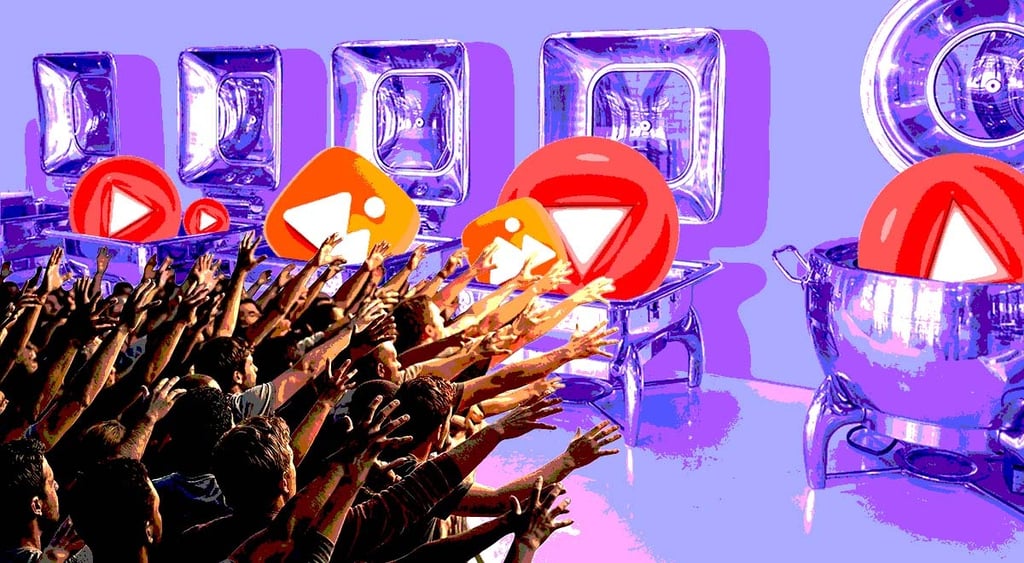
Both the sycophant and the algorithm have a dependence loop. The sycophant requires your validation to maintain the friendship, and the algorithm relies on the time you spend on the platform (which, in turn, triggers emotional responses quickly). Both systems are designed for continuity, not for your development or welfare.
A similar distortion occurs in both, as they alter the perception of the self. When everyone agrees with you, you begin to think you are always right. When you view nothing but content reflecting your worldview, your idea of what is considered "normal," "accepted," or "true" will become distorted. This can have consequences for personal growth and public discourse more broadly, as the notion of a shared reality is replaced by a personalized reality.
Although it might feel nice to hang out in a virtual bubble where you are always right for 16 hours a day, what we really need is someone who pushes us to grow. But both AI agents and social media algorithms are programmed to do the opposite.
Everyone sees the harm except the business model
Sixteen hours of nearly anything each day indicates that something is amiss, even though, according to the medical field, we can't agree upon a single word for "addiction."
Mosseri is factually correct to make a distinction between a clinically defined problem and excessive behavior. It's important in a courtroom, and outside of it. But there is no hiding the fact that society at large is quietly changing how it lives, how much it sleeps, how long it can focus, and how it thinks about itself, all in public.
In today's increasingly divided world (arguably caused by social media), there is a rare consensus across generations. If you ask most kids, they will say they wish the platforms did not have such a strong influence over them, while their parents would like to be able to free their children of its grip.
Teachers witness the cognitive and emotional ramifications firsthand, and researchers continue to publish warnings. Yet the one place the system is consistently depicted as functioning as intended is within the businesses that profit from the time it wastes.

Check if your data was exposed
Find out if your email and related personal information have appeared in known data breaches.
The harmful impact of social media is seemingly acknowledged in private, debated in public, but the burden always shifts back to the individual. While many will advise turning the phone off and making better choices, it's easy to forget that the product on trial is engineered by some of the most sophisticated behavioral design teams and computer algorithms in history to make stopping feel like the hardest part.
It may be time to recognize that the systems behind social media are working exactly as designed. If everyone in the room, users, parents, educators, and researchers, are pointing in the same direction while the business model points in another direction, the debate should be on accountability.
Many years from now, future generations could look back and wonder why we spent so long arguing over the wording while the damage kept piling up for all to see.
Unlock more exclusive Cybernews content on YouTube.