Best fish finder in 2026: top picks for every angler

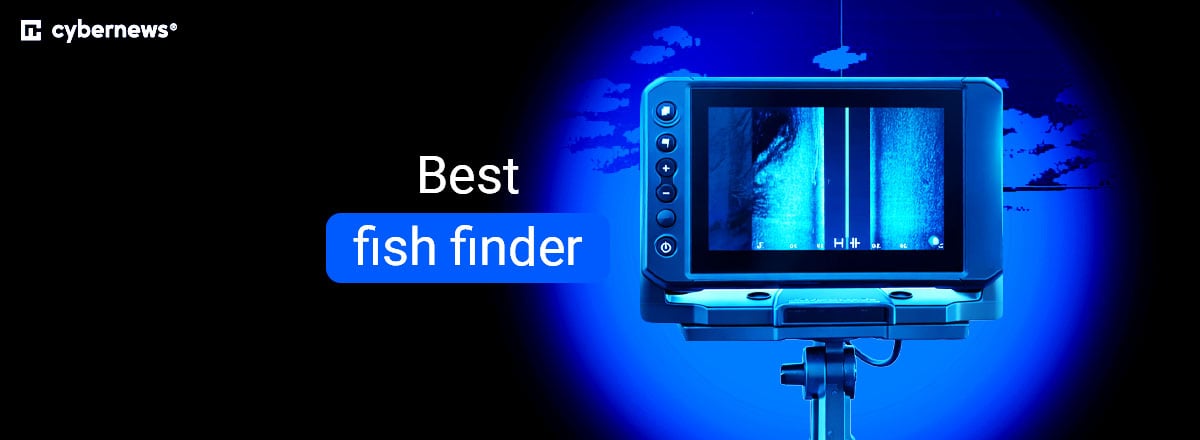
A fish finder supports structure analysis, fish detection, and navigation, helping anglers make faster, more informed decisions on the water. With detailed imaging and integrated mapping, it improves efficiency and increases the chances of locating productive areas.
Together with the Cybernews research team, I analyzed manufacturer specifications, sonar data, and consistent long-term user feedback to identify models that offer strong value and reliable performance. In this guide, I break down the top options, explain key technologies, and help you choose the right unit for your fishing environment.
5 best fish finders – shortlist
- Humminbird XPLORE Series GPS Fish Finder MEGA Side Imaging+ & HD Touchscreen Display – Best overall performance and advanced imaging
- Garmin 010-01550-00 Striker 4 with Transducer – Best budget option for beginners
- Garmin Striker Vivid 4cv – Best for enhanced color sonar clarity
- Lowrance Eagle Fish Finders with IPS Screen (4", 5", 7", 9") – Best for bright sunlight visibility
- Lowrance HOOK Reveal 5 SplitShot – Best for fish identification clarity
5 best fish finders – our detailed list
Below is my in-depth breakdown of each model, including its strengths, technical positioning, and who it’s best suited for.
1. Humminbird XPLORE Series GPS Fish Finder – best for advanced imaging precision
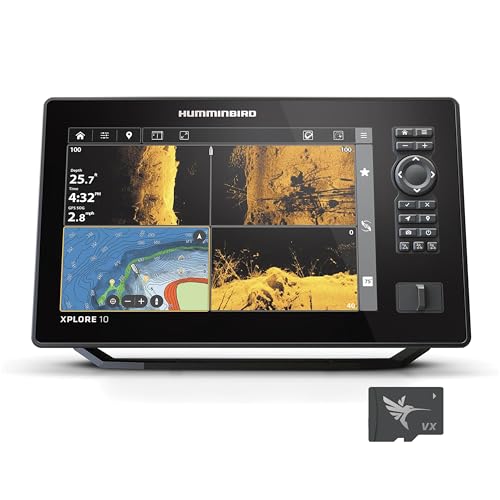
The Humminbird XPLORE Series stands out for its MEGA Side Imaging+ technology, which operates at higher sonar frequencies to deliver highly detailed underwater views. Structure edges, submerged timber, rock transitions, and fish separation appear clearer than on standard CHIRP systems.
Its hybrid control system combines a responsive touchscreen with physical buttons for reliable operation in wet conditions. Integrated GPS supports waypoint marking and route tracking for structured navigation.
Users consistently praise its imaging clarity and mapping precision, though the premium price is the main drawback. It’s best suited for anglers who prioritize advanced imaging and long-term capability.
2. Garmin 010-01550-00 Striker 4 with Transducer – best budget fish finder
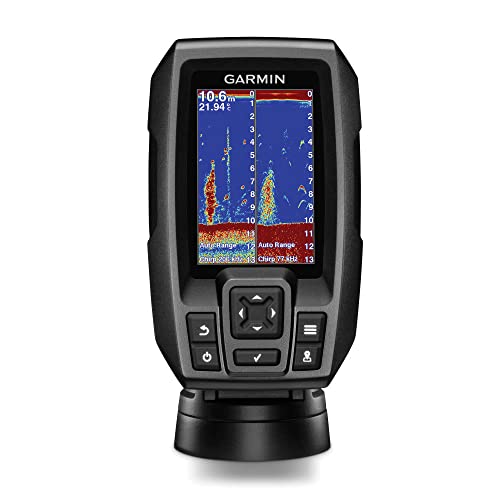
The Garmin Striker 4 remains one of the most recommended entry-level fish finders. It uses CHIRP sonar, which sends a range of frequencies rather than a single pulse. This improves target separation and helps distinguish fish from structure more clearly than traditional sonar.
Users consistently highlight affordability, simplicity, and reliability. It focuses on clear depth readings, fish arches, and waypoint marking without overwhelming new anglers with advanced imaging layers.
Its compact design makes it ideal for kayaks and small boats. While it lacks side imaging and advanced mapping, it delivers dependable sonar performance within its intended use case.
3. Garmin Striker Vivid 4cv – best for color sonar differentiation
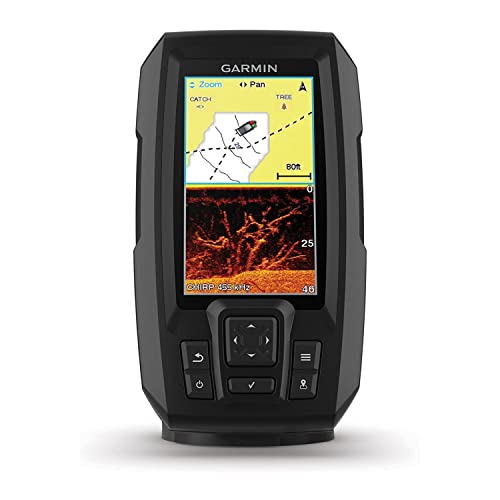
The Striker Vivid 4cv enhances sonar readability through customizable vivid color palettes. These modes allow anglers to distinguish fish, vegetation, and bottom structure more easily, especially in cluttered environments.
ClearVü scanning adds improved vertical detail compared to standard CHIRP alone. Integrated GPS supports waypoint marking and speed tracking, making it suitable for anglers who want mid-range functionality without premium pricing.
Recurring feedback emphasizes ease of interpretation and balanced performance.
4. Lowrance Eagle Fish Finders with IPS Screen – best for screen visibility
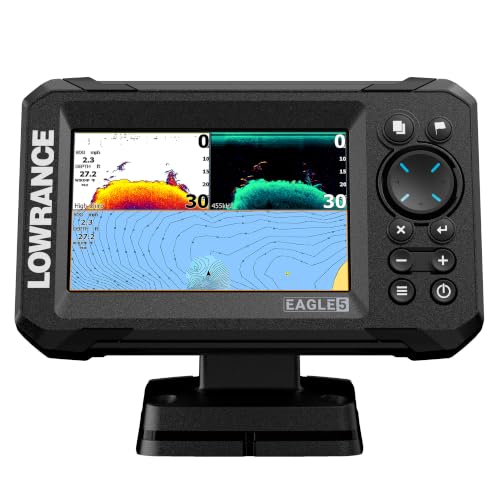
The Lowrance Eagle lineup stands out due to IPS screen technology, which enhances brightness, color accuracy, and viewing angles. In practical terms, this means the display remains readable from different positions on the boat and performs reliably in direct sunlight.
Multiple screen size options make the lineup adaptable to various boat layouts and mounting spaces, from compact setups to larger consoles. While it doesn’t offer MEGA imaging, it provides stable CHIRP and DownScan performance with clear structure definition and dependable operation.
Users frequently highlight display readability as the strongest advantage, especially during long sessions in bright, open-water conditions.
5. Lowrance HOOK Reveal 5 SplitShot – best for fish separation clarity
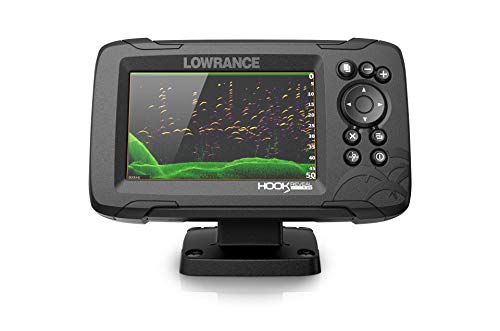
The HOOK Reveal 5 combines CHIRP sonar and DownScan Imaging using FishReveal technology. FishReveal overlays fish targets directly onto structural images, helping anglers distinguish fish from brush, rocks, and bottom contours more clearly.
This feature is particularly useful in freshwater lakes and rivers where vegetation, timber, and uneven structure can obscure traditional sonar returns. By merging fish arches with detailed structure views, the unit simplifies interpretation and reduces guesswork. It delivers strong mid-range performance with practical imaging benefits, without stepping into premium price territory.
Our methodology
To determine the best fish finder models, we used a weighted evaluation framework designed to balance technical capability with real-world usability:
- Sonar technology and clarity (30%). Assessed imaging detail, frequency range, depth consistency, and target separation accuracy across different conditions.
- GPS and mapping features (20%). Evaluated waypoint precision, route tracking, mapping compatibility, and overall navigation reliability.
- Display quality and usability (15%). Reviewed brightness, resolution, menu logic, and control responsiveness in typical on-water environments.
- Build quality and durability (15%). Considered housing strength, water resistance claims, and recurring long-term reliability feedback.
- Value for money (10%). Compared feature depth relative to price tier to ensure fair positioning within each category.
- User sentiment consistency (10%). Analyzed recurring themes across verified buyer reviews and fishing forums to identify sustained satisfaction patterns.
Our focus was identifying consistent performance trends supported by both technical documentation and long-term user experience, rather than relying on isolated impressions.
What is a fish finder and how does it work?
A fish finder is a sonar device that detects underwater objects using sound waves. A transducer sends pulses into the water, and the returning echoes are translated into visual signals on the screen.
Modern systems include:
- CHIRP sonar. Uses multiple frequencies instead of a single pulse, improving target separation and helping distinguish fish from vegetation or bottom structure more clearly.
- Down Imaging. Provides detailed vertical views of underwater structure, making it easier to identify drop-offs, brush piles, and submerged timber.
- Side Imaging. Scans horizontally across wider areas on both sides of the boat, allowing anglers to cover more water without repositioning.
- GPS mapping integration. Enables waypoint tracking, route recording, and navigation across larger lakes or coastal areas for more consistent spot management.
Entry-level units focus primarily on depth and fish arches. Advanced models provide high-resolution structure imaging and mapping overlays for more technical fishing strategies.
Reasons to use fish finder
Using a fish finder delivers measurable advantages that directly impact efficiency and consistency on the water:
- Locate fish more efficiently. Focus casts on active zones instead of searching blindly, especially when targeting suspended fish or depth transitions.
- Identify underwater structure. Target drop-offs, vegetation, submerged timber, and contour changes where fish naturally hold throughout the day.
- Improve navigation with GPS. Save and revisit productive spots with precise waypoint marking and route tracking.
- Reduce time spent searching. Eliminate low-probability water faster by scanning before committing to repeated casts.
- Enhance safety awareness. Avoid shallow areas, sudden depth changes, and hidden obstacles that could damage your boat.
Instead of relying solely on instinct, anglers gain clearer underwater visibility, faster pattern recognition, and more confident decision-making based on real-time data.
How to choose the best fish finder
When selecting a fish finder, evaluate the following core factors to ensure the device matches your fishing style and environment:
- Sonar type. Match imaging capability to your typical depth, water clarity, and target species. Basic CHIRP is often sufficient for shallow freshwater, while deeper or structure-heavy waters benefit from Down or Side Imaging.
- Screen size and resolution. Larger, higher-resolution displays make it easier to interpret split-screen sonar and mapping views, especially in bright daylight.
- GPS functionality. Built-in GPS is essential for marking productive spots, tracking routes, and navigating safely on larger lakes or coastal waters.
- Boat compatibility. Consider mounting space, available power supply, and whether you need a portable setup for a kayak or a fixed installation for a larger boat.
- Budget alignment. Focus on features you will realistically use, rather than paying extra for advanced imaging that may not suit your typical conditions.
Performance varies based on water depth, clarity, and bottom composition. Always choose a unit that aligns with your primary fishing environment rather than the most feature-packed option available.
Things to consider when buying a fish finder
Before purchasing, review the following practical factors that can influence long-term usability and ownership experience:
- Installation complexity. Fixed systems require mounting and wiring, while portable models are easier to set up but may limit features. Consider whether you prefer a permanent setup or flexibility between boats.
- Power consumption requirements. Larger screens and advanced imaging use more battery, which matters for kayak setups or smaller power systems. Check expected runtime before heading out.
- Weather resistance durability. Look for solid housing and reliable water resistance to withstand spray, rain, vibration, and prolonged sun exposure.
- Expandability potential. Some units support additional transducers, networking, or future upgrades, which is useful if you plan to expand your electronics setup.
- Warranty coverage length. A longer warranty adds protection and peace of mind, especially for higher-end electronics.
Regular firmware updates also help maintain GPS accuracy, improve system stability, and extend the overall lifespan of the device.
Best fish finder according to users
Across Reddit discussions, fishing forums, and verified buyer reviews, anglers consistently highlight imaging clarity, ease of use, and screen visibility as the most important strengths when choosing a fish finder.
The Humminbird XPLORE Series is frequently mentioned for its exceptional MEGA imaging detail and structure definition, while the Garmin Striker 4 is often recommended for straightforward operation and dependable CHIRP performance. Models like the Lowrance Eagle also receive praise for IPS screen visibility in bright sunlight, which many users say makes a noticeable difference during long days on open water.
At the same time, pricing remains the most common point of criticism. Many anglers note that premium imaging technologies can significantly increase costs, and the added detail may not always be necessary for casual or shallow-water fishing. Overall, feedback suggests that satisfaction largely depends on matching the device’s features and price tier to the angler’s environment, experience level, and typical fishing conditions.
Final verdict: which fish finder is the best?
For overall performance and advanced imaging, the Humminbird XPLORE Series stands out as the strongest option in this lineup, combining MEGA Side Imaging clarity, flexible controls, and advanced GPS mapping into a single premium system.
It delivers high-resolution imaging, dependable hardware controls, and precise navigation tools, making it the most complete solution for serious anglers who want detailed structure visibility and long-term expandability.
For beginners or budget-focused anglers, the Garmin Striker 4 remains a dependable and affordable entry-level choice that covers essential sonar needs without unnecessary complexity. Before purchasing, confirm your typical fishing depth, preferred screen size, and required sonar features to ensure the device matches your environment and boat setup.
FAQ
What is the most accurate fish finder for beginners?
The Garmin Striker 4 is widely considered accurate for beginners because CHIRP sonar improves target separation while keeping operation simple.
Is MEGA Side Imaging worth the higher price?
Yes, for anglers who fish structure-heavy or large bodies of water. The added imaging clarity can significantly improve underwater interpretation.
Do fish finders work in shallow water?
Yes, most CHIRP systems perform well in shallow freshwater conditions, although side imaging becomes less effective at extremely low depths.
What size fish finder screen should I choose?
Choose 4-5" displays for kayaks and compact boats. Larger boats benefit from 7-9" screens for clearer mapping visibility.
Can fish finders be used on kayaks and small boats?
Yes. many compact models are specifically designed for smaller vessels. Always review mounting options and power requirements before installation.