Best motion sensor headlamp in 2026: what to look for before you buy


If you’re tired of constantly adjusting the headlamp – or, even worse, holding a flashlight – as you work, a motion sensor headlamp can be a great hands-free solution. A head-worn light with gesture sensors, it allows you to turn the illumination on or off without pressing any buttons.
Whether you’re working in gloves or with dirty hands, jogging during nighttime, or enjoying activities like camping or night photography, motion sensor headlamps can spare you a lot of inconvenience. However, there are a few things to keep in mind before buying.
Together with the Cybernews research team, I analyzed manufacturer statements, expert feedback and user reviews to understand which motion sensor headlamps stand out in 2026 and why. In this article, I’ll go through some of the available models, benefits of motion sensor headlamps, best options for different scenarios, and pitfalls to be aware of.
Best motion sensor headlamps – shortlist
- LumenLight – best for light tasks
- NightBuddy – best for outdoor activities
- BIAT – best budget-friendly pick
- Klarus – best for intense use
- MOLAER – best customizability
5 best motion sensor headlamps – detailed list
1. LumenLight – best for non-demanding use
| Light source type: | LED |
| Battery life: | 8 hours |
| Material: | Abs |
| Special features: | 230-degree light angle, waterproof design |
| Price: | Medium |
| Best For: | Light tasks |
LumenLight advertises its motion sensor headlamp as easy to set up and use, with a 230-degree angle LED beam, up to 8 hours of battery life, and a water-proof build. It also lets you choose between buying either a single headlight or a bundle of up to 5 – with a one-size-for-all headband design.
User feedback, however, is mixed, with customers pointing out exaggerated provider claims and quality not matching the premium price. Reviewers also criticize customer support, with common complaints including shipping, payment and refund problems.
2. NightBuddy – best for runners and photographers
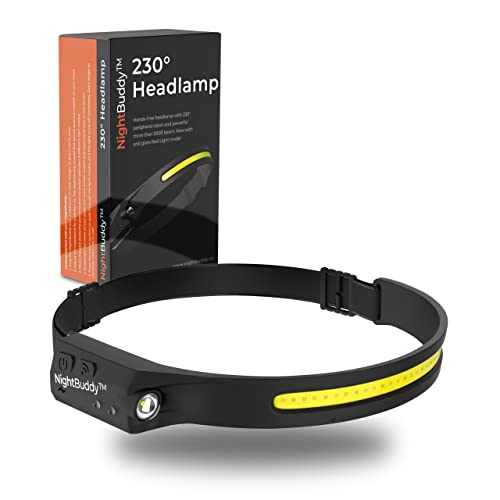
NightBuddy’s headlamp claims to come with a weather-proof design, runtime of 8 hours on a single charge, customizable headband with adjustable strap, and a light beam up to 100 meters. Additionally, it has 5 different modes, including Night Vision and SOS.
According to the manufacturer, the headlamp uses red light technology to reduce glare and avoid attracting bugs, which makes it a suitable option for outdoor activities and night photography. Users also praise its brightness and functionality, although some of the common criticisms include short battery life and overall poor durability – with one customer even claiming their headlamp broke after just a few uses.
3. BIAT – best affordable model
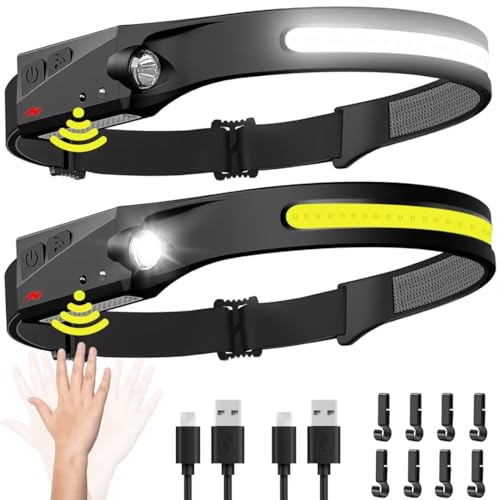
Advertised as lightweight and comfortable to wear thanks to its soft silicone material, BIAT boasts 6 different light modes, waterproof design fit for activities like diving or fishing, 230-degree wide angle illumination, and a 150 ft spotlight to help you see further. Its adjustable headband is another benefit, created to fit on most types of helmets without adding burden, according to the manufacturer – a promising option for both indoor and outdoor workers.
Users compliment this model for its design, bright light and affordable price, although its functionality and battery life get mixed reviews. However, most users who criticize the headlamp’s durability, still point out it’s a good value for money.
4. klarus – best durability
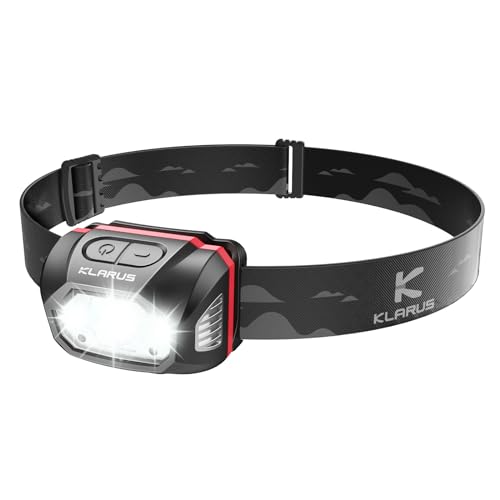
klarus positions itself as a reliable option for users who plan on intense use, with the promised battery life of up to 70 hours on low and charging time of 2.5 hours. Its weatherproof build is designed to withstand extreme conditions like torrential rain, while the silver-plated heat dissipation is claimed to extend LED lifespan by 50%, making it a promising model for outdoor workers.
Customers compliment the headlamp as well, with users often praising its battery life, brightness and overall comfort.
5. MOLAER – best for travelers
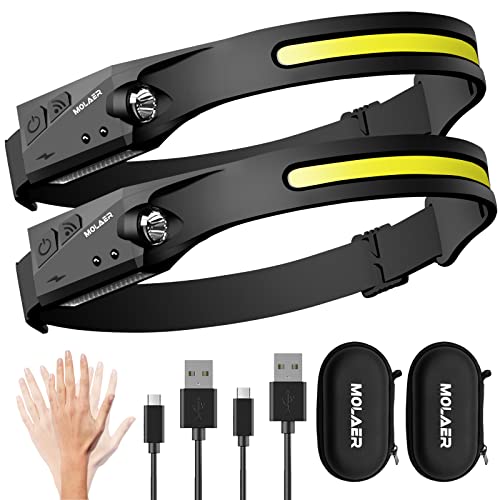
With the advertised brightness of 350 lumens, a 230-degree view, adjustable buckle for comfortable wear and 5 different light modes, MOLAER may prove a good fit for travelers thanks to its portable and flexible design, as well as multiple charging modes. You can charge it from a power bank, computer or your car – useful if you’re always on the go.
Most users compliment the model for its brightness, although the battery life and overall durability gets mixed reviews, with customers saying it goes out of service fast and isn’t particularly weather-proof.
Our methodology
Together with the Cybernews research team, I analyzed provider statements, user feedback, and expert reviews to better understand what makes a good motion sensor headlamp. While we did not try any of these models or perform hands-on testing, such as lumen verification and beam pattern analysis, we evaluated the headlamps based on available information about following aspects:
- Light performance expectation (25%). I looked at claimed lumens and available beam options, as well as reported brightness consistency.
- Motion sensor reliability (20%). I paid attention to the sensor’s overall sensitivity and potential false-trigger complaints from users.
- Comfort and fit (15%). I analyzed the models’ weight, strap adjustability and stability, bounce during running and other aspects which can affect comfort during wear.
- Battery and power options (15%). I looked at models’ battery life claims depending on the mode, as well as real users’ feedback.
- Durability (10%). I analyzed the headlamps’ build, aiming for high-quality, weatherproof models that can handle extreme conditions, from heavy rain to heat to cold.
- Ease of use (10%). The ease of setup, switching between modes and adjusting settings also mattered, with the user-friendly models being the priority.
- Value and trust signals (5%). Last but not least, I paid attention to aspects like warranty clarity, return policy and brand transparency.
How do motion sensor headlamps work?
Motion sensor headlamps use a small gesture-detection sensor (in some cases, infrared-based) to let users control the device without pressing any physical buttons. The system interprets motion in the sensor’s detection zone as a command to turn the light on or off – or, with some models, to even switch between preset modes. Such functionality can prove helpful for workers or during outdoor activities, when your hands are in gloves, dirty, wet, or simply occupied.
The way motion sensor headlamps operate can vary from model to model. For example, some have their sensors always on, while others allow you to manually activate or deactivate the feature – helpful if you want to avoid accidentally triggering the sensor.
Sensor range and direction also vary, as some front-facing models may only respond to forward hand motions, while side-mounted sensors will detect gestures from different angles.
However, it’s important to remember that motion sensor headlamps have their limitations. One of the most common complaints from users is false triggers that can occur in tight spaces, during rain or simply due to poor product quality.
Benefits of motion sensor headlamps
Motion sensor headlamps often come in handy in situations where regular button-pressing can be inconvenient. There are several key benefits to them:
- Hands-free control when wearing gloves. This is especially helpful for certain, intense kinds of work – or even simply when you’re outdoors in freezing weather.
- Cleaner use. Whether you’re doing repairs, cooking, fishing or doing any other ‘messy’ tasks, motion sensor headlamps can help you keep your workspace and yourself clean.
- Faster on and off switching. Motion sensor headlamps can be a great way to avoid unnecessary movements and save time, especially if your hands are already busy, or if you don’t want to lose sight of the trail when outdoors.
- Better accessibility. For some users, motion sensor headlamps can even become accessibility aid, reducing reliance on precise finger movements if their mobility is limited.
That said, motion control is at its best when combined with the right user interface. For example, certain models will allow you to switch the sensor on and off manually or enable the lockout feature to prevent accidental activation. Such functionality can help you make the most of motion sensor headlamps – without quickly growing frustrated by false triggers.
Applications and real-world use cases of motion sensor headlamps
Motion sensor headlamps are used in various scenarios, and can prove helpful for casual users, sport enthusiasts, professionals and travelers alike. However, there’s no single perfect model for all use cases. Which headlamp you should choose often depends not on its lumen output, but on your specific goal:
- Night or trail running. Look for lightweight models with little to no bounce and adjustable headbands, so you can keep the path well-lit without limiting your mobility and comfort.
- Camping and tent use. Focus on options that fits travel – ideally, the ones with a low-power mode for continuous camping and flood or mixed beams for broader area coverage. The lockout mode is also important if you want to avoid accidental activation in the tent.
- Mechanics and DIY work. Here, the stable beam angle, flood coverage and reliable motion control are essential – especially if you work long hours or intend for intense use.
- Photography and astrophotography. Look for a model with fast controls and dedicated modes, such as red light mode – to ensure a reliable source of light that doesn’t interrupt with stargazing or taking photos.
- Emergency kits. If you need your headlamp for emergencies, your biggest priority is durability. Look for models with flexible power options, extensive battery life, weatherproof build, and simple navigation.
How to choose the best motion sensor headlamp for your needs
To choose the best motion sensor headlamp, you need to know how exactly and where you’re going to use it. You also need to look out for the following components of a good motion sensor headlamp:
- Beam type. Flood beams will work best for close-up tasks, while spot beams might better suit trails, and hybrid options will offer flexibility.
- Modes and interface. Some of the features you might benefit from include low mode, last-mode memory, and the lockout functionality.
- Motion sensor controls. You’ll need a sensor that works reliably (even with gloves, if you plan to wear them) and, just as importantly, is easy to disable when not needed.
- Power options. While rechargeable models are often the most convenient, it’s worth considering AAA/AA options or a replaceable battery if you’re planning a long trip without power.
- Comfort and fit. Aspects like the overall weight or strap width and adjustability will affect your long-term comfort, which is essential for active use.
- Weather resistance. Check the IP ratings that indicate protection from rain or splashes. And while often overlooked, cold-weather performance is also important – especially if you’re planning to go skiing or work outside during winter.
- Extra safety features. Models with advanced safety features like reflective straps or rear red lights can prove especially helpful for workers and outdoor usage.
Things to be aware of when buying a motion sensor headlamp
When buying a motion sensor headlamp, there are several common red flags to watch out for. Here are the pitfalls to keep in mind:
- Overstated claims are common to find on retailer websites. Be aware of positions with vague descriptions and no specifics, such as runtime charts or IP rating, and always look out for transparency in descriptions.
- Motion sensors that cannot be disabled risk causing accidental activation in tents, bags, or simply tight spaces, so watch out for models that are way too limited in their functionality.
- Similarly, absence of the lockout mode can also increase the risk of false triggers – and result in your battery getting drained quicker.
- Proprietary batteries or charging cables can be hard to replace when the time comes, so be sure to seek out newer models with transparent maintenance options.
- Last but not least, suspicious brands with vague warranty terms may complicate the return process or long-term support, so even if the price looks tempting, chances are high that the price-to-quality balance isn’t there.
Remember to only purchase your motion sensor headlamps after thorough evaluation – and only from trusted providers or established marketplaces, with the checkout process secure and transparent. It’s also worth checking the brand’s shipping, warranty and return policies in advance to avoid unpleasant surprises later.
Bottom line: which motion sensor headlamp should I buy?
While there’s no single best motion sensor headlamp for all needs, you’ll be able to make the right choice as long as you know what exactly you need it for.
For example, runners and sport enthusiasts will benefit most from lightweight designs with stable straps, simple controls, and sensors that can be switched off, while campers should prioritize wide flood beams, low modes for longer runtime, and lockout functions.
For work or DIY tasks, it’s better to focus on durability, glove-friendly sensors and stable lighting and beam direction. And if you’re low on budget, prioritize essential features and basic reliability – look for models with clear and transparent descriptions, as well as strong return policies.
FAQ
Are motion sensor headlamps reliable, or do they trigger accidentally?
This depends on the model, with advanced options usually more reliable and cheaper ones more prone to false triggers. While the headlamp can still trigger in rain or cramped spaces, these accidents can be prevented if it has a lockout feature.
Can a motion sensor headlamp be used with gloves in winter?
Yes, most advanced motion sensor headlamps are designed for glove use. However, thicker gloves may still potentially reduce sensitivity with certain models, especially cheaper ones.
What matters more: lumens or beam pattern?
While lumens are important, beam pattern usually matters more when it comes to buying a motion sensor headlamp – with the right pattern depending on your specific use case. For example, flood beams will suit close-range tasks, while spot beams are more helpful with distance visibility.
Do rechargeable headlamps work well for multi-day trips without power?
It depends. Rechargeable headlamps are generally convenient, but in a scenario when your power access is limited, a replaceable battery might prove more reliable.
What’s the safest way to buy a headlamp online and avoid misleading listings?
Be sure to choose trusted brands and retailers only, avoiding listings with unclear specifications, suspicious checkout processes, and unreliable return policies. Additionally, remember to check real users’ reviews before purchase – to avoid falling into the trap of exaggerated manufacturer claims.