Bluetooth brakes leave vehicles vulnerable to remote access and control
No pairing, PIN, or authentication needed.
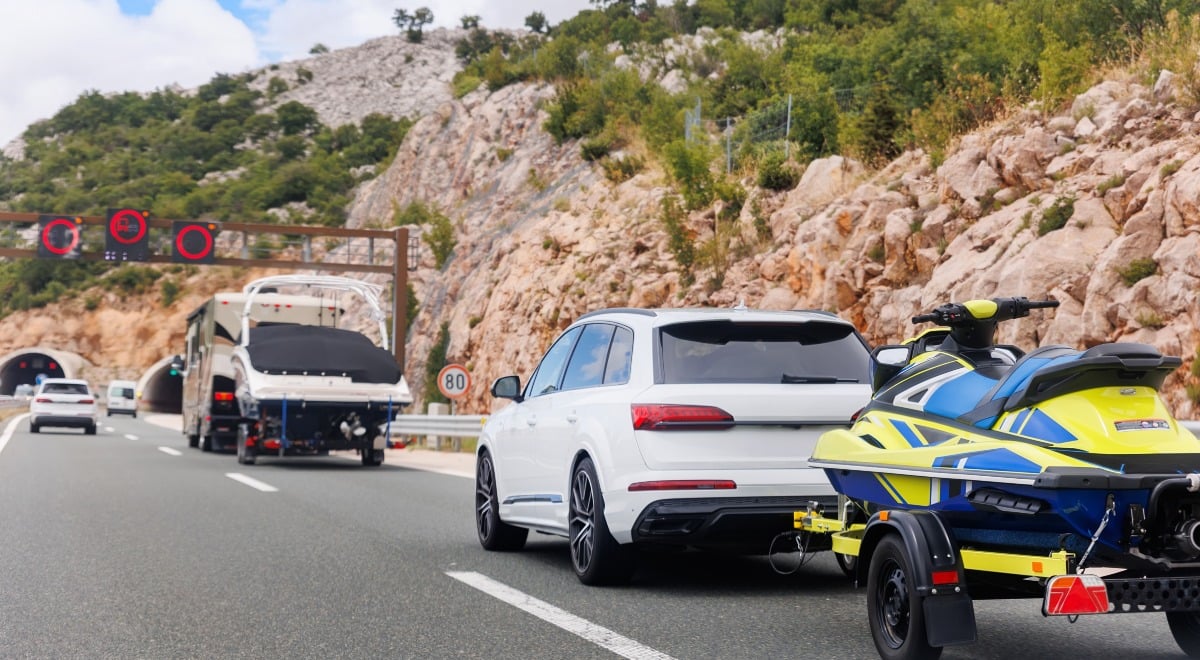
Image by K-FK via Shutterstock

 Follow us
- Researchers say Elecbrakes controllers accepted brake commands over Bluetooth without pairing, a PIN, or authentication.
- A nearby phone or laptop could apply trailer brakes, disable brake lights, or change safety settings.
- CISA says EB2, VM1, and ELBC2000 products are affected by three reported vulnerabilities.
- Elecbrakes released fixes for EB2 and VM1, but users must install updates manually.
Key Takeaways by nexos.ai, reviewed by Cybernews staff.
Researchers say the vulnerability in Elecbrakes’ controller allowed any phone or laptop within Bluetooth range to apply the trailer’s brakes or disable brake lights.
Patrick Forck and Jeremy McCarthy, researchers at Element Digital, a Tasmania-based IT consultancy, detail previously unknown risks of Bluetooth-powered brake controllers.
Heavier trailers need their own brakes and a controller that applies them in proportion to how hard the tow vehicle is braking. Normally, the controller is a box bolted to the underside of the dashboard.
However, manufacturers like Australia’s Elecbrakes moved the brake controller box to the trailer itself, allowing brakes to be controlled via Bluetooth from an accompanying app.




Forck says he was driving down the highway when he noticed that his physical Elecbrakes in-car remote had automatically connected to someone else’s trailer. His own trailer wasn't towed at that time, but he had the remote powered on.
It had connected mid-drive, without pairing or a prompt, to a brake controller that wasn’t mine, on a trailer I’d never seen, belonging to a driver who had no idea,Patrick Forck, researcher at Element Digital
Researchers emphasize that the brake controller is a safety-critical component because it decides the braking force applied by the trailer.
“When it does the wrong thing, you are having a very bad day on a highway with several tonnes of trailer behind you,” Forck and McCarthy say.


Stay updated with our latest stories and follow us on social media
Be the first to discover new stories, ideas, and updates from our team.
Not your average IoT bug
The remote access to a trailer’s brake controller without any authorization prompted Forch and McCarthy to start an investigation.
They used Claude to reverse engineer Elecbrakes Android app, revealing the device’s entire Bluetooth GATT profile: 47 characteristics, 5 of which were hidden, across 4 services, commands sent as plain unencrypted byte arrays, no checksums, and no sequence numbers.
Researchers then built a Web Bluetooth research tool that runs in Chrome, and made multiple pairing attempts on the system owned by Forck.
Despite multiple failed attempts, the system allowed accessing the actual brake control. Researchers wrote 4 bytes to the brake control characteristic, and, to their own surprise, connected without any pairing or PIN.
The electromagnetic hum at the brake drums was immediate and, frankly, a little sickening,Patrick Forck and Jeremy McCarthy, researchers at Element Digital
Researchers say their findings reveal “not an average IoT bug,” because the attack surface is “anyone within Bluetooth range,” the skill required is “can write four bytes,” and the victim selection is “optional.”
Two firmware fixes delivered
The Cybersecurity and Infrastructure Security Agency (CISA) issued an advisory on November 19th, 2026, saying that that vulnerabilities in Elecbrake’s system could allow an attacker to
- Gain control of the brakes of a trailer
- Modify the firmware
- Disable the brake lights
- Modify the brake conditions or disable other critical safety features
According to the CISA, the following versions of Elecbrakes EB2, VM1, ELBC2000 are affected
- EB2 <=3.0.4.2.0 (CVE-2026-124281, CVE-2026-125273, CVE-2026-96805)
- ELBC2000 vers:all/* (CVE-2026-124281, CVE-2026-125273, CVE-2026-96805)
- VM1 <1.3.4.2.1 (CVE-2026-124281, CVE-2026-125273, CVE-2026-96805)
Elecbrakes told researchers there have been no reported incidents of damage or injury caused by these vulnerabilities. Forck and McCarthy hadn’t seen evidence of exploitation either.
The company shipped a firmware fix for the EB2 and VM1 on July 6th, 2026. Users need to install the update themselves because it isn’t delivered automatically. There is no fix for ELBC 2000 yet, according to the researchers.
While Elecbrake products are primarily used in Australia and New Zealand, Bluetooth-powered trailer brake controllers are also available in the US. However, it remains unclear if products from other brands carry the same vulnerabilities.