Hackers claim Burger King, Tim Hortons, and Popeyes owner, some credit card data exposed
The victim has 48 hours to respond.
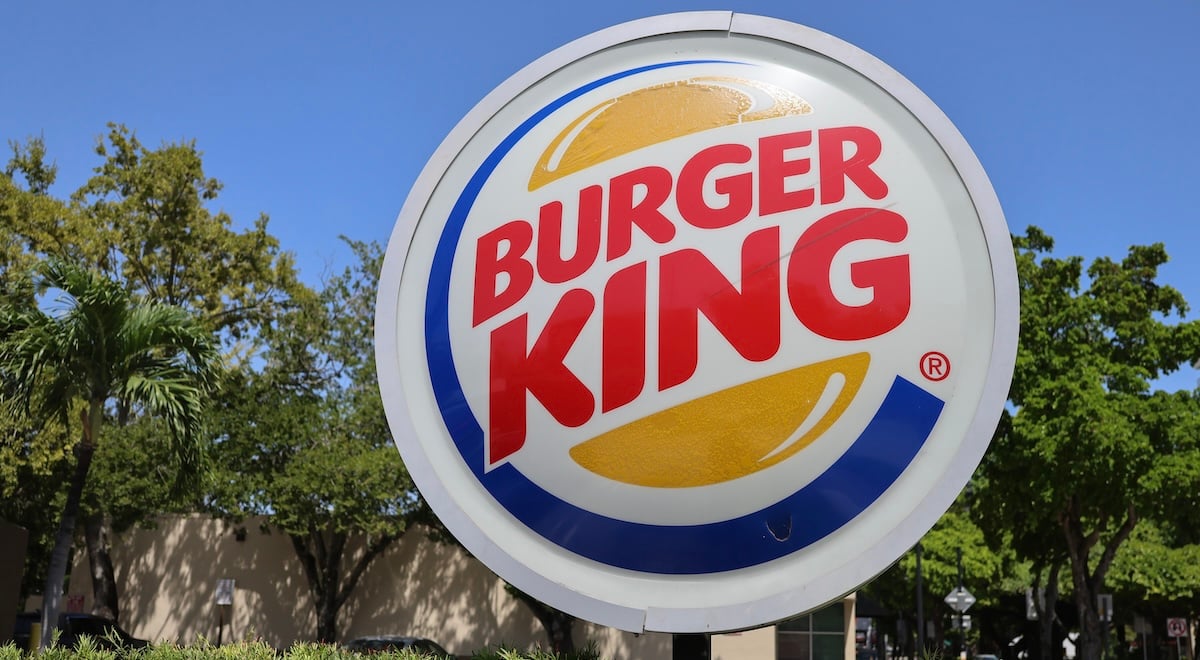
A Burger King restaurant in Florida. Source Joe Raedle/Getty

 Follow us
- Inception claims it stole about 800,000 files from Restaurant Brands International, but has shown no samples.
- The alleged data includes support tickets, loyalty records, complaint records, and partial payment details.
- Hackers say they accessed employee OneDrive accounts and exported corporate Slack messages.
- A Cybernews researcher warns criminals could combine the data for profiling and possible fraud.
Key Takeaways by nexos.ai, reviewed by Cybernews staff.
Restaurant Brands International (RBI) has reportedly suffered a ransomware attack. The cybercrime gang has given the fast-food giant 48 hours to respond to its demands before leaking stolen data, but has provided no proof that the hack actually happened.
The parent company of Burger King, Tim Hortons, Popeyes, and Firehouse Subs has allegedly suffered a ransomware attack in which around 800,000 files were stolen.
In this case, the data relates to customer support tickets and restaurant loyalty programs.
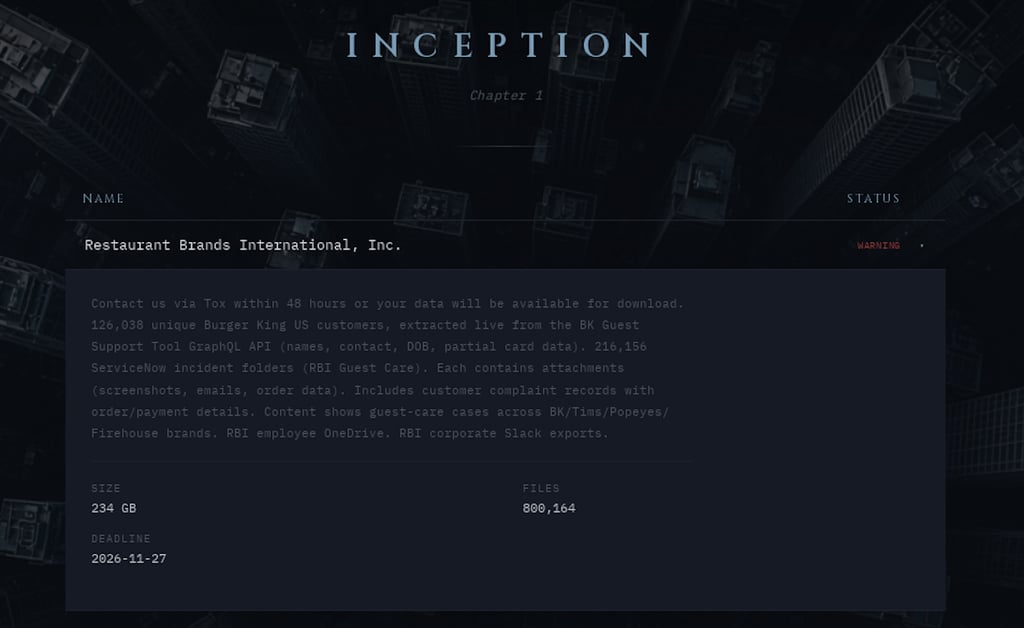
Inception, the ransomware group that claimed responsibility for the hack, extracted data from approximately 126,000 Burger King (BK) customers through the BK Guest Support Tool.



This data includes:
- Names
- Contacts
- Dates of Birth
- Partial card data
Roughly 216,000 incident folders were swiped from RBI, which allegedly include screenshots, emails, and order data.
These guest care cases came from RBI’s major restaurants, including Tim Hortons, Popeyes, Burger King, and Firehouse Subs.
Customer complaint records were also accessed, which show order and payment details.
Hackers claim that they managed to steal RBI employees' OneDrive accounts and exported the company’s corporate Slack messages.
Inception posted the claims on its leak site, urging RBI to contact them via Tox within 48 hours, or the data will be made public.
However, Inception provided no data samples, just written claims on its leak site.
Cybernews has reached out to RBI asking to confirm the breach.
What could hackers do with this data?
While the support ticket and loyalty program data might not be damning on their own, if bad actors combined this with other leaked data, it could mean bad news.
Cybernews information security researcher Rasa Jurgutytė said that bad actors may combine leaked data to create a more detailed profile of the victims.
She also raised alarms around the risk of financial fraud.
“But this could be limited and depends on whether there’s more info than just the last 4 digits of a credit card number.”
What’s more, internal company data, such as OneDrive and Slack messages, could lead to further exposure.
“Internal company info could expose more detailed PII [personally identifiable information] of employees, confidential info surrounding how the company operates, and possible information about internal infrastructure that could be used against them as well,” Jurgutytė concluded.


Stay updated with our latest stories and follow us on social media
Be the first to discover new stories, ideas, and updates from our team.