Users turn to pen and paper to protect their passwords amid data breach fears
Paper as a password manager.
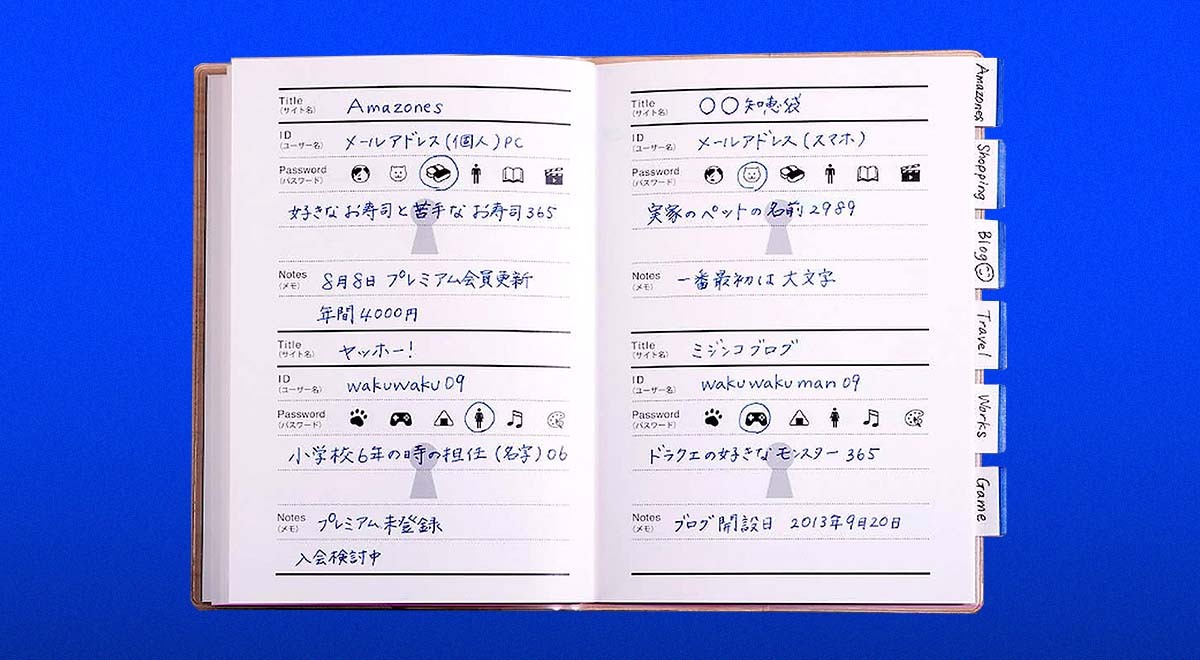
Image by Cybernews | Source: Amazon Japan

 Follow us
- Hands says Hightide Password Books sales rose 50% year over year and sold out online.
- Retailers say customers in their 20s and 30s are increasingly buying password notebooks.
- Cyberattacks on Muji and Osaka Metropolitan University have heightened concern over exposed data in Japan.
Key Takeaways by nexos.ai, reviewed by Cybernews staff.
The Japanese are bringing back paper notebooks to keep their passwords and IDs secure. Do they have a point?
The Japanese retailer Hands reported a rise in sales of the “Hightide Password Books” over the past month, which are used to write down website names, personal information, and passwords.
Sales of these notebooks have surged by 50% compared to last year, and they’re already out of stock at the company’s online store, according to Nikkei.
Daiso, another retailer, has also reported a growing interest in these notebooks, suggesting there may be a reason behind the sudden surge in demand.





Safer on paper?
As most users tend to store their passwords digitally, these notebooks were initially aimed at older customers in their 60s and beyond.
However, Daiso has recently seen an increase in purchases by customers in their 20s and 30s, while Hands has also reported a widening age range among its buyers.
Previously, many users were much less diligent about account protection, often reusing the same password across multiple accounts.
A surge in cyberattacks and data breaches appears to have made them more cautious about their data being exposed online.

Attackers are going after various institutions, including universities, stores, and government sites.
It was previously reported that Muji, a Japanese retail brand, suffered a cyberattack in which 27 million emails were leaked, along with more than a million credit card numbers.
In October, Osaka Metropolitan University had to cancel classes and shut down a part of its IT infrastructure due to a ransomware attack.
The attack caused 500 servers to stop working, disrupting operations across various university departments, including administration, accounting, educational support, library, and HR.
The season of data breaches
Japan isn’t the only one to suffer from frequent data breaches and leaks.
French sports retailer Decathlon confirmed a data breach affecting its website and exposing 163,000 customers.
Leaked data revealed users' emails, phone numbers, addresses, and more. The company shared that no bank details or passwords were compromised.
In the US, Visa and JPMorgan Chase were targeted by a ransomware gang known as n0n.
N0n has leaked data exposing 6,000 premium Visa customers and 16,000 JPMorgan customers.


Stay updated with our latest stories and follow us on social media
Be the first to discover new stories, ideas, and updates from our team.
Recently, it was reported that an unsecured database exposed about 2 billion credential records.
The database contained leaks from numerous data breaches.
The data included emails, passwords, cookies, session tokens, device details, and saved app credentials.
Even governmental institutions aren’t safe, with the US Treasury Department, the CIA, ODNI, and the FBI having been affected by cyberattacks.
It’s been reported that the incident, involving hackers gaining “unauthorized access to a limited subset of its systems, is being investigated.
It’s not yet clear which systems were accessed or how the actors accessed them.