Drones over Europe: when airspace is the new frontline
When European lawmakers call drone flights over the region’s critical infrastructure “hybrid warfare,” that’s probably an overstatement: drones are nothing new, actually, if only, well, there are millions of them, and everyone can buy one. Nevertheless, the possibility of a catastrophic event is growing, an expert says.
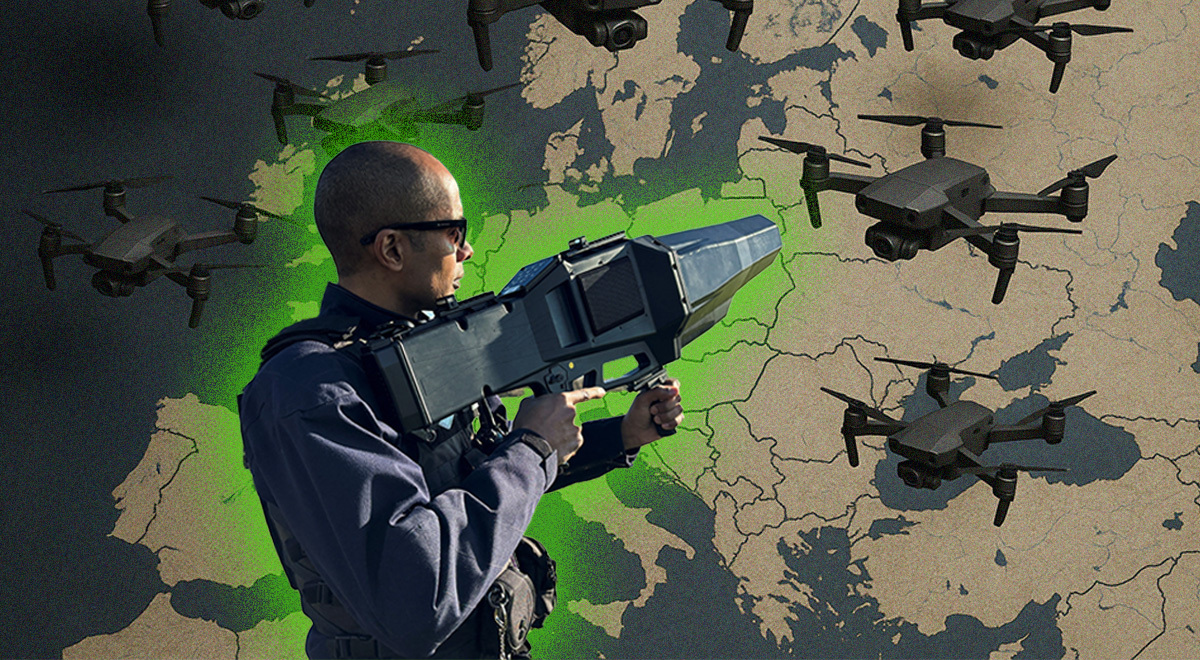
Image by Cybernews.

 Follow us
When European lawmakers call drone flights over the region’s critical infrastructure “hybrid warfare,” that’s probably an overstatement: drones are nothing new, actually, if only, well, there are millions of them, and everyone can buy one. Nevertheless, the possibility of a catastrophic event is growing, an expert says.
- Drone activity, particularly from Russia, is increasing over critical European infrastructure, raising security concerns.
- Current radar systems struggle to detect small drones, necessitating investment in new detection technologies & data sharing.
- A layered defense – combining detection, tracking & mitigation – is crucial, with open architecture key to effective protection, Ash Alexander-Cooper says.
Key Takeaways by nexos.ai, reviewed by Cybernews staff.
The usual suspect in the last few months is Russia. Moscow is flying drones daily to attack targets in neighboring Ukraine and, according to European officials, is testing Western defences by sending them westwards, too.
Drones have recently flown over critical sites in Belgium, Poland, Romania, Denmark, and Germany. In some cases, the Kremlin’s fingerprints are easy to spot – in others, when airports had to be closed in Denmark, Norway, and Germany, they weren’t.
Either way, flights needed to be grounded and jets had to be scrambled. That’s expensive if not deadly dangerous – and the cost is growing every year.






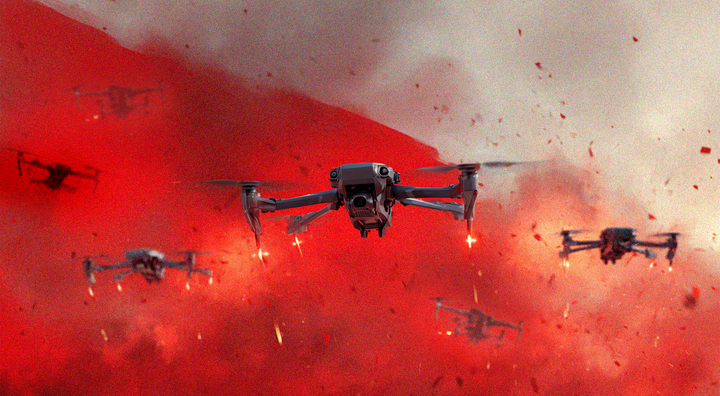
According to data released by the EU Aviation Safety Agency (EASA), in 2021, the number of incidents involving drones in European aviation soared from around 500 a year in 2015 to nearly 2,000 in 2019.
EASA was unable to provide more recent data. Undoubtedly, though, drone incursions are now even more frequent. These unmanned vehicles are more modern each year and generally difficult to detect for air traffic control systems.
As Frederic Deleau, vice president for Europe of the International Federation of Air Traffic Controllers’ Associations, told Politico, “traditional radar is optimized for large aircraft with substantial radar-reflective surfaces, not lightweight carbon-fiber devices.”
Consequently, “small UAVs often fall below radar detection thresholds or are mistaken for birds or clutter.”






According to Deleau, specialized drone-detection technologies like radio-frequency (RF) scanners, electro-optical cameras, and acoustic sensors are being deployed.
But he added: “No single technology yet offers complete and reliable coverage.”
That’s unless these technologies are properly interconnected, says Ash Alexander-Cooper, Vice President for the EMEA and APAC regions at Dedrone by Axon, one of the leading drone defense companies in the industry.
He insists that counter-drone detection data sharing must become the new normal, especially for Eastern European countries. Otherwise, criminals and bad actors, state-sponsored or not, will always stay one step ahead.
“It doesn’t take a lot of creativity to cause harm, disruption, and death. You don’t have to get explosives across a border hidden in a car. The threat is as creative as the entrepreneurs seeking to do harm. That’s what makes it so challenging,” Alexander-Cooper told Cybernews.
A border wall can be irrelevant
The uncomfortable truth is that the Eastern European region is vulnerable to these drone threats – let’s be honest, Russian drone threats. How vulnerable do you think we are? Is it bad, or is it manageable still?
It’s hard to say. It’s manageable – until it isn’t. Until there is a catastrophic incident that then triggers governments to take action. Many assume it won’t happen to them and apply, therefore, a (highly risky) strategy of hope. As Dedrone by Axon is deployed globally, we see a lot of different types of customers and different sites that need protecting.
Counter-drone detection data sharing must become the new normal, especially for Eastern European countries.
The concern I have across Europe is particularly about countries one country away from the Eastern flank. They hope they’ll have time to think about how they’re going to approach the problem and the solution without rushing, because they don’t want to apply budget when racked and stacked against competing priorities.
The message I hear from many governments is this: “We understand there is a problem, but it hasn’t really impacted us yet directly” – until it does. In another recent conversation with an international airport they said, “We know it’s a problem, but it hasn’t hurt us yet.”
Then an aircraft was hit. Luckily, despite being struck by a drone, it landed safely. Yes, the damage ended up costing the airline and the airport money, but nobody died. But almost because nobody died, the conversation has slowed down again.

There are cost‑effective solutions today that every country – including those in Eastern Europe – can afford, for as little as tens of thousands of dollars or euros a year. There are baseline solutions that will give them a really good understanding of the nature of the threat: what is normal drone activity? What is the baseline around our cities and airports?
Most global drone activity is not illegal. Almost anybody can buy a drone – the threat comes from those who don’t understand the risk they pose flying near an airport, electricity substation, or port. They could do serious damage or create loss of life without knowing it. Then, at the other end of the spectrum, you’ve got those individuals or groups that seek to do harm.
I worry that we do not yet have drone detection and data sharing networks inside or between countries across Europe, enabling coverage and protection of an entire frontline and every critical national infrastructure site in a country.
Until we have that network of airspace and counter-drone detection data sharing at scale, it will be really hard for governments to understand the full extent of the threat, as it evolves.
“Wall” sounds great, but when you hear “wall,” you think fixed, solid, impenetrable, or something you have to knock down to get through. The drone threat is different.Ash Alexander-Cooper.
What about the concept of “drone wall?” It’s not a physical wall, of course, it’s a network of detection and interception systems, but opinions about it differ across Europe. The German Defense Minister Pistorius said drone defense would be more logical at the moment because the tech is evolving too quickly to build something so temporary. What do you think of that concept in general? Is it just an impressive headline?
“Wall” sounds great, but when you hear “wall,” you think fixed, solid, impenetrable, or something you have to knock down to get through. The drone threat is different. Yes, we need a broader network of capability across the entire frontline – if we’re calling it the frontline with Russia – but we shouldn’t think of the “wall” as being fixed, or the entire solution.
Capabilities should be able to move and adjust as the threat changes, as the Russians clearly do.
In the most recent cases of airport incursions across Europe, if a non‑state or state actor, such as Russia, wanted to disrupt operations – without protection – it would not be hard to breach the perimeter, gauge initial reaction, wait for the response, before moving to another location and doing it all again, thereby creating maximum disruption. Hard to prove, but very effective.
A fixed wall is valuable only if it is one part of a more comprehensive and layered system of capabilities – detection, tracking, identification, as well as mitigation or defeat. But what if – as happened during Ukraine’s Operation Spiderweb in June – the drones are already inside the country, behind the wall?
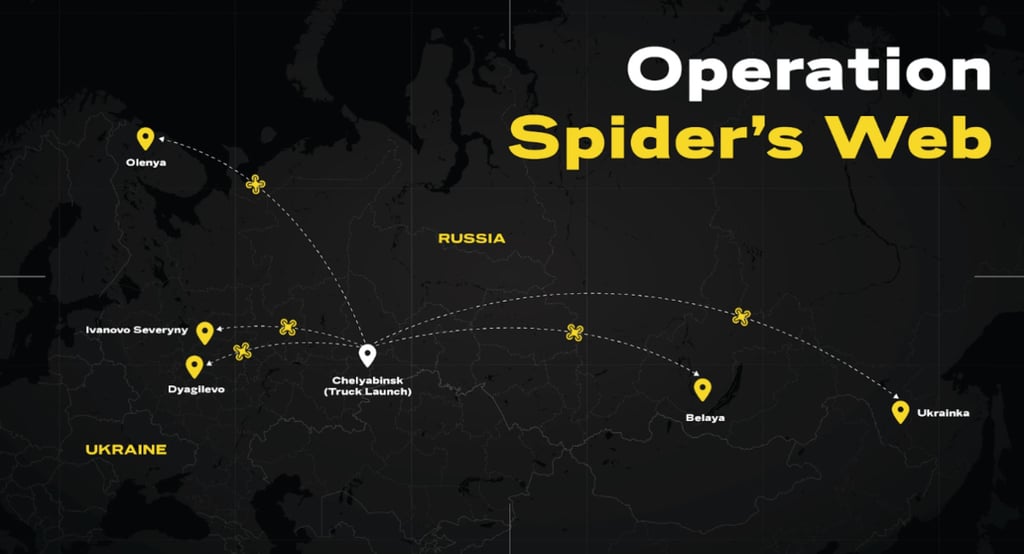
A wall on the border is irrelevant if they’re already 3,000 km inside, in the back of a lorry, driven by someone who doesn’t know they’re there.
Governments need to think, therefore, about border security being part of a much broader, coherent and layered airspace security network.
For larger drone threats from the East, detection should take place as far away as possible so interceptions, or other defeat measures, happen well before they reach cities – missiles, interceptor drones, even airplanes in some cases.
You don’t want a drone over a city because of the risk to civilians, should it reach its target, or if it were to fall from the sky.
If airspace is the new frontline, wherever the threat exists is our frontline – it doesn’t have to be on a border. Let’s think less, therefore, about a fixed border wall and more about a network of capability across the frontline that extends deep inside domestic territory, protecting all key sites all of the time.
Open architecture as default
It’s very interesting, because when you put it like that, the threat’s everywhere, right? Russia, or, actually, whichever great power, has the capability to have its own agents inside your country or region anyway: a lorry, a ship, a boat.
Exactly. It doesn’t require you to hide and ship explosives across a border, which is risky. You could go on Amazon, buy a drone, be a sleeper agent in Munich, Bonn, Vilnius, or wherever, and fly that drone with anything you want – into a stadium for a big national football game with 80,000 people.
Even something as harmless as flour from the kitchen – if dropped from a drone – could cause mass panic among the crowd.Ash Alexander-Cooper.
Even something as harmless as flour from the kitchen – if dropped from a drone – could cause mass panic among the crowd. Fearing the white powder could be poisonous, you’ll have people running to escape and screaming, leading to a high chance that some will be injured or killed in the stampede.
It doesn’t take a lot of creativity to cause harm, disruption, and death. You don’t have to get explosives across a border hidden in a car. The threat is as creative as the entrepreneurs seeking to do harm. That’s what makes it so challenging.
Industry and governments need solutions that are cost‑effective and affordable enough to deploy in many more places, so it isn’t just borders that are protected. Equally, it can’t just be the Presidential palace or the parliament building. It’s got to be on every football stadium, power station, port, airport, and train station.
You need a networked understanding of the threat, affordably. Equally important, it has to be software‑defined so that whatever governments deploy can connect with existing or legacy systems. We must drive open architecture as default – governments should not be locked into a single system or vendor.

In the past, some company strategies sought to tell customers that everything they’d purchased previously was rubbish and that they should buy everything again from scratch. That won’t work. It is neither realistic nor sensible. Industry must be able to take existing RF, radar, cameras, acoustic or other sensors and integrate them, if they are good enough for use in the current fight.
If my system can’t integrate a large number of proven industry hardware, I shouldn’t get a contract. We must maximize existing hardware, software, and solutions across each country, with those governments establishing robust data‑sharing agreements to share safely and securely drone and airspace security data between themselves.
Probing activities by drones in northern Finland might not be an isolated event – it might be the same kind of testing also happening in Lithuania, Estonia, Latvia, or Poland. But without the scalable threat detection network, we just won’t know.
Safe jamming possible
So, what does Dedrone by Axon do? How does it detect a threat and contain it?
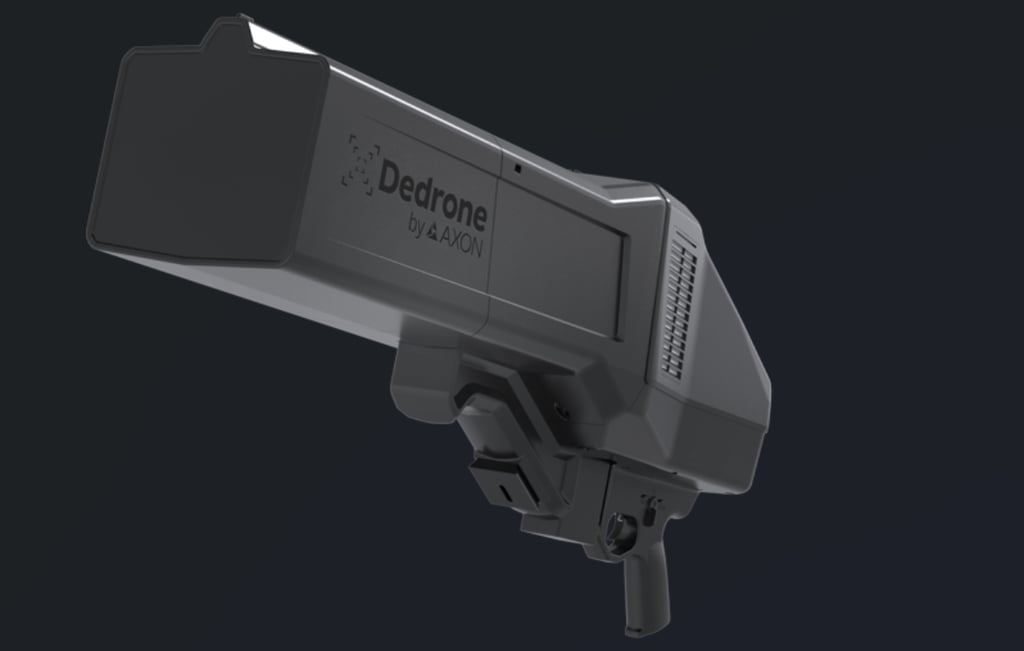
Fundamentally, we’re an airspace security company. We make radio frequency sensors and a smart jammer (DedroneDefender), but we are best known for our sensor fusion software platform called DedroneTracker.AI, which leverages a cutting-edge AI engine to fuse data from different sensor modalities in a single pane of glass.
This means that, whether your sensor provides RF detection (drone signatures, pilot and drone home (take off) locations), radar tracking (excellent for fiber‑optic or non-standard drones), or optical detection (to identify visually the type of drone and whether it’s carrying something), our software fuses that into a single view.
As a user, you will see the drone in real time, and everything related to that drone and its activity. Leveraging advanced AI fusion, you don’t get multiple tracks of the same thing. AI helps crunch the data to give you a single source of the truth, so you can make fast and more effective decisions.
In many countries where drone mitigation is highly restricted – either jamming (soft kill) or kinetic defeat (hard kill) – getting real-time detections, and then getting security or police officers to the pilot location quickly is some of the best mitigation.
As part of Axon, the company that makes tasers, body cameras, and evidence software, and is deployed by so many governments and police forces around the world, we can now offer an end-to-end experience.
This means that on the back of Dedrone alerts, Axon enables customers to identify and dispatch the closest officer to the pilot location to understand why he or she is there and if they have any nefarious intent or just didn’t realize they were flying dangerously.
In many countries where drone mitigation is highly restricted – either jamming (soft kill) or kinetic defeat (hard kill) – getting real-time detections, and then getting security or police officers to the pilot location quickly is some of the best mitigation.Ash Alexander-Cooper.
Increasing numbers of customer conversations ask about jamming. Many traditional systems available (whether RF or GPS jammers) jam everything on a given frequency.
Your WiFi right now is probably 2.4 GHz or 5 GHz. That means, if you jam 2.4 GHz, where many drones fly, that’s also where lots of WiFi lives. So, if you were to jam everything in the 2.4 GHz range, your WiFi will be disrupted; you may even lose Bluetooth and potentially other comms systems. That’s how most jamming works.
But jamming can be done more selectively and safely, a requirement particularly for urban environments and airports. For some situations – presidential security, for example – blanket jamming may be exactly what the protection officers want, if a drone gets too close. Being able to press the button – the “Oh s**t!” button – and jam everything around them to protect their principal, is a key requirement.
However, what our smart jammer (DedroneDefender) does differently is to be able to select and neutralise specific drones, taking its cue from the Dedrone sensor network to which it can be connected.
What this means in practice is that, rather than hitting everything within a cone of effect, I can select an individual drone. Your drone might be flying on 2.4GHz, but in reality, this could be 2437.000 MHz.
So, rather than hitting everything flying on 2.4GHz, including ‘friendly’ police, military, or TV drones, you can now target the one frequency or protocol the illegal drone is on, leaving everything else to fly unimpeded.
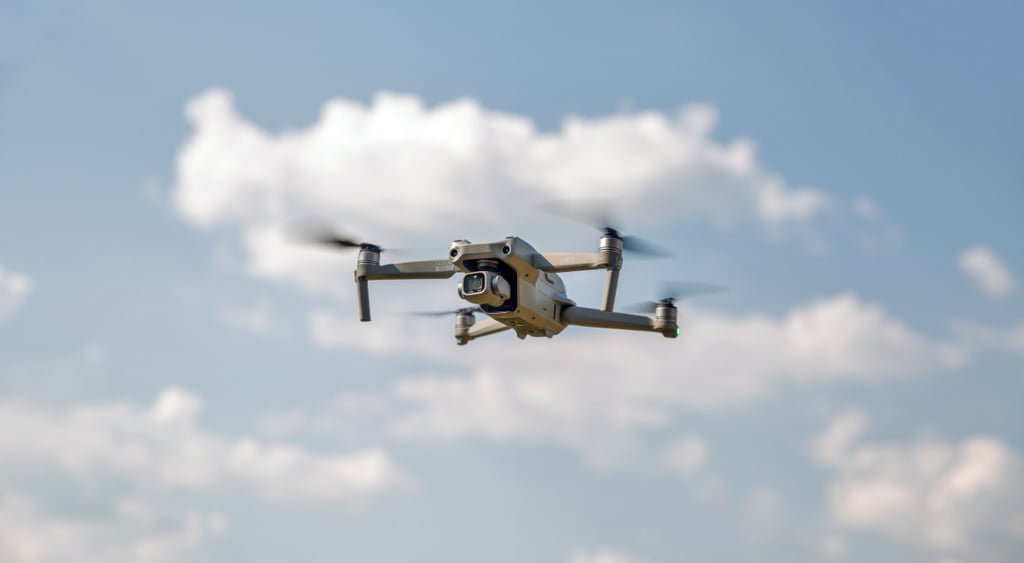
More importantly, because it’s surgical, it’s safer in urban areas or airports, and I don’t even need to see the drone: the sensors know where it is. The smart device on the back of DedroneDefender then tells me exactly where to point and even when to pull the trigger, neutralising on the most appropriate defeat protocol. Once mitigated, most drones return home to their take-off point.
We help customers get the most comprehensive threat picture by integrating other best‑in‑class global technologies to ensure that, if a customer already owns something or wants to buy new components, we can help integrate them into the solution.
This means that they get the most effective option – from core RF-only solutions for only a tens of thousands of Euros a year all the way through to large sites with RF sensors, IR cameras, radars and jammers at the top end, depending on the threat, budget, and environment.
Many customers don’t have the data to make informed decisions, so we often start with a baseline system to help them understand the nature of the threat they need to address.
In Australia, where Dedrone by Axon has created a national threat detection network, we’re seeing more than 125,000 alerts a month across the country, helping them make better decisions. Sydney may be busier than Melbourne, which may be busier than Adelaide. They didn’t know that until we connected it all together.
More importantly, if you’re an adversary, deliberately flying drones near or over sensitive sites to gauge government reactions, if you keep using the same drone, our customers will now know you’ve turned that drone on again.
If you already violated airspace in Vilnius and then pop up in Tallinn, and I’ve tagged you as illegal or unknown within a European network of capability, Dedrone can help alert everybody the moment you fly again.
That network threat picture is critical. Expand that across the Eastern flank: I want countries to share border data with neighbors, so together we have a better chance of defeating the threat.
A constant cat-and-mouse game
What’s your success story – the best example of your drone product working for a country or a government?
The World Cup. We protected the 2022 Qatar World Cup – 900 km² (347 sq. miles) across 46 sites – connecting hundreds of sensors with only seven weeks to do it. It was 100% successful, with not a single game disrupted.

We saw more than 2,000 illegal drones, almost 100 of which tried to get inside stadiums. Every single one was detected, tracked, identified, and then defeated.
Has Dedrone learnt anything from the Ukraine war? They have faced drones for almost four years now.
We’ve learned a huge amount. We’re also learning how quickly the cat‑and‑mouse game is speeding up. When Western companies supporting Ukraine come up with a new capability, we see how quickly the Russians identify it and try to counter it.
It’s a constant battle, which is why procurement is frustrating for many governments: their cycles can’t keep up with the speed we need to deploy. We at Dedrone are advocates of an open architecture, software‑defined, or software‑led approach.
You can’t keep replacing hardware. You’ve got to update software to keep up with the threat – new signatures, new ways to detect or defeat threats. Clearly, a lot of counter‑drone and airspace security companies are engaged in Ukraine, and we’re all learning a huge amount.
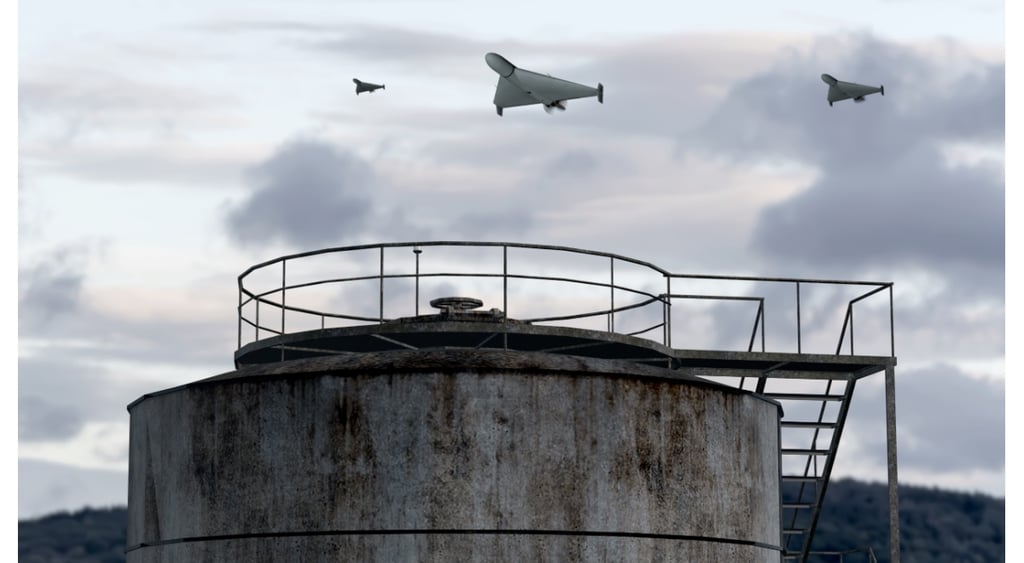
Being able to add new drones – visually or in RF frequency terms – is a much-needed ability. It’s the speed at which we all need to move. Many governments recognize they have to move faster.
While it does not have to cost a lot up front, there does need to be a dedicated investment if governments want to do this seriously. Unfortunately, too many are waiting for the big catastrophic event that might trigger taking the threat more seriously, while hoping it never happens. We shouldn’t wait for that.
Have you noticed Russia reacting specifically to the software you use to help Ukrainians fight back?
Not specifically. The Russians don’t know where we are deployed, and nor should they: we wouldn’t expose that. But they’re trying to evolve capabilities to counter a multitude of capabilities deployed by Ukraine and the West in support of Ukraine.
The challenge for Ukraine – and one of the lessons we need to learn quickly for protection across Europe – is that because of the speed at which some systems have been deployed and the way they’ve learned, many have been built in quickly, but in silos. Those focused on delivering capability haven’t necessarily had time to think about how to network their solutions in the longer term.
For the rest of us, the key is that these great ideas evolve into an open architecture that all of us can integrate with and share on agreed standards. That’s how Europe creates the most effective layered defense of its airspace against today’s and tomorrow’s threats.
Unlock more exclusive Cybernews content on YouTube.