Russian hackers claim responsibility for attacks on European refrigeration systems
Tons of food wasted.
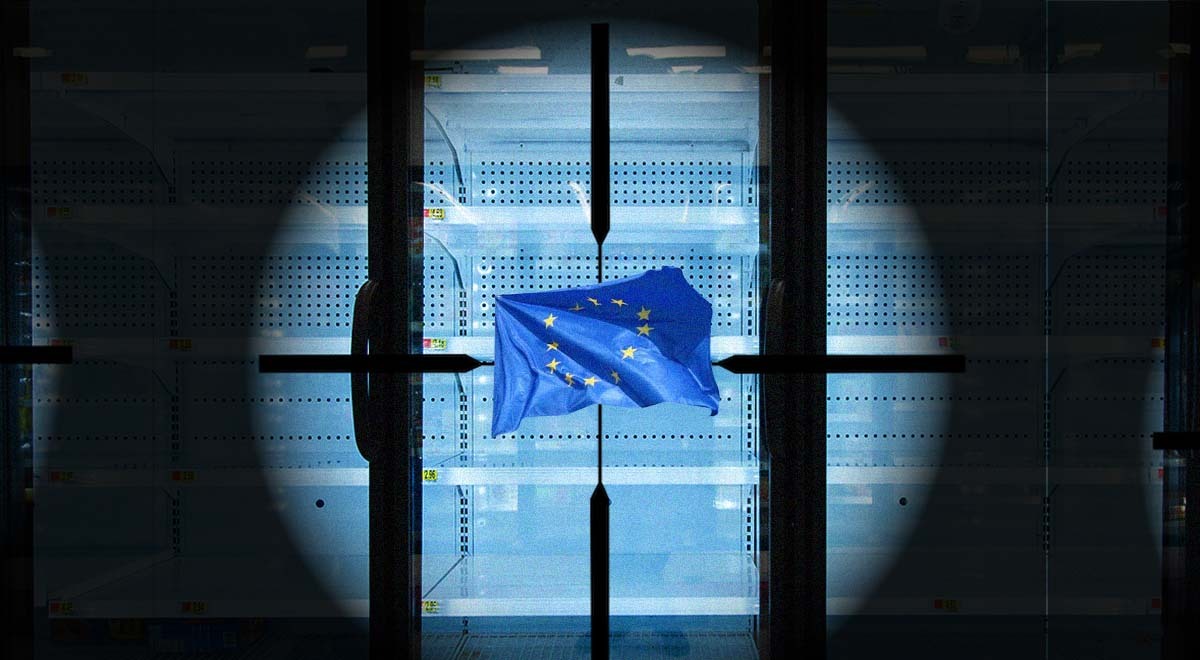
Source: Shutterstock, Vic Rincon

 Follow us
- NoName057(16) and Z-Pentest claimed responsibility, but their deleted Telegram posts remain unverified.
- Attacks reportedly pushed supermarket freezer temperatures to 50°C and forced stores to discard spoiled food.
- Analysts say about 13,000 refrigeration systems across Europe still run vulnerable, outdated software.
- Z-Pentest often targets exposed control panels and weak passwords rather than using advanced hacking tools.
Key Takeaways by nexos.ai, reviewed by Cybernews staff.
Pro-Russian hacker groups NoName057(16) and Z-Pentest Alliance have claimed shared responsibility for the recent attacks that reportedly caused European refrigeration systems to heat up to 50°C.
“To prove that we have the database, we are releasing a sample containing over 2,500 lines. It contains login and password data for Danfoss employees and customers (users),” NoName057(16) wrote.
“The problem is not with "evil hackers," but with the systemic negligence of European and American operators who have ignored basic cybersecurity requirements for years,” wrote Z-Pentest.
The groups initially published the claims on their respective Telegram channels. However, both channels were deleted at the time of writing. So, at this point, the allegations cannot be independently verified.





The claims were reshared by a threat intelligence researcher going under the name CyberKnow on X.
However, the researcher expressed doubts about whether the hacktivists had actually breached the systems or had just taken the glory after the media suspected them.
European refrigeration systems under attack
Just this week, a wave of cyberattacks has struck supermarket refrigeration systems across Europe, causing freezer temperatures to rise to 50°C.
Supermarkets in Belgium, Estonia, Ireland, Luxembourg, the Netherlands, Denmark, Sweden, and Finland were forced to throw away tons of spoiled food. The previous month, hundreds of French supermarkets reported similar attacks.
Cybersecurity analysts had previously warned that many refrigeration systems are running outdated firmware affected by known vulnerabilities. Around 13,000 refrigerator systems remain vulnerable across Europe.


Stay updated with our latest stories and follow us on social media
Be the first to discover new stories, ideas, and updates from our team.
Who are NoName057(16) and Z-Pentest?
NoName057(16) emerged in March 2022, just days after Russia’s invasion of Ukraine. The hacktivist group has been loud, targeting government portals, banks, public transit networks, and media outlets across Ukraine, the US, and Europe.
The key tactic used by the gang is a digital disruption through distributed denial-of-service (DDoS) attacks.
Z-Pentest is a relatively new pro-Russian hacktivist group that emerged in late 2024. The group is reportedly formed by veterans of NoName057(16) and the Cyber Army of Russia Reborn.
Unlike NoName057(16), the group is targeting industrial control systems across the West and Ukraine.
Their primary goal is to disrupt systems that manage water treatment plants, power grids, oil and gas facilities, and agricultural operations.
Instead of relying on sophisticated hacking tools, Z-Pentest often hunts for industrial control panels that are left exposed to the internet or use weak passwords.