What 1.1 million data points per second really means for modern Formula 1
The final laps in Abu Dhabi had everything a Formula 1 season finale promises to deliver. But how many fans stopped to think about the invisible layer shaping every decision? Or that every car generated 1.1 million data points every single second of the race?

 Follow us
The final laps in Abu Dhabi had everything a Formula 1 season finale promises to deliver. But how many fans stopped to think about the invisible layer shaping every decision? Or that every car generated 1.1 million data points every single second of the race?
The closing race was not only a battle between drivers. It was a real-time battle between data models, predictive analytics, and the people tasked with turning it all into decisions at 200 miles per hour.
Formula 1 today is no longer defined solely by engines and reflexes. It is increasingly shaped by marginal gains extracted from telemetry, simulation, machine learning, and the cloud.
At the heart of that transformation sits the long-running partnership between Formula 1 and AWS. And few people are better placed to explain what that actually means than Ruth Buscombe, former head of race strategy and now a key voice translating F1's data world for fans and teams alike.
Did you know an F1 car creates around 1.1 million data points every second while travelling at full speed?
undefined Neil C. Hughes (@NeilCHughes) December 3, 2025
I chat with @RuthBuscombe at #AWSreInvent about how data shapes race strategy, fan insights & the future of @F1 and @aws. https://t.co/xPjFZnzcnE pic.twitter.com/3CbMsbuaSg






Abu Dhabi proved that pure speed is no longer the standard strategy
A season decider breaks every conventional rule of race planning. As Ruth explained to me at AWS re:Invent, the last day of the season was a rare environment where the stopwatch becomes secondary to the championship objective.
Lando Norris did not need to win in Abu Dhabi. He only needed a podium. Verstappen, on the other hand, had one route to the title. Win the race and hope for chaos. That difference reshapes every decision.
A standard Grand Prix rewards the fastest total time. A decider rewards a position relative to one rival. That is why Oscar Piastri's role became so important. He was not simply racing for himself. He was a rear gunner, an undercut blocker, and the contingency if chaos erupted between the two title protagonists.






Even tire behavior became a psychological weapon. If degradation stayed below 0.10 seconds per lap, a one-stop race favored McLaren. If it crossed that line, Verstappen's two-stop chaos theory gained power. McLaren needed the tire to hold. Red Bull needed it to break. Every lap reinforced or undermined a title dream.
This is where marginal gains take on a different meaning. This was not about finding raw lap time. It was about manipulating scenarios. It was about forcing reactions. It was about collapsing rivals into traffic. And history added another chilling layer.
In the last two or three-way title finales before this one, neither of the leading pair became champion. Both were undone by each other, opening the door for a third driver, Vettel in 2010. Raikkonen in 2007.
Abu Dhabi was not a race dictated by instinct alone. It was a live simulation running in the cloud, driven by input streams no human could process alone at speed.
From a muddy stopwatch to a million data points per second
Seventy-five years ago, Formula 1 launched with a single data source, a stopwatch. Today, every car generates around 1.1 million data points per second from hundreds of sensors across power units, aerodynamics, braking systems, tire behavior, and driver inputs. That volume completely changes how the sport operates.
In the 1970s, telemetry was so limited that engineers only saw the data after the race. In the 1990s, teams were shocked when data volumes exploded almost overnight. Now, the challenge is no longer collecting information. It is selecting which fraction of it actually matters.
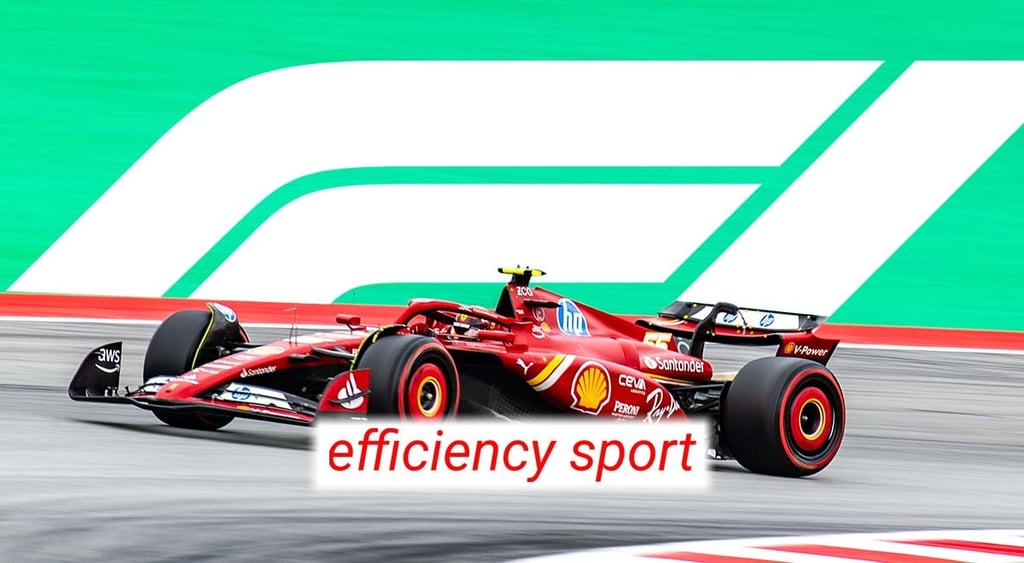
Ruth describes Formula 1 as an efficiency sport. The average performance gap between first and last across a season is around 1.3 percent. In Olympic sprinting, that margin would still produce medals. In Formula 1, it sends you to the back of the grid.
At the Japanese Grand Prix this season, pole position was decided by twelve thousandths of a second. Seventy-six centimeters across a circuit more than three miles long.
In that context, marginal gains are not motivational slogans. They are mathematical necessities. Finding the correct data signal faster than a competitor can decide championships.
Why AWS became part of the competitive fabric
The AWS partnership did not emerge as a marketing exercise. It was driven by reliability and speed first. Formula 1 now broadcasts live telemetry worldwide in real time. Any disruption in that pipeline weakens fan experience, team operations, and official analysis.

Using AWS infrastructure and cloud diagnostics, F1 has reduced latency in diagnosing broadcast issues by 86 percent, dramatically improving reliability. But reliability was only the foundation.
The more profound transformation lies in how AWS tools now shape storytelling, strategy, and decision-making across the sport. Data no longer explains what already happened. It increasingly predicts what is about to happen.
Track Pulse offers one of the clearest examples. By analyzing live telemetry and predictive models, broadcasters and camera crews can be positioned for race-defining moments before they unfold. It is not guesswork. It is probability at scale. Helicopters, pit cameras, commentators, and strategy analysts all respond to the same predictive signals.
Time Loss Insight goes even deeper. Built after a Singapore race in which an off-track moment couldn't be explained quickly enough on air, it now overlays data deviations in near real time to explain exactly where and how time was lost.
In one case, it revealed that a momentary missed gear shift on a straight cost Lando Norris a sprint pole. Engineers could have found it manually. The difference is that it now happens automatically, at race speed, without waiting for human review.

The human still sits at the center of the machine
One of the most misunderstood aspects of F1's data revolution is the belief that algorithms replace instinct. Ruth describes it very differently. Human judgment has not disappeared. It has been augmented.
A strategist's gut instinct, in her words, behaves like a living large language model built from years of experience. It compresses memory, pattern recognition, and risk tolerance into fast decisions. The danger is that memory favors extreme moments. Data corrects that bias by grounding decisions in the thousands of invisible races that sit between the dramatic ones.
This is where AWS tools shift risk culture. Engineers are no longer forced to choose between instinct and evidence. They operate with both. When the pressure peaks, the infrastructure absorbs part of the cognitive load. That does not remove responsibility. It sharpens it.
This balance between human and machine is why strategy roles remain some of the most demanding in sport. You still commit to the call. You do it with far more context than any human could access alone.
Fan engagement now runs on the same infrastructure as pit walls
The same tools that serve strategists now shape how fans experience Formula 1. The real-time racetrack experience gives viewers access to forecasting tools that mirror those used by teams.
Fans can design tracks, simulate tire strategies, and see weather respond to live conditions. It even generates custom race posters using generative AI tools embedded into the experience.
This is not novelty technology. It redefines what engagement means. Formula 1 once asked fans to observe. Now, it invites them to interact with the same variables teams fight over on race day.
Ever designed your own F1 track? 🏎️ This research explores using Amazon Nova to let fans create tracks with AI-driven racing strategies & retro posters! They used prompt engineering to craft immersive experiences. Read more: https://t.co/hTSrlQdX0k
undefined Marcel Butucea (@marcel_butucea) September 7, 2025
It also explains why the F1 audience is changing so rapidly. Viewership in the United States is growing by double digits year over year. The sport no longer speaks only to long-time fans raised on engines and rivalries. It now attracts data-literate audiences who want to understand why a race unfolds the way it does, not just who wins.
The technical story is no longer a side narrative. It is one of the main attractions.
Marginal gains now travel beyond motorsport
The most interesting part of this transformation is how transferable it has become. The same AWS services that process telemetry from a car traveling at 200 miles per hour are used in financial markets, logistics platforms, and healthcare systems.
High-performance environments share the same constraint. They all drown in input and starve for insight. Formula 1 compresses that reality into two hours at extreme speed. What businesses experience across weeks or months, F1 experiences in milliseconds.
That is why the logic of marginal gains resonates far beyond racing. It is not about chasing perfection. It is about finding the one signal that moves the outcome when every competitor is already operating near theoretical limits.
Former engineer at Ferrari and Williams, Rob Smedley, spoke to us about the growing utilization of data in Formula 1, and how it's changing the fan experience.@awscloud #AWS #F1 pic.twitter.com/qYYbCMImRg
undefined TechNative (@TechNative) June 10, 2024
Abu Dhabi showed what the future of sport now looks like
When Lando Norris held position in Abu Dhabi, he was not only resisting Verstappen on track, he was also resisting him off it. The team was managing a comprehensive ecosystem of predictive analytics, tire degradation models, cloud infrastructure, and decision frameworks under intense pressure.
Nothing about that moment was accidental. It was the outward expression of thousands of simulations, millions of data points, and years of cloud-based refinement.
The emotional peak still belongs to the driver. It always will. But the reality is now unavoidable. Championships are no longer won by speed alone. They are defeated by the one who extracts certainty from uncertainty faster than anyone else.
Formula 1 still calls it marginal gains. But what Abu Dhabi really showed is something bigger. This is what happens when human judgment and machine intelligence collide at full speed. And the lessons are racing far beyond the circuit.
Unlock more exclusive Cybernews content on YouTube.