Researchers create an AI drone that isn’t afraid of fires
The new type of drone can fly into a fire and return with 3D data.
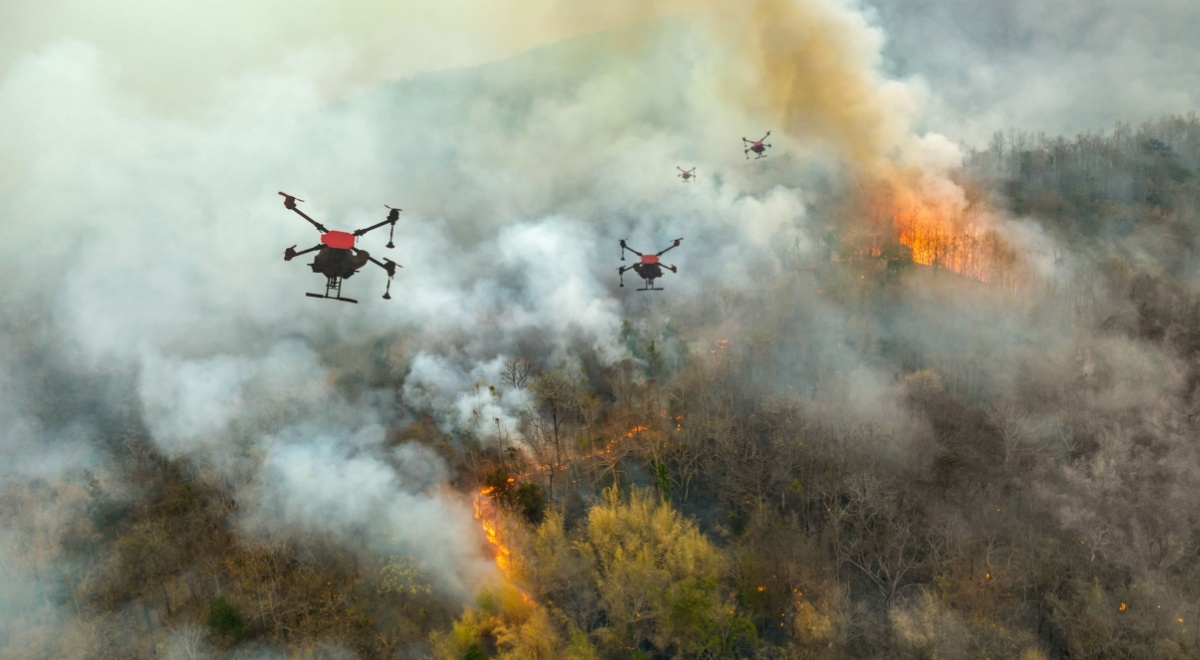
Image by Toa55 | Shutterstock

 Follow us
The new type of drone can fly into a fire and return with 3D data.
Researchers from the University of Minnesota Twin Cities have created an aerial robot that can fly into smoke and collect data that could help make forecasts much more accurate.
The researchers used artificial intelligence and coordinated drone swarms to create a machine that can detect, track, and map how heavy smoke moves in real time.
This way, scientists receive accurate data on how the toxic smoke drifts in the atmosphere.
These aerial robots, powered by AI and sensors, differ from regular drones in that they can recognize smoke and fly into it, reports Interesting Engineering.






They can also collect data from multiple angles and create 3D models of plumes, which scientists can use to learn how smoke particles move and circulate.
The senior author of the research, Jiarong Hong, explained that such information could help in understanding how smoke particles can impact air quality even in areas far away from the fire, as smaller particles can travel longer.
Aerial robots may be able to replace satellites as they provide high-resolution data, can cover larger areas, and cost less than satellites.
The US has been in need of more reliable smoke detection and management tools. While some systems could capture fire and smoke, they didn’t provide accurate enough information.
The researchers already tested the system to see how it tracks plumes in real time and creates flow pattern analyses.
The system could monitor wildfires, volcanic eruptions, sandstorms, and similar events.




Next on the scientists' list is making the system capable of detecting fires early.
The aerial robot is based on the group’s earlier drones, which had computer vision that allowed them to follow smoke plumes. The current system version now includes multi-drone tracking.
Have thoughts about this topic? Others do, too. Join them in the discussion.
The researchers are also working on vertical take-off and landing (VTOL) drones that could be used to observe wider areas.
These new AI-powered drones could help organizations and agencies respond faster to wildfires and minimize their impact on the environment.