How these 3 major US carriers determine whether you get an iPhone or not
It’s written in the fine print.
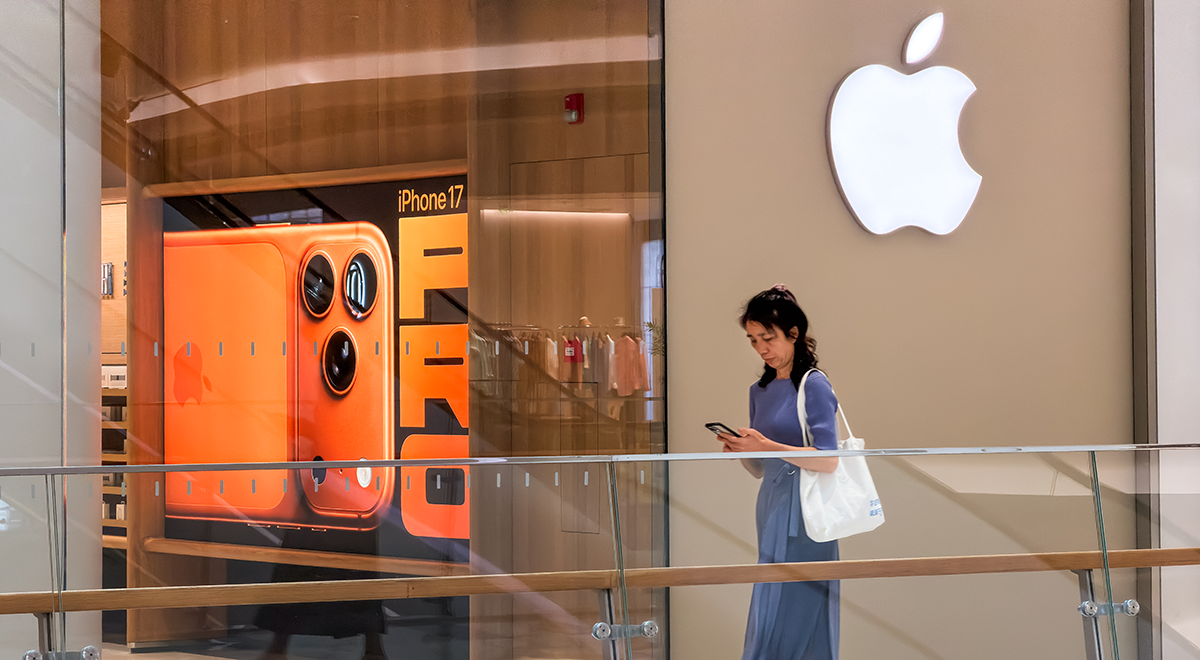
Apple Store. By Getty Images

 Follow us
- Apple Upgrade iPhone leases require customers to use AT&T, T-Mobile, or Verizon, excluding prepaid carrier plans.
- Apple uses major carrier accounts as a credit-risk signal because those carriers already screen customers before opening accounts.
- Apple’s carrier agreements also appear to drive the rule, with major carriers reportedly paying for exclusive partnership benefits.
Key Takeaways by nexos.ai, reviewed by Cybernews staff.
Being a client with AT&T, T-Mobile, or Verizon is what will land you that new iPhone via the Apple Upgrade program.
Apple has recently announced a new program that allows customers to purchase its products through leasing.
The Apple Upgrade program allows customers to get the latest devices, including phones, smartwatches, computers, and iPads.
The leasing period varies from 12 to 36 months, depending on the product, with the customer entering an agreement with Apple and leasing provided by Klarna.


Nevertheless, there are some additional clauses users must meet before getting the Apple Upgrade deal.
According to the company, users eligible to enter the program must be US residents, be at least 18 years old, have an accepted credit or debit card, and have an Apple ID.
When it comes to purchasing an iPhone, the company noted that “you must select an eligible carrier (but you cannot use a prepaid carrier plan).”
John Gruber, the creator of the technology blog Daring Fireball, noted in a blog post that “when you lease an iPhone through Apple Upgrade, you need a cellular account on one of the big 3 US carriers: AT&T, T-Mobile, or Verizon.”
The expert asked why it’s one of the Apple Upgrade program requirements.
Why must you choose one of the big 3 carriers?
“You’re leasing the iPhone through Apple and Klarna, not the carrier, so I don’t know why Apple cares,” noted Gruber.
After being contacted by his readers who worked at Apple, the expert managed to get his answers.
The first reason for this was related to credit-risk assessment.
It’s been revealed that before a customer is allowed to open an account with any of the 3 carriers, the carriers conduct an extensive risk assessment. So if a customer already has an account with one of these companies, it signals to Apple that they’re a trustworthy client.



Stay updated with our latest stories and follow us on social media
Be the first to discover new stories, ideas, and updates from our team.
The other reason relates to Apple and its agreements with each carrier.
Gruber was told by an ex-Apple employee who worked on the carrier team that the company strikes a deal or a program worth “hundreds of millions of dollars” with each mobile carrier: AT&T, T-Mobile, or Verizon.
In return, Apple includes clauses such as one that requires users to sign with one of the 3 major mobile carriers to enter its Apple Upgrade program.
This way, Apple is also encouraging other mobile virtual network operators (MVNOs) to get into such deals.
“It’s more like Apple is selling it as part of a package deal that’s exclusively offered to its biggest and best ‘tier 1’ partners. It also acts as a carrot to perpetually try to motivate smaller partners into behavior Apple wants,” the former Apple employee explained in Gruber’s post.
It’s also been noted that activation via a carrier made it easier to stop fraudulent purchases when the illegitimate account holder tried to obtain the device.
“As bad as it was with the activation requirement, it would be way worse without it. I believe it’s gotten a lot better, and the carriers have more advanced systems in place to detect and deter this behavior now,” shared a former Apple Store retail employee via the blog post.
The Apple Upgrade program was introduced to replace the 11-year-old iPhone Upgrade Program, which was created specifically for iPhone leasing.