CES 2026: the year of everything AI, but nobody asked why
This year's Consumer Electronics Show (CES) once again provided a sneak peek into the minds of technical innovators and big tech companies. Despite gaps in reach and budgets, over 4,100 exhibitors across 2.6 million net square feet of exhibit space united to convince attendees that their creations were the next big thing.
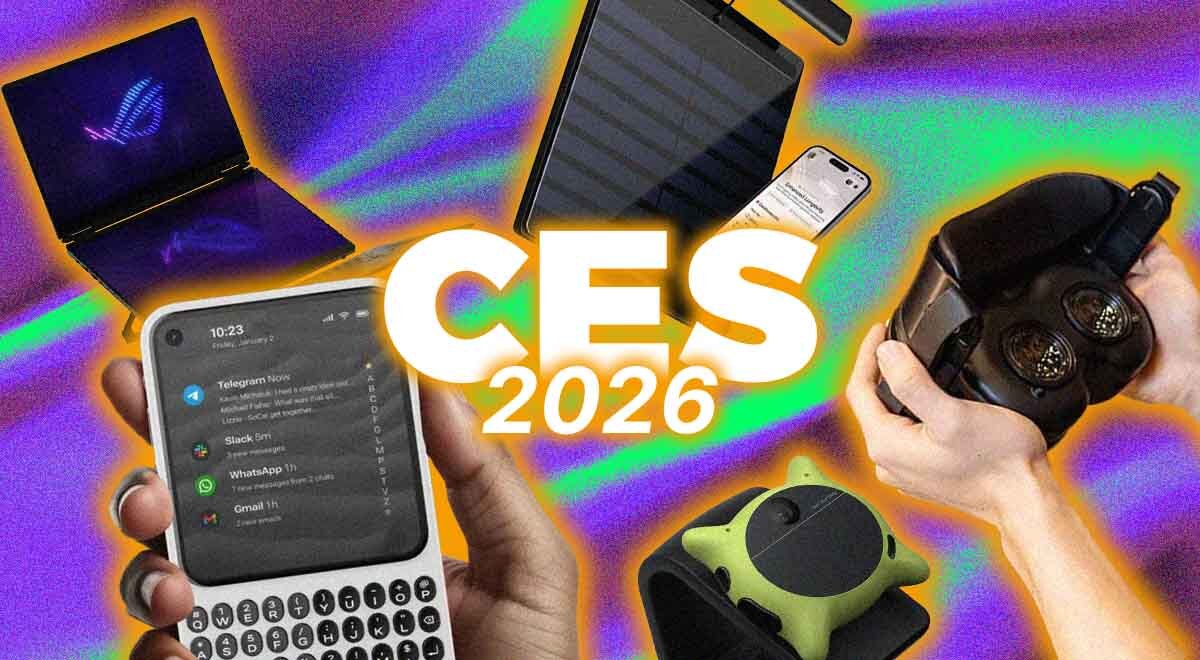
Image by Cybernews

 Follow us
This year's Consumer Electronics Show (CES) once again provided a sneak peek into the minds of technical innovators and big tech companies. Despite gaps in reach and budgets, over 4,100 exhibitors across 2.6 million net square feet of exhibit space united to convince attendees that their creations were the next big thing.
CES is infamously an exhausting and predictable affair. The usual suspects, Samsung, LG, AMD, and Nvidia, returned with high-profile keynotes. But most big tech companies remained conspicuously absent, preferring to showcase their products at their own events.
Anyone following the announcements would have quickly ticked every box on their CES bingo card. AI pets, dancing robots, tech demo fails, creaseless foldable phone displays, small chips, and massive TV screens could be found at every turn.
AI everywhere means that even a Samsung stick vacuum claims AI features that adjust suction strength based on the floor material. The jury is still out on whether it's AI or merely sensor feedback. But that is an argument for another day.
AI-powered Legos




One of the biggest surprises of CES was Lego jumping on the AI bandwagon with the introduction of the Lego SMART Play System. The marketing spiel promises it will unlock a new dimension of play. The more cynical could be forgiven for thinking, so it's Mario Lego, where you pay double the price for a few more bricks, and here lies the problem.
Lego might be marketed for kids, but with the smart brick tax, it's not sold at kid prices. It's a niche market of adult nerds who can afford $160 for a 962-piece set of Darth Vader's Throne Room Duel & A-Wing.
CES 2026 and the rise of RGB TVs: Do consumers speak the acronym?
RGB TVs are perfect for CES. They feature vibrant colors that move, pulse, and sync to the kind of content that immediately draws attention to hordes of zombie-like customers in a noisy expo hall.
Many believe that RGB is an example of how television manufacturers have finally turned to creating a display with personality and immersion, making their screens appear "alive" in ways that no display with a blue or white bias has ever been able to. At the same time, purists feel this new trend will be a distraction from legitimate innovations in display technology.
However, not all manufacturers were singing from the same hymn sheet. TCL decided to buck the trend by unveiling a flagship TV that wowed audiences without being an RGB Mini-LED. The X11L SQD-Mini LED TV features a super quantum-dot mini LED panel that covers 100% of BT2020, backed by 20,000 dimming zones and 10,000 nits. But once again, $7,000 for 75 inches is a long way from attracting mainstream consumers.
Shokz leads CES 2026 with open ear noise reduction
Although companies have long tried to prevent all noise from entering the ear, a shift has occurred. There are now "Open-Ear" headphones, which place the speakers in front of the ear canal. Therefore, the listener hears the surrounding environment along with their music or voice call.
For runners, commuters, and those who spend time near cars and busy sidewalks, there is comfort in being aware of the external world without sharing their music with it. The technology behind these "Open Ear" headphones uses directional sound and speaker design to direct audio into the ear canal rather than outward toward the environment.
As such, the overall category of "Open-Ear" headsets provides users a feeling of safety, greater interaction with others, and a better fit for everyday life, as they do not require an entirely silent environment to use.






Shokz demonstrated its new "OpenFit Pro" earbuds at CES 2026, featuring "Open Fit Noise Reduction," which is designed to significantly reduce background noise generated by crowds, fans/air conditioning/heating systems, etc., while retaining environmental sounds (i.e., the difference between "noise reduction" and "active noise cancellation"), which removes frequency bands from the ambient space within a headset.
Shokz did not fully seal the ears during the development of OpenFit Pro. Instead, it created a quieter acoustic environment around the ear to deliver a clearer audio experience for music and voice calls.
Shokz's OpenFit Pro is available for preorder at $249.95, with dual speakers per ear and Dolby Atmos support, positioning it as a premium product that lets users listen to music without blocking out the world around them. Early reviews suggest these could be the big sleeper hit of CES.
Disney+ vertical video debut
I want to replace my social media apps with Disney+, so it becomes my daily destination for short-form content. Said no one ever. Despite this, Disney used CES 2026 to make a direct pitch to advertisers, revealing plans to introduce a vertical video feed inside Disney+.
The new vertical format will be similar to short, portrait-style videos on TikTok, YouTube Shorts, and Instagram Reels. According to Erin Teague, EVP of Product Management at Disney Entertainment & ESPN, this new feature will help young viewers open the Disney+ app more frequently by leveraging cultural habits formed through short-form video consumption over the last couple of years.
Vertical video on the Disney+ platform is expected to be a mix of new vertically shot originals, repurposed social media content, and select moments from longer Disney movies and series, created into a smooth user experience.
Teague told advertisers that her goal was to emphasize the usability and frequency of advertising on the Disney+ platform and to provide them with opportunities to expand their ad presence within the platform.
There is no specific date planned for the public launch of the vertical video feed. But she described vertical video as "snackable, short, bite-sized experiences" that will exist alongside longer programming, rather than replacing it.
Announcing to advertisers first arguably feels like the app listening to the balance sheet before the viewer, and it's a dangerous game that could push many to hit the cancel button on their subscription, already fatigued by one too many Star Wars spin-off series.
AI soulmates and robotic dogs, progress or parody?
The most ironic aspect of the Consumer Electronics Show is how far it is from what consumers actually want and need. Buzzwords like AI, quantum, and autonomous could be heard in every keynote, making it feel more like the corporate electronics show.
Despite iRobot's recent bankruptcy, the maker of the Roomba vacuum cleaner was still trying to convince everyone that AI everywhere is the future. Another problem is the growing backlash and distrust over filling homes with tech that gathers data on our every move and then sells it to the highest bidder.
In 2015, actor Simon Pegg got a lot of flak for suggesting that "Nerd culture is the product of a late capitalist conspiracy, designed to infantilize the consumer as a means of non-aggressive control."
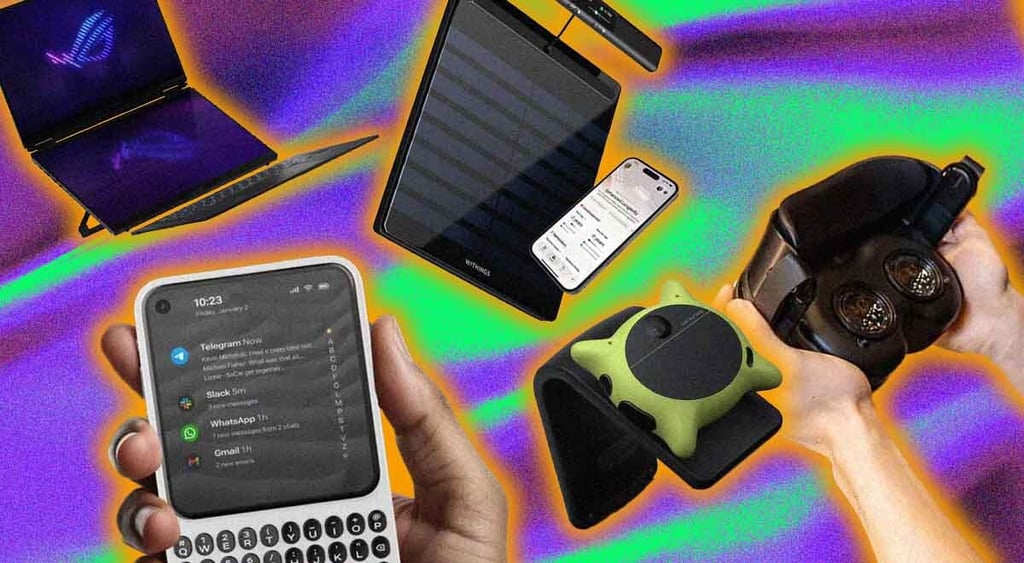
Fast forward to 2026, and CES is presenting consumers with AI soulmates, robotic Labradors for emotional support, and sucking on a lollipop that plays music to you, while a robot does your laundry. As you reach your autumnal years, you can rest assured that an AI-powered panda is waiting to help with your cognitive decline.
CES keeps selling a future packed with AI gimmicks. But the real question is whether we're designing technology to help people think, live, and learn better, or merely training ourselves to stop thinking at all.
Unlock more exclusive Cybernews content on YouTube.