A French content creator builds a map that can track police movements worldwide
France is bracing itself for another wave of protests over the weekend.
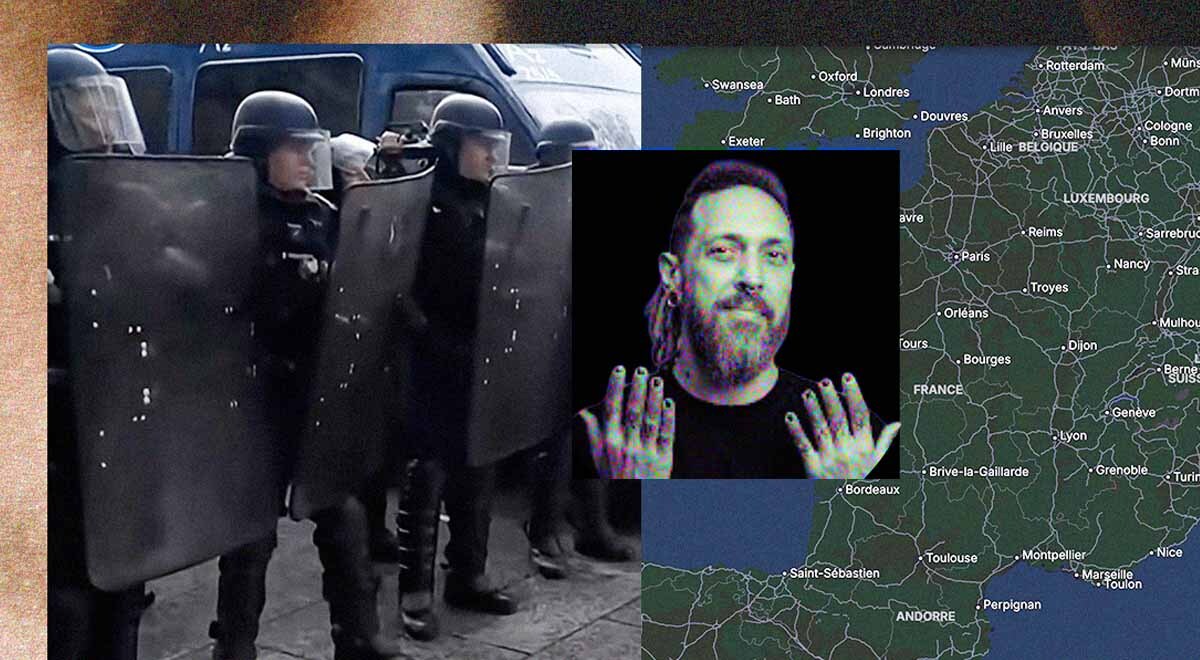
Screenshots from Neru.tv website and YouTube account/Illustration by Cybernews

 Follow us
- Neru built Cortège so protesters can share real-time reports about police, tear gas, medics, and legal aid.
- The open-source map has received more than 4,000 reports since mid-October, creating nearly 2,800 map points.
- Reports expire within minutes, and users can confirm or dispute them to limit false information.
- Neru says groups worldwide can run their own version because the code is free software.
Key Takeaways by nexos.ai, reviewed by Cybernews staff.
A French content creator has developed an interactive web app to protect his son amid student protests in France. He says that the open-source software can be used anywhere in the world.
Neru, a political influencer from Montpellier, launched the Cortège app amid the high school blockades across France, which his son also participated in, along with hundreds of thousands of French students, demanding better conditions for schools.
Neru wanted his son to be able to quickly report what was happening around the schools, including the police presence, rising tensions, and the places to avoid.

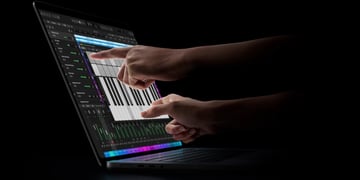

“Then the project grew, because the need was the same at every protest: one shared, real-time map so people can protect themselves and each other. Anonymity was a requirement from day one. No account, no trackers, and public code that anyone can check,” Neru tells Cybernews.
At first, the project took the form of a WhatsApp group, according to Actu.fr, but growing demand and donations enabled the expansion of the Cortège into a free, open-source web application built on OpenStreetMap (OSM), and also increase its server capacity.




Stay updated with our latest stories and follow us on social media
Be the first to discover new stories, ideas, and updates from our team.
Over 4,000 reports in less than a month
The Cortège map was dubbed as “Waze for demonstrations,” referring to the popular navigation and real-time traffic app, which also relies on community reports about police presence and traffic conditions.
On the Cortège, people can report the movements of police units, the use of tear gas, and the presence of militias that can pose risks to protestors. Users can receive buzz notifications warning about dangers nearby.
In addition, the map tracks street medics and legal teams that assist demonstrators.
Neru tells Cybernews that the Cortège has received more than 4,000 reports and confirmations since mid-October, totaling nearly 2,800 distinct points on the map.
There’s a protocol for limiting false information: every point expires after a few minutes, while people on site can confirm or dispute it. Identical reports at the same spot merge into a single point, showing how many people saw it.
Anti-spam limits and moderation complete the system. An isolated false report doesn't last long against hundreds of people on the ground,Neru
The map is not limited to French protests
The map was specifically designed for France, where student barricades that began in September 2026 turned into mass protests across the country.
On October 17th, some protestors resorted to looting and violence, leaving France and the world grappling with apocalyptic views of vandalized French cities.
Meanwhile, the French police face serious accusations of brutality.
Amnesty International condemned law enforcement for “recklessly” discharging tear gas grenades and causing serious injuries by firing rubber bullets. The organization called for an end to the “disproportionate police response.”
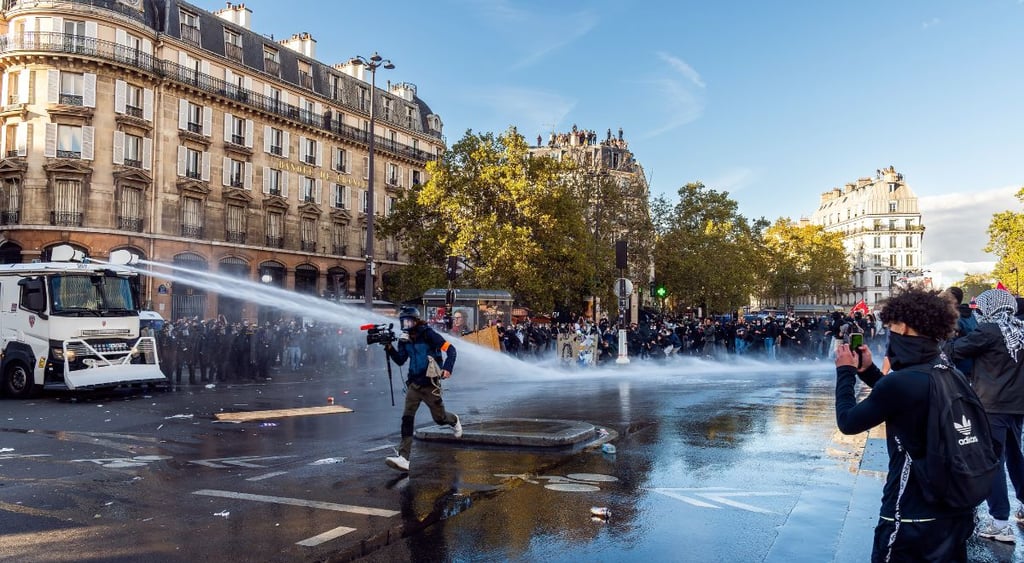
Some students sustained life-changing injuries as a result of excessive force, including a blown-off hand, blindness in one eye, and a broken jaw, according to Deutsche Welle.
As France prepares for the new round of demonstrations over the Halloween weekend, the Cortège may help protestors avoid violent clashes.
Neru says that while the instance he runs is designed for France, the interface is already available in English, Spanish, and Arabic.
He tells Cybernews, “The code is free software: any group, elsewhere in Europe or around the world, can run its own version on its own server.”