Good deal, but at what cost? Scan reveals what’s inside a $17 Apple Watch dupe
While your new smart watch, which cost less than $20, may look just like an Apple Watch, its insides may be nothing but loose wiring.
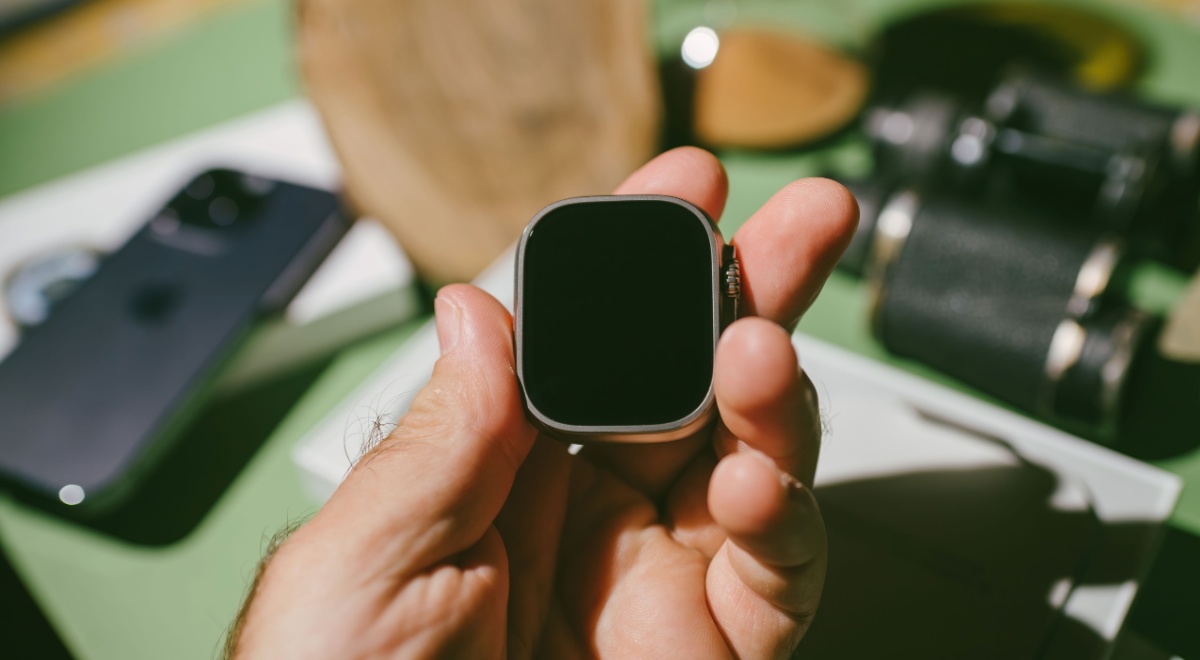
Image by Hadrian | Shutterstock

 Follow us
While your new smart watch, which cost less than $20, may look just like an Apple Watch, its insides may be nothing but loose wiring.
- CT scans of the Apple Watch Ultra 3 and Dyson Supersonic versus cheap dupes show that copies often have “empty” interiors, smaller batteries, loose wiring, and far fewer tightly integrated components.
- Cheap electronics can pose safety hazards: poor wiring, low‑quality components, and skipped safety certifications increase the risk of overheating, fire, or even explosions.
- Consumers often choose dupes because they’re 20-40% of the price of the real product.
- Dupes become accessible to consumers through loopholes exploited by sellers. These include frequent market switching, light parcels, and trans‑shipment routes.
Key Takeaways by nexos.ai, reviewed by Cybernews staff.
The existence of counterfeit goods has been an ongoing issue for years. While this problem has often been associated with clothes and accessories, it’s also been an issue with electronic goods.
Many duplicates, often referred to as dupes, of well-known items are now being sold through what appear to be legitimate businesses that lure consumers with devices that look similar to popular brand items, but are sold for much cheaper.
While it doesn’t take much to copy the designs of big tech giants like Apple or Samsung, getting the same components and features can be trickier.






To prove that, Lumafield, which specializes in CT scans and data analysis to help businesses with production development, showed how the insides of original and duplicate electronic devices actually differ.
The company took four popular items and their dupes and scanned them to see which components they include. Among these were an Apple Watch Ultra 3, a Labubu figure, a golf ball, and a Dyson hair dryer.
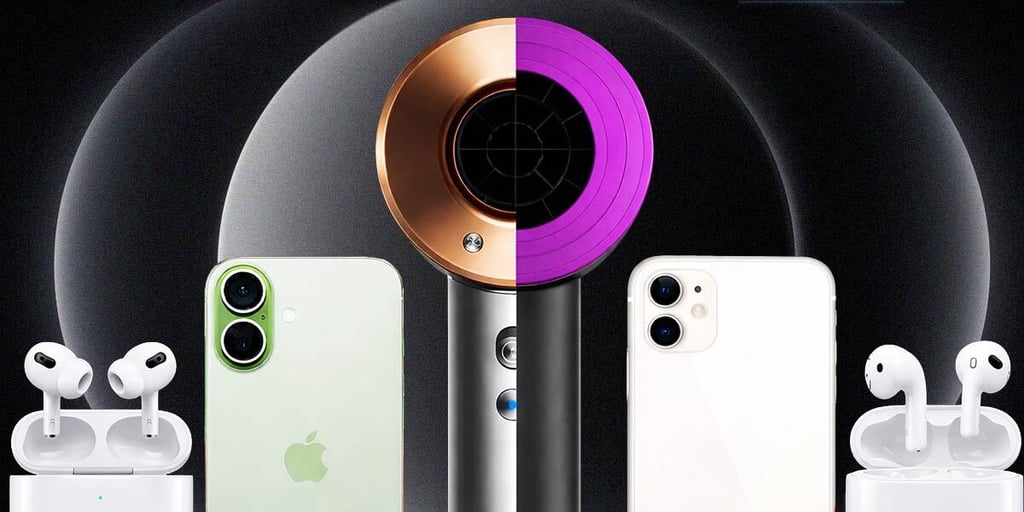
Original devices vs dupes under scan
Apple Watch is considered one of the most sought-after smart watches, with the company holding 32% of the global market share in the last quarter of 2025.
The starting price of the Apple Watch Ultra 3, whose insides were scanned by Lumafield, is $800. Even if you consider its design and features, it’s quite a hefty price for a watch.
Debating whether it’s worth buying such a smart watch can become even less of an issue when you go to Amazon, Temu, or AliExpress, where a similarly looking watch can be found for $15 to $30.
The CT scan reveals what you actually get for such a bargain, comparing the Apple Watch Ultra 3 and the OICIIDO watch available on Amazon.
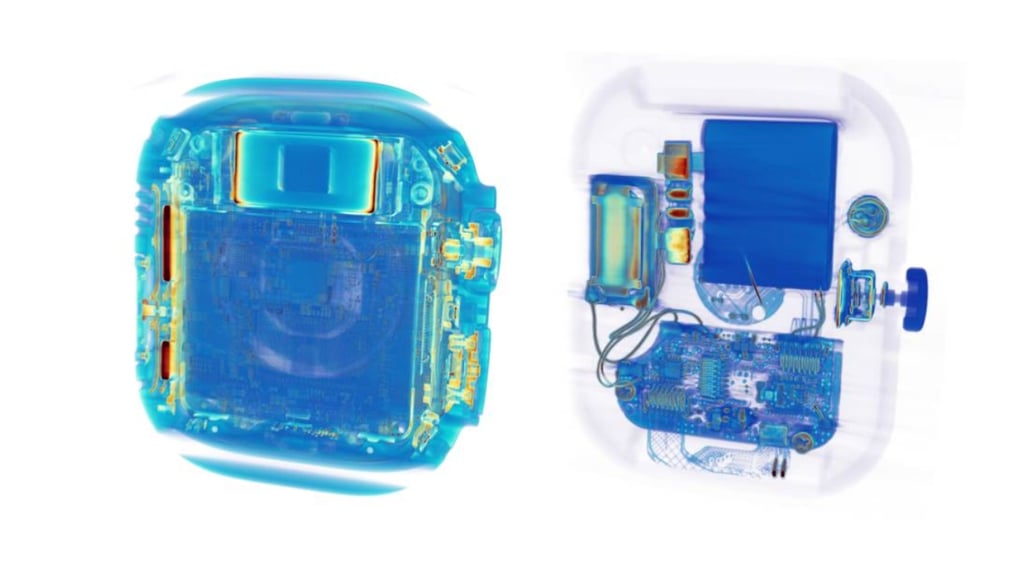
The comparison shows how “empty” the latter appears, while the Apple Watch scan shows a 599 mAh soft pouch lithium-ion cell. Meanwhile, the OICIIDO watch scan shows a smaller cell and loose wiring.
The scan also reveals that while Apple Watch packs every component tightly together, the same couldn’t be said about the OICIIDO watch.
The backs of the watches also reveal the truth about what these devices are actually capable of monitoring, compared to what’s being advertised.
According to Lumafield’s scan, the Apple Watch includes a third-generation optical heart rate sensor, “surrounded by a dense ring of photodiodes that support both heart rate and blood oxygen monitoring.”
Meanwhile, the watch available for $15 on Amazon features “a much simpler layout.”
Another scanned item was the viral Dyson Supersonic hair dryer, which became known for its distinctive form.
Such a hair dryer can cost at least $400, but consumers can get a similar one for $70. What do they get for such a price?
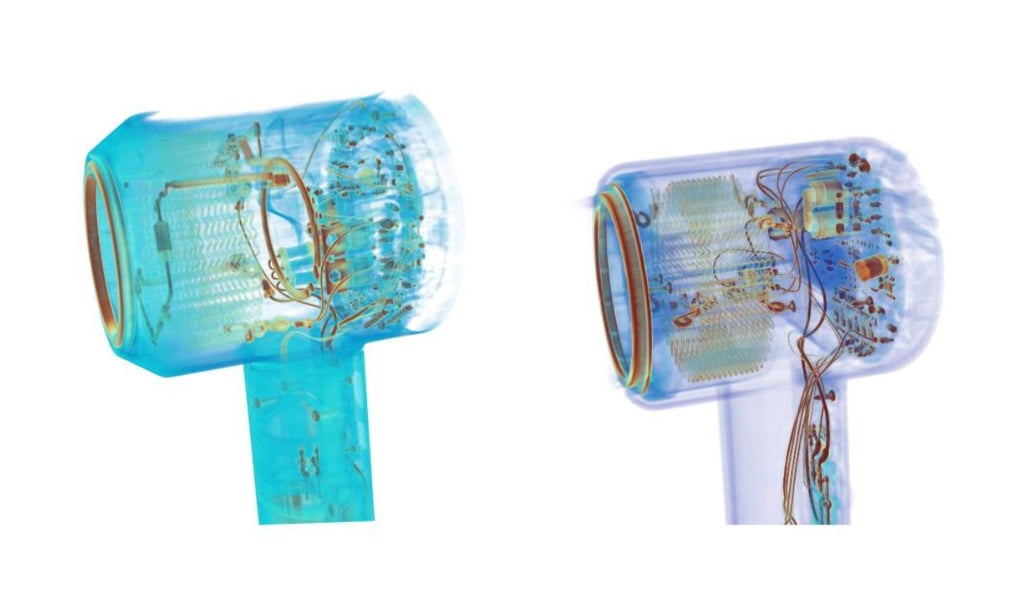
In the side-by-side comparison, the scan results showed that the Aniekin hair dryer includes unnecessary wiring, fewer integrated components, and a motor placement that differs from Dyson’s, which is designed not to “fatigue the wrist the way a conventional dryer does.”
The scan also showed the insides of an Aniekin hair dryer, including a motor that is much heavier and louder than that of a Dyson.
Duped electronics – a safety hazard?
Often, buying a dupe of a piece of clothing, an accessory, or a toy means you’ll end up buying a new one because of its poor quality. However, purchasing a cheap duplicate of an electronic device might have more serious consequences.
One of the Amazon users who bought an Aniekin hair dryer left a review on the website, stating: “[...] This morning it made a strange noise and then actually stopped blowing air for a few seconds. After that, it smelled very hot, and I was afraid it was going to catch on fire.”
That loose wiring and impaired components seen on Lumafield scans could lead to a fire and even an explosion.
“Copycat products are more likely to avoid safety tests such as UL, FCC, and CE tests that may cost a legitimate producer up to $15,000-50,000 per product line,” explains Alan Heimlich, President of Heimlich Law, PC.
The expert also noted that replicas of earbuds and chargers use lithium cells, which are known to overheat and often catch fire or explode.
He also added that “poor-quality solder joints, omission of fuses, and under-estimated capacitors can break in a manner that will harm the user long before the warranty paperwork becomes relevant.”






Selling dupes under a scheme
Despite these risks, users still tend to buy such electronics. Is good pricing so crucial that users turn a blind eye to quality?
While duplicates are sold for 20% to 40% of the actual retail price, it's the design that influences consumers' decision to consider it a good enough product.
“When the molding is the same, shoppers might think that the interior is similar to the exterior,” says Heimlich.

Check if your data was exposed
Find out if your email and related personal information have appeared in known data breaches.
Considering that there are laws that protect brands and their innovations, how do these duplicates even exist?
Sellers who sell such products tend to switch markets every few weeks, deliver parcels that don’t weigh more than 2 kilograms, thereby avoiding inspections and transferring products via trans-shipment centers, explains the expert.
When it comes to patent infringement, it often falls to brands to notice and respond to these instances, with the whole ordeal taking days for the listing to be taken down.
Unlock more exclusive Cybernews content on YouTube.