European Starlink rival Open Cosmos bets on building “secure and autonomous” connectivity
A UK-based satellite company says it is building a new kind of space network aimed at government and critical industries – although it adds that it is also for “anyone worried about their data resiliency and sovereignty.”
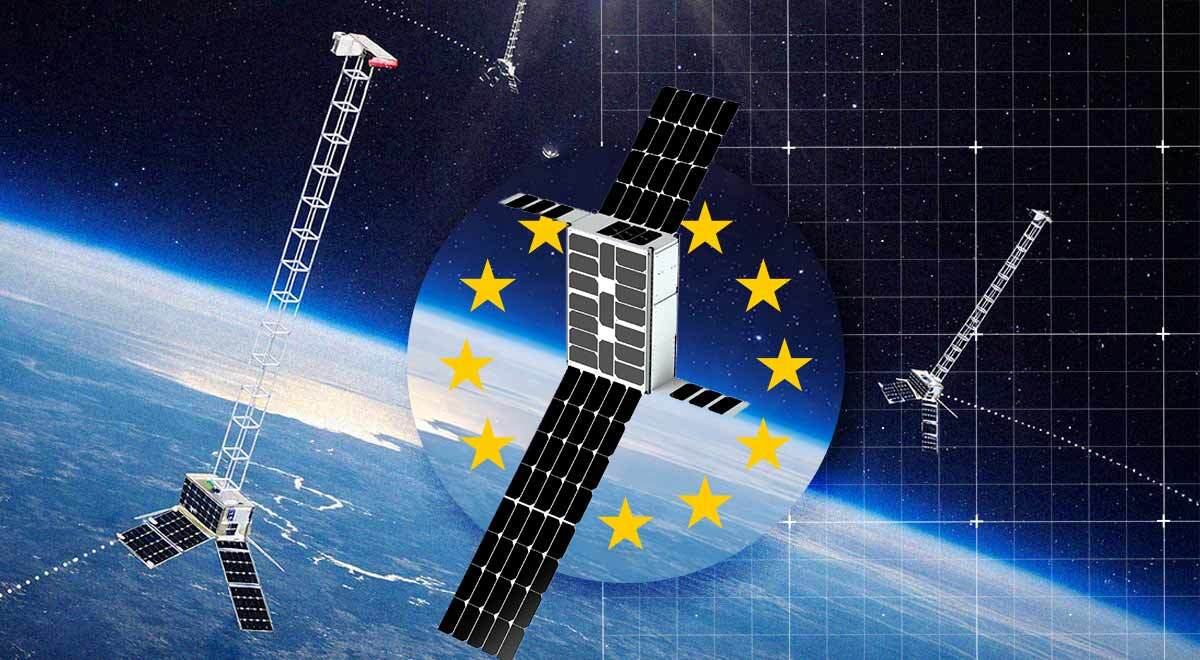
Image by Cybernews

 Follow us
A UK-based satellite company says it is building a new kind of space network aimed at government and critical industries – although it adds that it is also for “anyone worried about their data resiliency and sovereignty.”
Open Cosmos, which recently beat the Peter Thiel-backed company Rivada and the China Telecom-backed German player Kleo Connect to secure a key slice of satellite spectrum from Liechtenstein, was the talk of Mobile World Congress (MWC) in Barcelona this week as Europe looks to reduce its reliance on big tech vendors.






The ten-year-old Oxford-based spacetech firm used the event to unveil ConnectedCosmos, a planned low-Earth-orbit constellation designed to provide secure, sovereign satellite communications and operational resilience for governments and businesses.
“True sovereignty in orbit”






Making the announcement on Monday, CEO Rafel Jordà Siquier said that the network is intended to counter the overreliance on transcontinental mega-constellations and would offer countries and institutions a European-led alternative for secure connectivity and real-time intelligence.
"ConnectedCosmos represents a leap forward for Europe in building a resilient, secure, and autonomous connectivity capability – giving nations and partners a reliable alternative for true sovereignty in orbit."Open Cosmos CEO, Rafel Jordà Siquier
While the network is designed primarily to deliver secure global connectivity for governments and commercial customers, rather than mass-market consumer broadband, Carlos Zamora, the VP of Satcom Solutions, told Telecoms.com at MWC that it could technically deliver broader services if required.

Check if your data was exposed
Find out if your email and related personal information have appeared in known data breaches.
“We're here to bring global secure connectivity to governments, commercial [customers], and actually anyone who is worried about their data resiliency and sovereignty. What we're selling is a network, not a link in space, but actually a network,” he added.
The firm launched two satellites into low Earth orbit last year, marketing an early step toward building that network.
Operating closer to Earth reduces signal delay compared with traditional geostationary satellites, enabling constellations to provide global coverage.
The spectrum it acquired from Liechtenstein belongs to the high-frequency Ka-band, meaning that it can carry large volumes of data at high speeds, making it well-suited for broadband connectivity, secure communications networks, and high-capacity satellite services.
In its press release, the spacetech firm confirmed that it would use the Ka-band Liechtenstein spectrum “to enable users to cut through an increasingly contested orbital field.”
Regulators pave the way for “direct to device” connections
Open Cosmos' move comes as the UK regulator begins to clear the path for satellites to connect directly to everyday mobile phones.
In September 2025, UK communications watchdog Ofcom said it would alter mobile network operators’ licence conditions to enable “direct-to-device” satellite services, allowing satellites to beam calls, texts, and data directly to ordinary smartphones.
Other European satellite systems planned for launch include the European Commission-backed SpaceRISE consortium, which aims to create one of the biggest European cosmos infrastructure projects.
Known as IRIS² (Infrastructure for Resilience, Interconnectivity, and Security by Satellite), with over €10.6 billion concession agreement from the EC, the project aims to deploy 290 satellites into Medium Earth Orbit and Low Earth Orbit by 2030.
Unlock more exclusive Cybernews content on YouTube.