What happens if you get flagged by facial recognition tech like Facewatch?
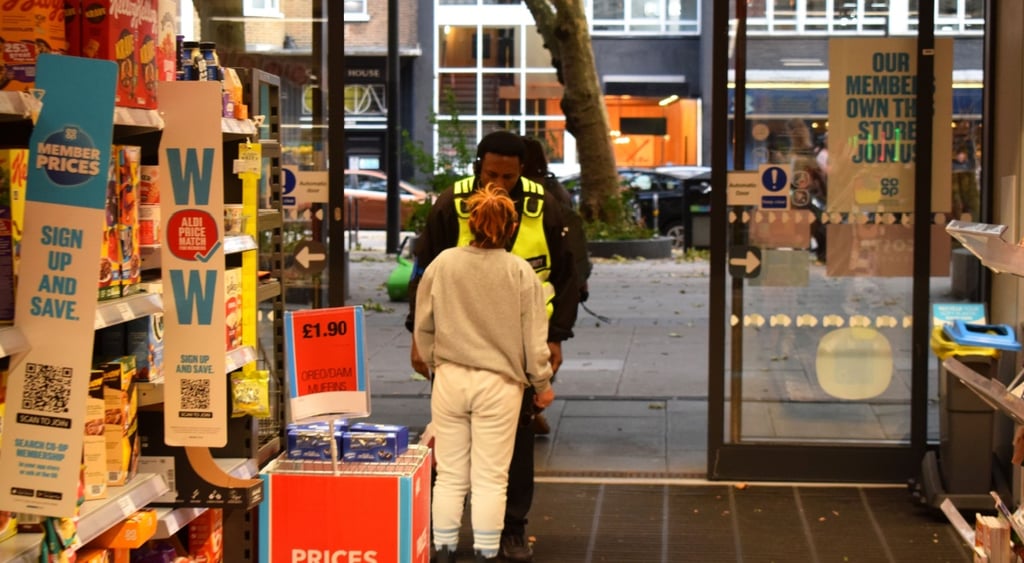
A frequent customer of Home Bargains, a UK retailer, said they were escorted from one of its shops after being flagged by a facial recognition system. But no one could tell why.
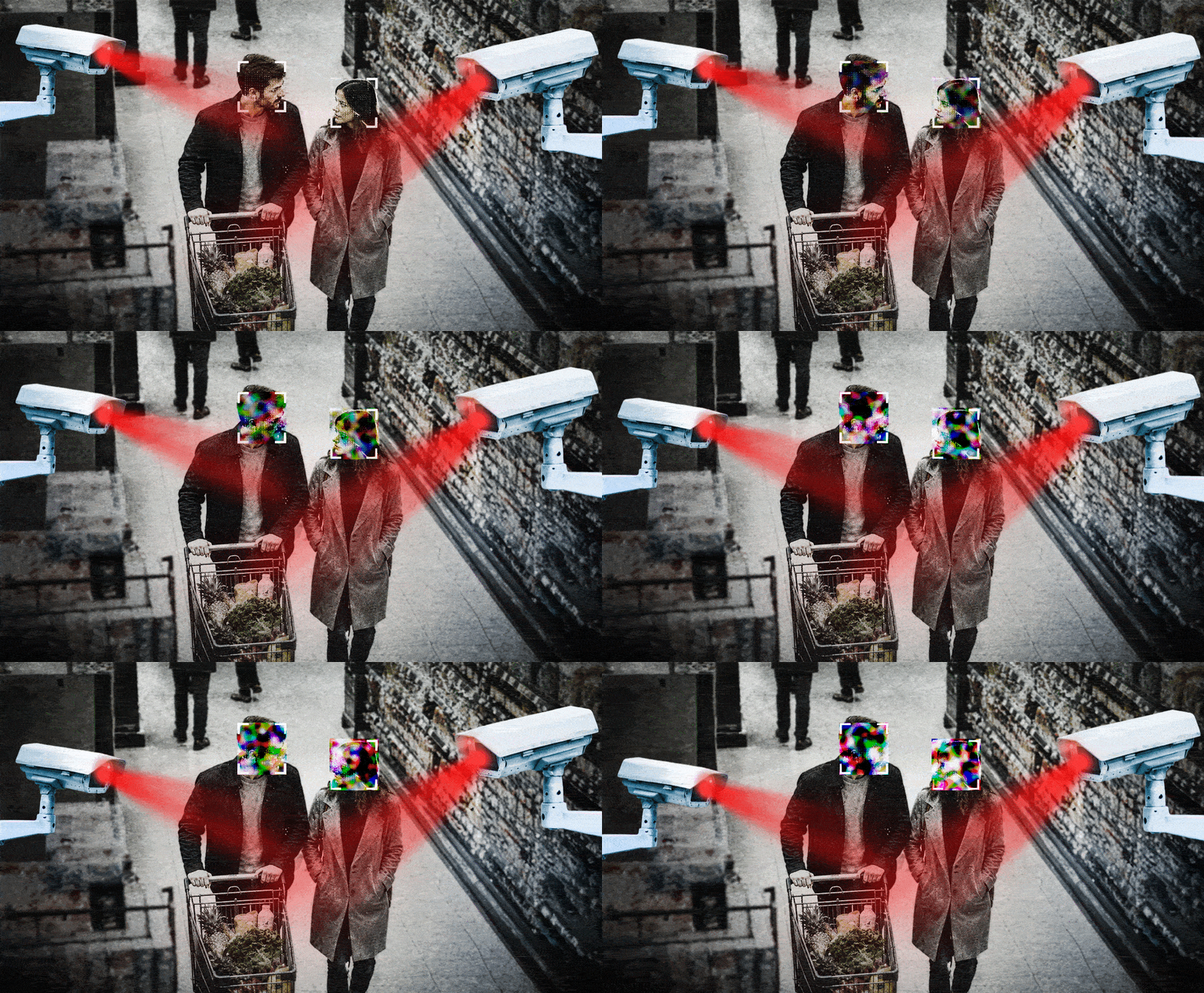
Image by Cybernews

 Follow us
A frequent customer of Home Bargains, a UK retailer, said they were escorted from one of its shops after being flagged by a facial recognition system. But no one could tell why.
- Multiple cases show innocent shoppers being wrongly flagged and escorted from stores.
- When flagged, people are often escorted out without explanation. While some retailers allow data to be removed after proving innocence, policies vary regarding data retention.
- Facial recognition systems are less accurate for people of color, women, children, and elderly individuals, and can fail due to poor image quality, similar facial features, or system errors.
- Despite common belief, police aren't always called when someone is flagged – most retail systems focus on loss prevention, with police only involved for ongoing theft, violence, or fraud.
- Many customers advocate for strict regulations and substantial financial penalties for companies that misidentify people.
Key Takeaways by nexos.ai, reviewed by Cybernews staff.
The customer shared on Reddit that they were “promptly asked to leave” the store without being given a reason. The Redditor demanded to speak to a store manager.
“As we followed the manager it became clear that they were just trying to get us out of the shop,” shared the original poster, who said they came to the store with their daughter.
They let the manager know they were frequent shoppers at the store and that they even have an enhanced DBS check, the highest level of background check for people who work in healthcare or education sectors.





The customer stayed there until they received contact information for the store’s manager and the company that owns Home Bargains.
The Redditor also added that they filed a complaint and contacted Facewatch, a UK-based company that provides facial recognition security systems to the retail industry to identify shoplifters and offenders.
How often does facial recognition technology fail?
Cybernews has contacted the original poster, Home Bargains, and Facewatch to obtain further insights into the situation.
The Redditor confirmed that they have a scheduled call with the institutions. However, they haven’t since provided an update.
Meanwhile, Home Bargains refrained from commenting.
Facewatch, after looking into the matter, said: “An individual was witnessed and reported by shop staff to have left the store without paying for items. They later returned to the store and paid for those items, after which their data was removed from our system.”
While the original poster didn’t provide their account of events, the situation raises several questions.
Are the police always involved?
In its response, Facewatch mentioned that the person got their data removed from the system. But is it always the case?
“If a resolution is made, some retailers will delete records, and others will retain the records for a longer time, depending on company policy and privacy regulations,” explains Rafay Baloch, the founder of RedSecLabs, a company providing cybersecurity services.
It might seem that once you're caught by facial recognition technology, the situation can’t be resolved without the police.
It’s “one of the main myths about facial recognition,” notes Kiril Meshyk, a head of AI data collection at Unidata, adding that “most deployments in retail are primarily aimed at loss prevention, rather than investigation of crimes."
Police are required when there’s an ongoing theft, a person is already involved in another open case, or fraud or violence is involved.
Another aspect that should be important to customers is what happens to the data the shop collects.
“A person does not have to pay for thefts after the fact to remove from the biometric information of a store’s database,” notes Baloch.
However, what happens to your facial data depends on the country you’re in and the shop you go to. So when the store and the person reach an agreement, some retailers will delete the records, while others may keep them for longer.
Facial-recognition-gone-wrong cases
The situation prompted an online discussion with other users sharing similar facial-recognition-gone-wrong experiences.
“A man in Las Vegas was arrested because a facial recognition app branded him a criminal. He had multiple forms of ID proving that he was not the individual in question,” wrote one user, revealing that the person was arrested by the police anyway.
This isn’t the first time people have been denied access to stores after facial recognition systems were involved.
“Whatever reason it flagged you, don’t stop until it’s taken down. Any other shop that introduces this will be a problem for you as well if you stay on their database,” noted another netizen.
That’s what happened to a 62-year-old woman who was denied access to Home Bargains last year.

Check if your data was exposed
Find out if your email and related personal information have appeared in known data breaches.
The woman was asked to leave after learning that she was on the Facewatch list for allegedly stealing 39p worth of paracetamol, reports The Guardian.
Even though the woman didn’t steal the drug, she was added to the list after a dispute with the staff. The situation escalated to the point where she says she’s now afraid to go shopping, not knowing whether she will be asked to leave the premises.
Several months ago, Warren Rajah, a customer at Sainsbury’s supermarket, which also uses Facewatch, was asked to leave the store after it incorrectly identified him as an offender.
Facewatch later told the man that there were “no incidents or alerts associated with [him]" on its database, and Sainsbury's has apologized for the "human error,” reports the BBC.
There were times when the use of facial recognition technology was viewed with extreme precaution because it relies on vast amounts of sensitive information.
In her book, Your Face Belongs to Us: The Secretive Startup Dismantling Your Privacy, Kashmir Hill detailed how to use such technology by reviewing the case of Clearview AI, a facial recognition company that provides software to law enforcement, government agencies, and other organizations.
The book covers numerous examples of facial recognition gone wrong. One of which is the story about Nijeer Parks, who spent 10 days in jail in 2019, after being accused of theft and assault on a police officer.
Parks was released after proving that he was in another city at the time.
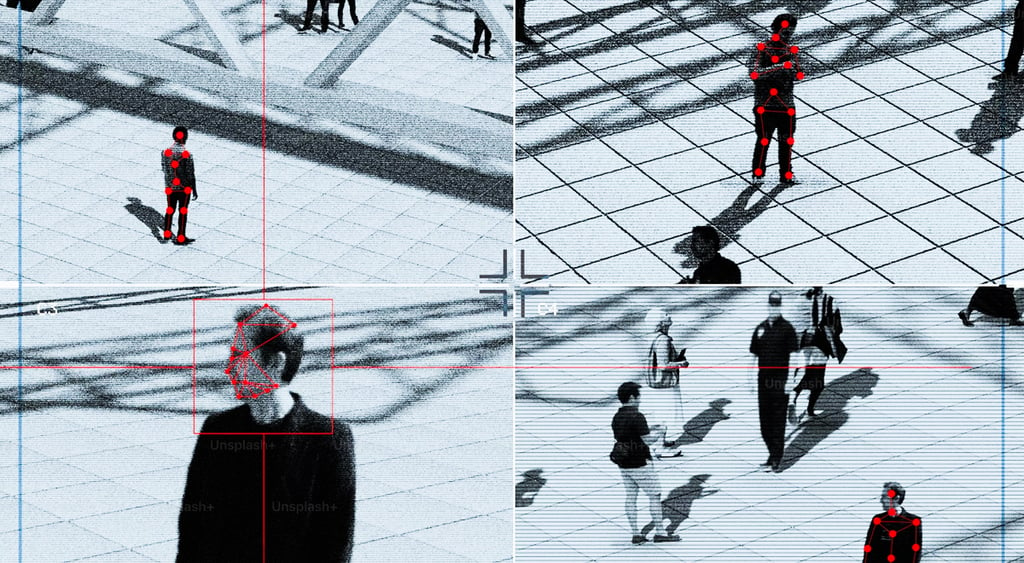
An apology isn’t enough
While many people misidentified by facial recognition systems were later “acquitted,” the experience still caused them extreme distress.
“These injustices require a legislative solution. It should be illegal,” concluded the user reacting to the story shared on Reddit.
Another netizen also agreed that, in cases where a person is misrecognized, they should receive compensation.
“There needs to be stiff fines, like 10's of millions, for any company that is found to have fucked up when it comes to this facial recognition. With a good chunk of it, say 80%, going to the individual misidentified,” noted the user.






Why do innocent people get flagged by facial recognition systems?
“Jesus. Like a credit score, but it’s your face, and the thing judging your face has the visual processing skills of Mr. Magoo,” said one Redditor about the facial recognition systems.
There are a few instances where the system may misinterpret people, which could happen due to bias in the training data.
This is why the technology works best at recognizing male faces but isn’t as accurate with people of color, women, children, and elderly individuals, notes ACLU Minnesota.
The system may also provide a false answer due to poor image quality. The surveillance footage often produces blurry, low-quality images, and it's difficult to identify someone if they’re wearing a hat or glasses.
There could also be a system error that accidentally matches a person's face with someone else’s due to similar facial features.
While companies employ facial recognition systems to enhance security and reduce manual monitoring, the question remains whether these benefits outweigh people’s distrust.
If you get flagged by such a system, the best way to act in this case is to “remain calm, and ask for transparency. Ask about the biometric system in place, and get written confirmation, and if there is a third-party system, ask who they are,” said Baloch, the CEO of RedSecLabs.
Unlock more exclusive Cybernews content on YouTube.