TVs dying on one bad LED: repair tech says manufacturers add software that bricks devices after one simple fault
A UK TV repair expert has exposed a widespread industry practice: TVs brick themselves if a single backlight LED fails.
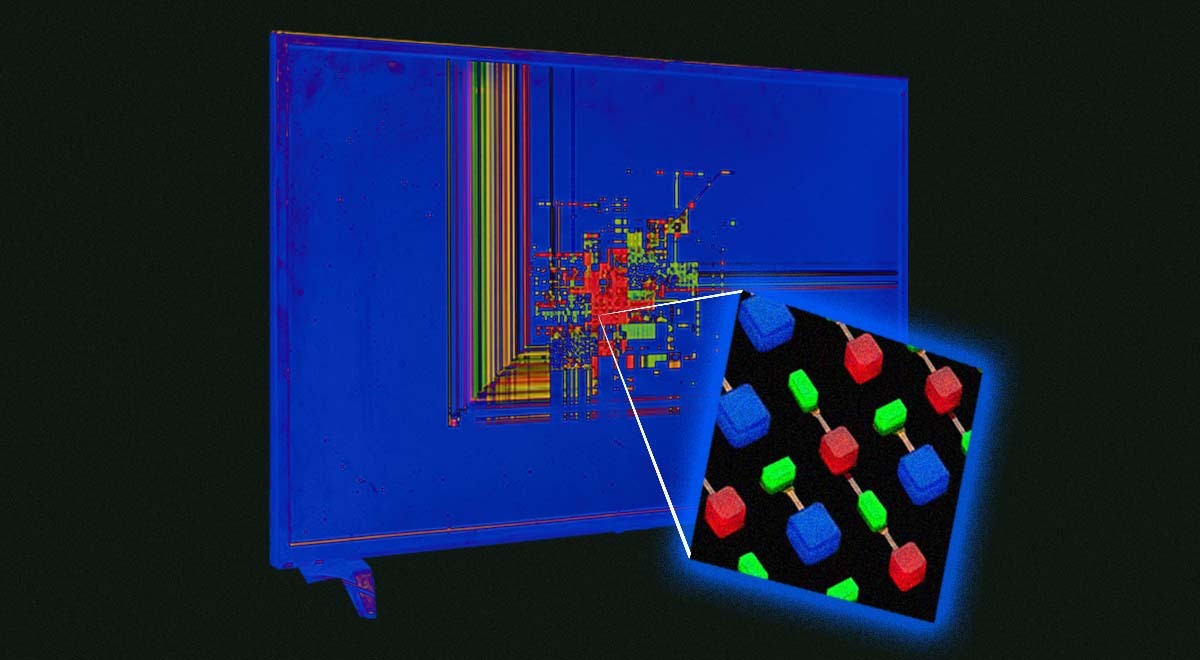
Image by Cybernews.

 Follow us
- One failed backlight LED out of dozens or hundreds will shut down an entire display.
- A repair technician argues that this practice is designed to drive new sales rather than a genuine safety measure.
- By grounding the error signal on the motherboard, a technician can restore the TV to full functionality without costly repairs.
A single failed backlight LED can kill an entire TV, not because it compromises picture quality, but because built-in software treats this as a fatal error. To prove the point, one repair YouTuber took a “dead” TV, dropped a blob of solder on the motherboard to ground the error signal, and watched the TV spring back to life.
The YouTube thumbnail for the controversial video claims that brands are using software that causes TVs to fail prematurely and that it is a scam.
Modern LCD TVs have dozens, or even hundreds, of tiny LEDs that shine light through the liquid crystals, usually placed on edges or directly behind.
Allen Fleckney, a UK-based TV repair professional who runs a YouTube channel called “TV repair community,” released a video demonstrating how a single bad LED can kill an entire TV, because the TV’s software/firmware chooses to treat it as a fatal error.






“It'll just go into a one-blink code because they want you to either get it repaired… They don't want you to get it repaired, but I've got to say that for legal reasons. What they want you to do is to go and buy a new one,” Fleckney said.



Stay updated with our latest stories and follow us on social media
Be the first to discover new stories, ideas, and updates from our team.
The technician compares this “on the sneaky side” practice to the whole chandelier failing over one bulb going out. One bulb doesn’t affect the whole fixture, so he argues that TVs also shouldn’t have a technical reason to be disabled over a single failed LED.
Usually, the LED strips are wired in series, but a dead LED typically doesn’t interrupt the whole strip because it shorts itself out rather than breaking the circuit. This means that every other LED can keep working as before.
But the TV senses the tiny change in current and flags it as a fault, shutting down the entire display.
“What the manufacturers have done, they've put in a little bit of software, which shuts the TV down if it detects a slight overcurrent or undercurrent. And I’m only talking slight, you know, I'm talking milliamps here,” Fleckney explains.
This type of fault is neither dangerous nor significantly affects the picture's quality. Even small TVs have a few dozen LEDs, but larger ones can go north of a hundred.
The conversation on this topic is live. Join in the discussion.
Fleckney demonstrated a broken 60-inch TV model he got tired of fixing by replacing the backlights, which is “quite a big job.”
Instead, the technician simply soldered two pins to the connector – one is ground, and the other is for error signaling. This means the TV's firmware no longer detects the error caused by a faulty LED.
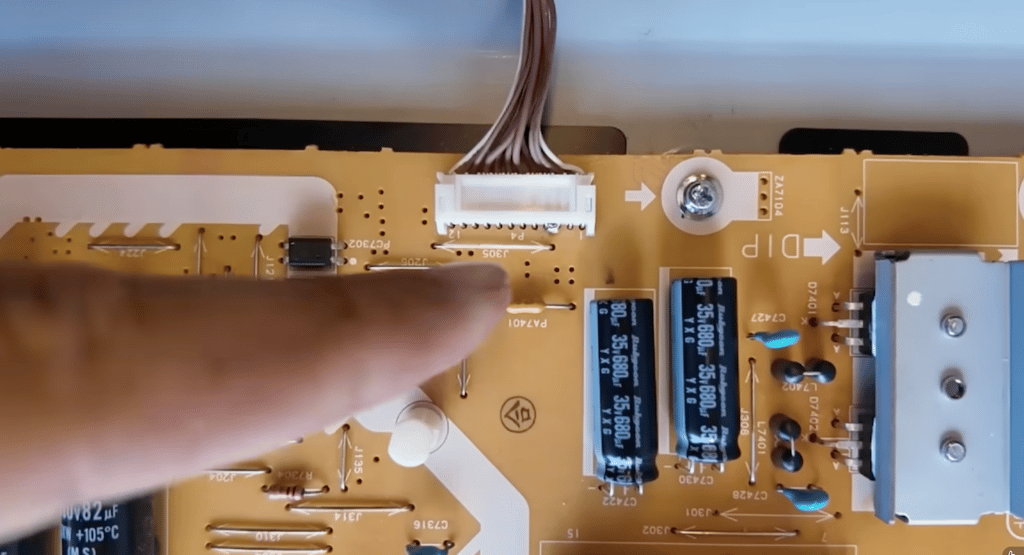
“That is all that's needed on this particular TV to get it going again.”
The fixed TV powered on successfully and showed a “beautiful, bright picture, really looking good,” despite the missing LED. The YouTuber assured that this quick fix will keep the TV working for many more years, and even challenged viewers to tell if they could notice a difference that a tiny light source is missing.
“You can’t.”
Fleckney warned that most of the largest TV manufacturers employ similar practices, and some do “worse than that.” While the software itself doesn’t deliberately disable TVs, a minor fault is all it takes.
Fleckney argues that shutting down a TV over a single failed backlight LED isn’t a genuine safety measure. Automatic shutdown would be warranted in the event of serious failures, such as overheating on the mainboard.
That doesn’t necessarily mean if your TV goes wrong after 2 years, you’ve got to throw it away. But believe me, hundreds of thousands of people are doing just that.TV repair community
“That doesn’t necessarily mean if your TV goes wrong after 2 years, you’ve got to throw it away. But believe me, hundreds of thousands of people are doing just that.”
However, the expert warns against ever trying to fix your own TV – every device is different, and power supply capacitors might even kill or harm you.
The video gained significant traction and over half a million views, with most upvoted comments pointing out that this is another proof of “enshitification,” an “epidemic of greed.”