UK social media ban could mean more users must prove their age online
Ofcom backs age checks for under-16s but warns that bypassing them remains possible.
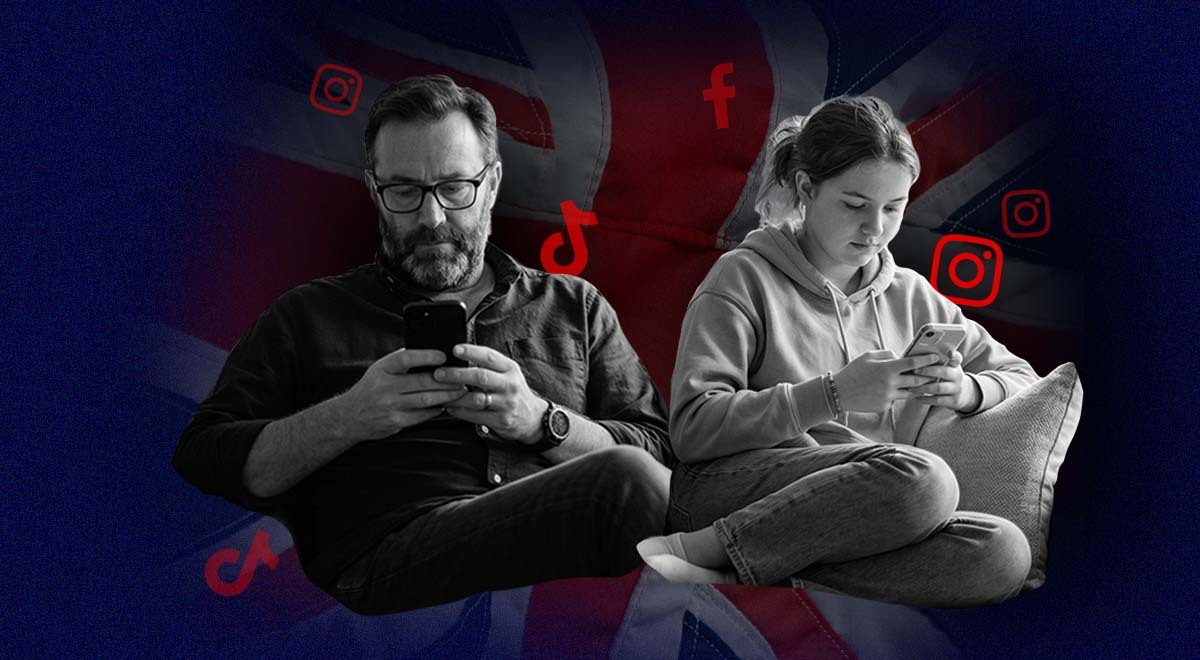
Image by Cybernews

 Follow us
- Ofcom says social platforms can verify age through photo ID, banking checks, digital IDs, or facial age estimates.
- Many adults may need to prove their age to keep using existing social media accounts.
- Ofcom warns motivated children may still try to bypass the under-16 restrictions.
- Privacy groups oppose the plan, while the ICO says age checks must protect personal data.
Key Takeaways by nexos.ai, reviewed by Cybernews staff.
Ofcom expects that many adults currently active on social media will need to undergo age verification to prove their age.
In June 2025, the UK government announced plans to ban teenagers under 16 from accessing social media.
Following Australia’s social media ban, platforms such as Facebook, Instagram, Kick, Reddit, Snapchat, Threads, TikTok, X, YouTube, and some gaming or virtual-world sites would be blocked for under-16s.
“These days kids must find their feet in a world where technology intrudes into every area of their life. I just can’t let that go on anymore. So we’re giving children their childhoods back,” former Prime Minister Keir Starmer said at the time.





Ofcom, the regulator for all communication services in the UK, has been asked to carry out a rapid assessment of what “highly effective age assurance” should look like to prove that someone is over 16.
On Thursday, the supervisor published its rapid assessment on how social media companies could reliably determine whether someone is 16 years or older.
According to Ofcom, there are 4 methods of effectively checking someone’s age. These involve photo ID matching, banking-based checks, digital ID services, and facial age estimation.
However, there’s a catch in Ofcom’s report: age checks at 16 will involve processing personal data. According to Ofcom’s assessment, available methods can be delivered in ways that protect users’ privacy and comply with data protection law.



Stay updated with our latest stories and follow us on social media
Be the first to discover new stories, ideas, and updates from our team.
For existing accounts, social media platforms can use information they already have to determine whether someone meets the minimum age requirement. Unfortunately, many adults will be required to undergo age verification if they wish to continue using their social media account, Ofcom argues.
Melanie Dawes, Ofcom’s Chief Executive, points out that we should expect that “motivated children” will seek ways to bypass the restrictions.
“Just like alcohol laws can’t completely eradicate underage drinking, but there’ll be ways for platforms to mitigate this risk. This will be a huge cultural shift for our society, so it’ll take time to adjust, and everyone will have a part to play,” Dawes says in a statement.
Big Brother Watch isn’t thrilled with Ofcom’s proposals.
“This plan for a government ‘social media ban’ is a national ID system by the back door. The plan will kill anonymity online, whilst the UK’s culture of speech policing is reaching a crisis point. The policy is painfully misguided, an Orwellian assault on free speech and privacy, and will make children no safer at all. It is authoritarian madness,” the civil liberties organization says in a post on X.
The Information Commissioner’s Office (ICO) welcomes Ofcom’s assessment.
“Age assurance plays an important role in the ICO and Ofcom's shared goal of protecting children from harm online. However, it must be implemented in a way that keeps people's personal information safe and allows them to exercise their information rights,” Katie Searle, ICO Director of Children’s Strategy, says in response.
“We are working closely with government and Ofcom to ensure that data protection is considered as the new regulations are developed. This also complements our own work assessing how age assurance providers currently comply with data protection law,” she continues.
In a separate report, Ofcom argues that app stores could play an important role in shaping children’s online experiences because they are part of a larger online ecosystem, which includes devices, operating systems, and regulated services.
Furthermore, app stores could make greater use of “highly effective age assurance” to better protect children online.
“If the government decides to regulate app stores or introduce additional children’s safety duties, they will need to consider which services would be in scope, regulatory and technical design, and interaction with the existing regulatory framework,” the report states.
The UK's social media ban for under-16s will come into force in March 2027.