(L)awful: AI won't let the dead rest
Deepfakes are targeting even the deceased, and long-gone historical figures aren’t the only ones affected. “Digital reincarnations” are now coming after victims of violent crime.

Image by Cybernews

 Follow us
Deepfakes are targeting even the deceased, and long-gone historical figures aren’t the only ones affected. “Digital reincarnations” are now coming after victims of violent crime.
- Departed historical figures and victims of violent crime are increasingly being targeted by deepfakes.
- There is no federal law in the US that protects the image of the deceased from being AI-simulated, unless it crosses a legal line.
- Posthumous publicity rights recognized in some states are limited to the use of images for commercial purposes.
- Experts say the best and least expensive strategy to fight deepfakes of the deceased is to report them to platforms for harassment and synthetic media.
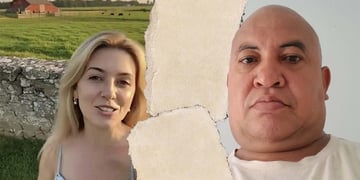
When Jacqueline O’Donnell saw a deepfake of her late daughter, Charmaine, telling the story of how she died after being pushed from a pier, the mother was horrified.
O’Donnell told STV News that it was one of dozens of AI-generated videos on a TikTok page, all of which impersonated victims who died as a result of crime.
Reporting the video to TikTok was unsuccessful at first because the platform stated that it didn’t violate their community guidelines. The account was only removed after a media inquiry.


Such “digital reincarnations” that involve AI to create a digital avatar of a dead person are on the rise, leaving loved ones, who are already dealing with grief, disturbed.






Zelda Williams, the daughter of late actor Robin Williams, has recently urged fans to stop sending her AI-generated videos of her father.
OpenAI’s AI video-generator, Sora, paused deepfakes of Martin Luther King Jr., after social media was flooded with videos depicting the social rights activist saying racist things or fighting a fellow campaigner, Malcolm X.
@jordan.and.skymar Martin Luther King jr ai #meme #viral #funny #ai ♬ original sound - Jordan and Skymar
The rise of griefbots worries AI ethicists
While people like O’Donnell and Williams are horrified seeing AI-generated versions of their loved ones who passed away, others look for comfort in so-called “griefbots.”
An advertisement for one of these bots, 2wai, recently made waves for featuring users talking to an avatar of a deceased family member, drawing comparisons with the dystopian “Black Mirror” series.
What if the loved ones we've lost could be part of our future? pic.twitter.com/oFBGekVo1R
undefined Calum Worthy (@CalumWorthy) November 11, 2025
AI ethicists say that griefbots are an ethical minefield. They warn that users can become vulnerable to manipulation due to developing strong emotional bonds with AI simulations, as evidenced by the rise of AI boyfriends.
Psychologists say griefbots may disrupt or delay the natural progression of grief and even transform genuine mourning into a form of addiction.
However, some people make a conscious decision to allow their image to be used to create an AI avatar. A dying parent, for example, may want their small children to have this type of memory.
What US laws protect the image of the dead?
Many others, like O’Donnell’s daughter, didn’t have a say in whether they wanted their “digital reincarnations.” And there’s nothing much their families can do about it.
Stuart Panensky, a co-chair of the cyber, privacy, and technology practice at Pierson Ferdinand, notes that the deceased have almost no protection against deepfakes on a federal level, as there is no national posthumous right of publicity.
Meanwhile, posthumous publicity rights, recognized in states such as California and New York, are limited to commercial exploitation, including the use of the image for advertising or trade.
However, the legal landscape is evolving due to AI, Panevsky says. Tennessee’s ELVIS Act or New York’s Digital Replica law specifically target unauthorized AI voice clones and digital replicas, broadening protection beyond commercial use.
He tells Cybernews, “In states without these specific statutes, posting offensive deepfakes of the recently departed remains awful but lawful.”
Even if the family of a deceased victim of a deepfake can navigate state laws, they may not find relief, which is costly to obtain, according to Yelena Ambartsumian, a founding attorney at Ambart Law PLLC.
However, the No Fakes Act, introduced in Congress in 2024, would prohibit the creation of digital replicas of all individuals, both living and deceased, without the prior consent of the individuals themselves and their heirs.
Fighting against the deepfakes of the deceased
Shane Lucado, founder and CEO of the legal tech platform InPerSuit, says there is only so much that can be done about deepfakes of the deceased, unless they cross a legal line. For example, if they are pornographic or defamatory.
Claims of libel, false light, or intentional infliction of emotional distress may be used. However, Lucado calls these cases “nightmare to win,” because the burden is on the living to prove actual harm.
In states without these specific statutes, posting offensive deepfakes of the recently departed remains awful but lawful.Stuart Panensky
If the deepfake of a deceased person is a direct manipulation of a specific photo, the estate can attempt a copyright takedown based on DMCA, short for the Digital Millennium Copyright Act, Panevsky says.
“However, if the AI merely ‘looks like’ the deceased but is a really newly generated image, copyright law generally does not apply because the estate owns the rights to the photo itself, not the person’s face,” he says.
Reporting the deepfake content to the platform for violating "harassment” or “synthetic media” policies may be the best strategy, because many platforms now have specific rules against non-consensual deepfakes of private individuals.
Lucado recommends that everyone start setting out their digital rights in their estate documents right now.
He tells Cybernews, “Your estate can attach a provision in your will or trust that specifically limits how your likeness, photographs, and voice data can be used, and which individuals have standing to act on your behalf if someone misuses them. Be specific.”
Unlock exclusive Cybernews content on YouTube