“This is not art:” artist sneaks AI-generated print into museum
Elias Marrow, a secretive artist, snuck a print generated by artificial intelligence (AI) into a Welsh museum, saying the image isn’t art but a symbol of power.
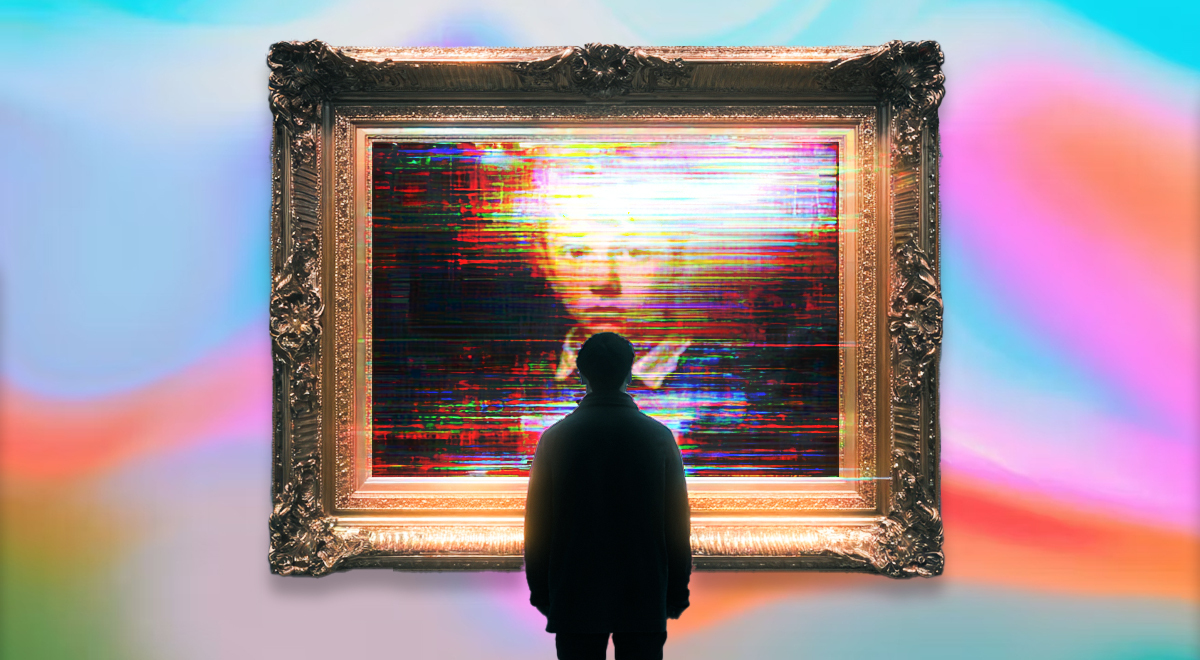
Image by Cybernews.

 Follow us
Elias Marrow, a secretive artist, snuck a print generated by artificial intelligence (AI) into a Welsh museum, saying the image isn’t art but a symbol of power.
The print titled “Empty plate,” which appeared at the National Museum Cardiff last Wednesday (November 5th), depicts a boy in a Welsh school uniform holding a book with an empty plate, Wales Online first reported.
A placard was placed next to the painting in two languages, describing the print as “digital print on paper” and “limited edition signed.”
The painting was viewed by a "few hundred people," according to the BBC. One visitor asked a staff member about the print, but said the museum employee "admitted they had no idea about the piece or when it arrived."
The museum’s spokesperson confirmed that the artwork was placed without permission and has since been removed.



Marrow, whose real identity is likely unknown, shared the image on his Instagram account.
“Empty Plate in place. Unnoticed in its weight and scope. This is not art, it's a symbol of the power of the moment,” he wrote.
In July, Marrow appears to have secretly installed a placard in the Bristol museum.
“Unauthorized. Undocumented. Unapologetic,” he wrote in an Instagram post.
He made a similar stunt in the Tate art museum network, where he placed several unauthorized works in July.
Marrow’s website states that he makes provocative pieces that “challenge collectors, galleries, and the audience to reconsider what art is – and what it's worth.”
“He distrusts galleries, collectors, and frames. He has never attended an opening. He arrives only at the end, just in time to remove his work. He rejects conformity. Embraces the unseen and revels in the nuance of end-stage art,” his website reads.
Protests against AI-generated art
The incident comes amid rising tension between tech companies and artists over AI being trained on artworks without their permission or compensation.
A group of artists filed a class action lawsuit against companies behind AI image generators in 2023, alleging that these platforms infringe on the copyrights of millions of creators.
However, a federal judge dismissed most of the copyright claims because the suing authors hadn’t registered their work with the US Copyright Office.
Japan has recently asked OpenAI, the creator of the video generator Sora, to stop imitating the country’s “irreplaceable treasures,” anime and manga, citing concerns about copyright infringement.
Despite artists’ protests, there appears to be a growing demand for AI-generated art. Over a quarter (28%) of art enthusiasts in the US and Europe reported purchasing an AI-generated artwork, with a further 52% saying they might do so, according to a 2024 report.
Meanwhile, the AI art museum, Dataland, is expected to welcome its first visitors in spring 2026. Its co-founder, Refik Anado, promised that the museum would promote “ethical AI.”
Unlock more exclusive Cybernews content on YouTube.