Can AI predict when you quit before you even know it?
Replacing employees is an expensive business. Replacing a senior employee typically costs around 200% of their annual salary, with a combination of recruitment costs and the productivity lag between the incumbent dialling it in as they eye the exit and the newcomer getting up to speed, the main culprits. Could AI help to ward off these costs and give you insight into whether someone might be on the verge of quitting, so you can actually do something about it?
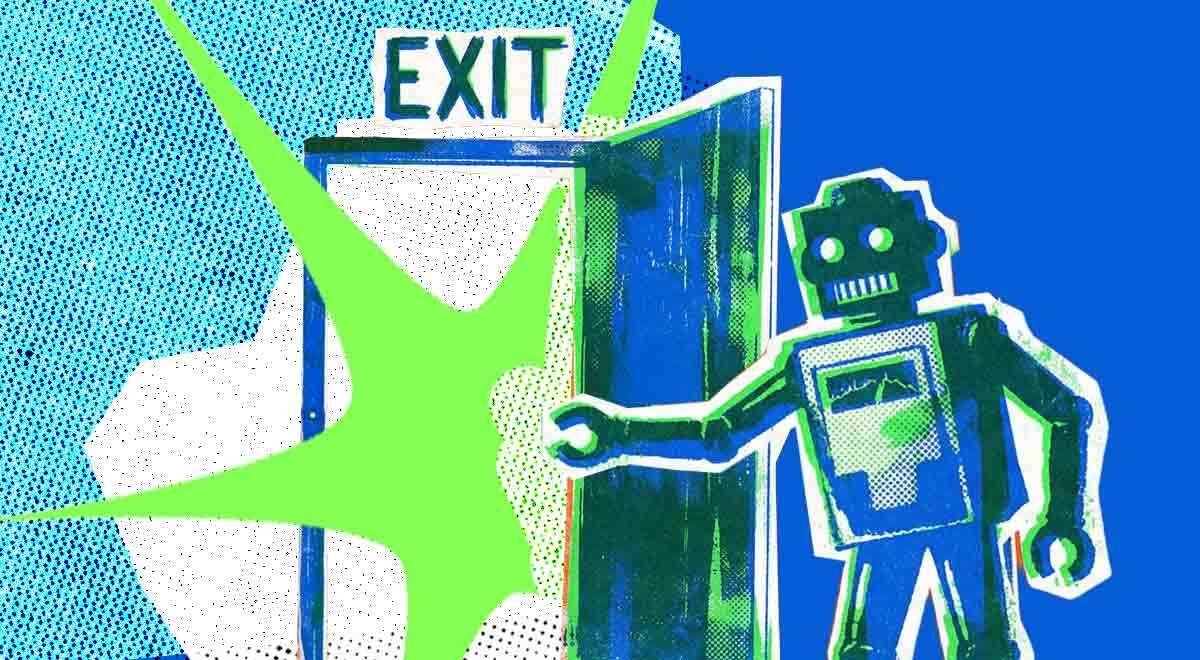
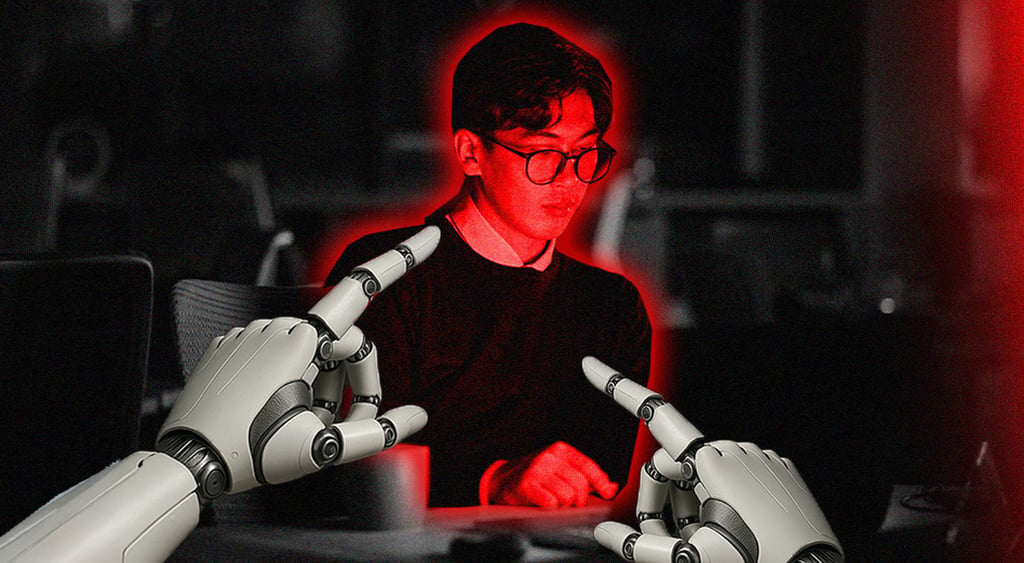
Robot opening doors for employees who don’t yet know they want to quit. Image by Cybernews.

 Follow us
Replacing employees is an expensive business. Replacing a senior employee typically costs around 200% of their annual salary, with a combination of recruitment costs and the productivity lag between the incumbent dialling it in as they eye the exit and the newcomer getting up to speed, the main culprits. Could AI help to ward off these costs and give you insight into whether someone might be on the verge of quitting, so you can actually do something about it?
What may sound like science fiction is increasingly feasible due to the advances in AI, with companies deploying algorithms that can forecast employee departures months in advance. Just as retailer Target famously knew a young lady was pregnant before her parents did, now, companies are trying to get ahead of the curve on employees' happiness and likelihood of jumping ship.
Inside the crystal ball
At the heart of these predictive systems are machine learning algorithms that analyze vast amounts of employee data to spot patterns invisible to human managers. Random Forest has emerged as the most widely used technique, achieving high predictive accuracy across multiple studies, though companies also deploy neural networks, logistic regression, and other approaches.





The AI examines hundreds of variables simultaneously, including everything from performance reviews and attendance records to email response times and participation in meetings. The system notices subtle changes like employees not participating in team meetings as they used to, email responses becoming shorter and less enthusiastic, or workers no longer volunteering for challenging projects.
These new systems are even analyzing candidates' responses to job applications to allow them to predict turnover in the future. Australian firm PredictiveHire (now Sapia.ai) developed algorithms that evaluate candidates' personality traits during the hiring process itself. They analyzed free-text responses from tens of thousands of candidates who had engaged with their chatbot to identify characteristics that are associated with job hopping.
A clear business case
It’s a service with a compelling business case. American firms are believed to spend around a trillion dollars replacing employees who quit each year, with typical replacement costs of between 50% and 200% depending on role and seniority. If we tried to keep tabs on who might be thinking about leaving via manual methods, it would be impossible. Indeed, tools like engagement surveys and exit interviews nearly always come too late to do anything to stop someone from leaving.
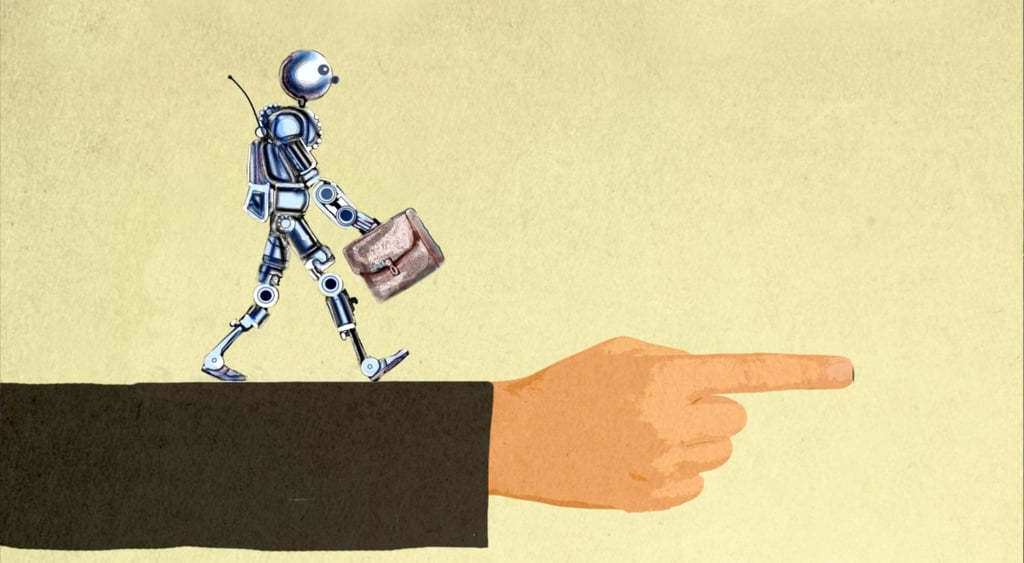
AI can flip that script and provide insights while you can still do something about it. Rather than figuring out the reasons someone left “after” they’ve decided to go, predictive analytics tell you who is at risk of leaving months beforehand so you can do something about it. This allows firms to take preemptive action to retain employees at risk of leaving, enabling targeted interventions like career development opportunities, schedule flexibility, or recognition programs.
A key area where this approach is being deployed is in mergers and acquisitions. It’s increasingly common for companies to be bought for their talent as much as their customers or intellectual property, but it’s also a real risk that the talent you think you’re acquiring won’t want to be part of your organization.
This is especially so if you’re buying a startup and its employees don’t fancy being part of a corporate behemoth. Research from George Mason University found that around 30% of employees leave acquired companies within three years, which can undermine the entire rationale for the acquisition in the first place.
The researchers developed a neural network to try to accurately predict the potential for departures after a merger. At the heart of the model was a comparison of the two organizations to determine their cultural compatibility. They also looked at the profiles of employees at both firms to see how similar they were. The goal is to identify which employees face the highest flight risk so companies can take targeted retention actions before valuable talent walks out the door.






What the AI sees
Suffice it to say, the AI isn’t reading people’s minds, but it’s aiming to spot patterns in behavior. Job Satisfaction was identified as the most critical factor in turnover prediction, appearing in a majority of studies. Other key indicators include schedule changes, performance metrics, engagement levels, and even external factors like market conditions.
Previous research has identified two primary drivers behind resignation decisions: workplace "shocks" that cause employees to question their role (like leadership changes or major life events), and "job embeddedness," which is the strength of an employee's connection to their work, colleagues, and the organization. The AI tends to look for these factors to determine one’s “flight risk.”
It’s not a technology without risks and concerns, of course. For instance, the Sapia technology runs the very real risk of discrimination, especially if it’s trained on historical data whereby people might have left organizations for perfectly valid reasons (such as discrimination), but that is then weaponized to freeze people with the same characteristics out of roles in the future.
There’s also the privacy aspect when you’re harvesting large quantities of data from your employees. It’s clear that consent and transparency are important if employees aren’t to get the ick with these approaches. They may justifiably think that their future career choices are no one’s business but their own.
A growing practice
Despite these concerns, the practice is growing, with a number of new firms entering this space to offer “predictive attrition” services. The tech works best when it’s not used as a surveillance tool but as an early warning system that prompts meaningful conversations.
Strong password generator

Rather than simply flagging high-risk employees, the most effective systems help managers understand why someone might be considering leaving and facilitate interventions that address underlying issues.
For employees, this raises an unsettling question: in a world where algorithms can predict your next move before you make it, how much autonomy do you really have over your career? The answer may depend on whether companies use these insights to create better workplaces or simply to manage workers more efficiently.
Unlock more exclusive Cybernews content on YouTube.