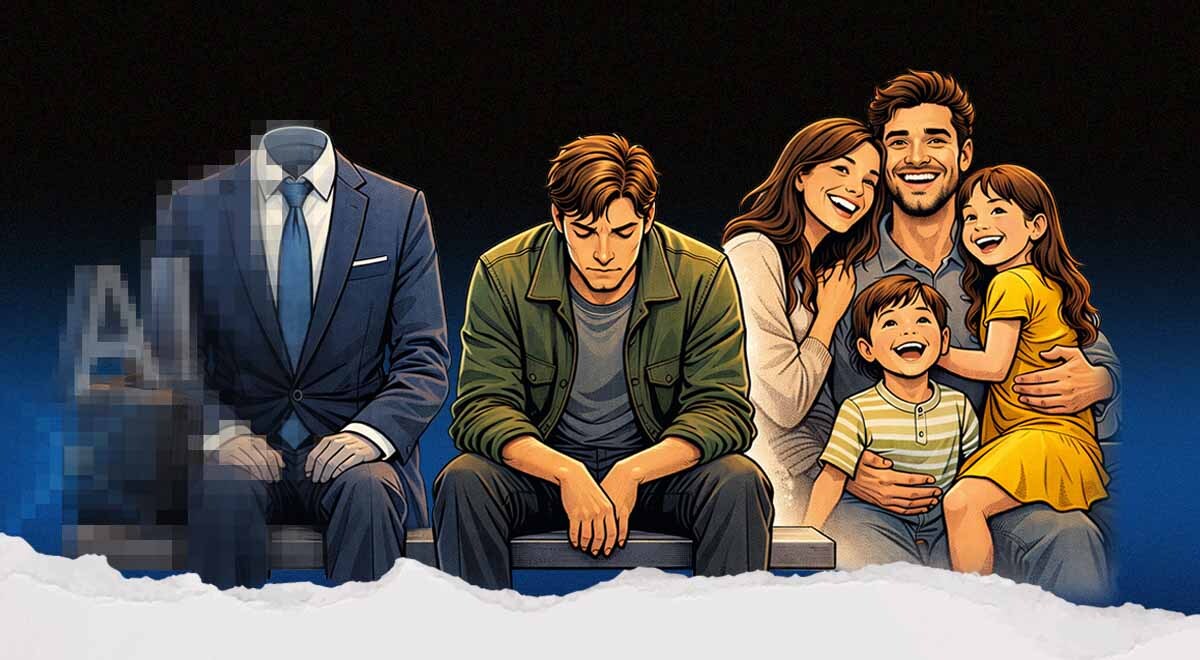
AI will dominate 2026. But what about our loved ones?
I once thought I was working a dream in the European Commission in Brussels. Big name, fancy title, in probably the most influential European capital. As Joey from Friends would ask, what’s not to like?

 Follow us
I once thought I was working a dream in the European Commission in Brussels. Big name, fancy title, in probably the most influential European capital. As Joey from Friends would ask, what’s not to like? It turned out – everything. Looking back, I wish artificial intelligence had existed then so that I could have been replaced as soon as possible, as my role couldn’t have felt more repetitive, boring, slow, and meaningless.
That was until Christmas that year, when I flew to Warsaw. My dad picked me up in his car and drove back home to Vilnius – mostly known as the capital of Lithuania, but to me it’s home, where I’m irreplaceable.
As we step into 2026, the question of how many of us are replaceable with AI and the stress it brings will only grow. All the signs are here: major companies and public institutions are committing to expanding their AI capacity, from private big tech such as Nvidia creating new AI models, to the Trump administration launching a campaign to hire 1,000 AI engineers into federal government roles.
And as one survey shows, nobody (well, 68% of CEOs), is sparing a dime on this, as the stakes are high and nobody wants to be the odd one out. The payoff on investments into AI is going to be the thing that will either make or break a business. It will also be a source of tension that will shape how companies think about people, productivity, and profit in the year ahead.
I write this with a smirk on my face because I believe that this year’s AI hype has proven, like never before, that people are indeed not replaceable. Not just at home but at work, too.

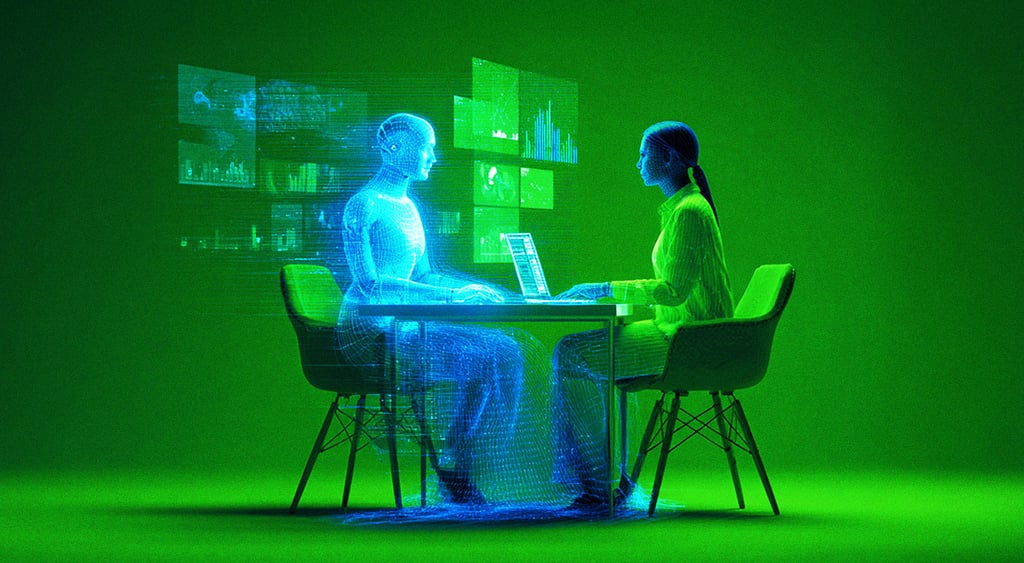
Take all the headhunting this year. Amar Subramanya, an engineer at Google DeepMind, and former head of Gemini, left to join Microsoft’s AI division.
Meta recruited at least two senior Apple AI researchers. The AI bubble has come full circle to proving that talent, creativity, charisma, and leadership are not to be replaced, but rather stolen. These are the elements that make us human, something desired by big tech companies and irreplaceable with machines.






You might argue with me by saying, hey, Izabele, these are A-list AI pros you’re talking about, of course, companies want them. But what if that’s precisely the point? What if the process we’re fearing so much is not human redundancy, but human concentration, pooling the value they can create?
Several major US banks reported significant productivity gains tied to AI, even as some businesses prepare for possible job impacts, which highlights how automation is both a tool and a worry for workers, although that is definitely not always the case.
Beyond these headlines, there’s evidence that people are already adjusting their careers in response to the AI era. For example, in the UK, young workers are shifting away from traditional office jobs toward skilled trades, such as plumbing, a career that would be difficult to automate.
Still, the fear that AI might steal jobs hangs in the background of countless career decisions. People talk about it quietly at dinner tables and commuter trains. What does it mean to live alongside powerful tools that can write, design, calculate, predict, and, in many cases, do parts of what once defined not only someone’s daily work but someone as a whole?
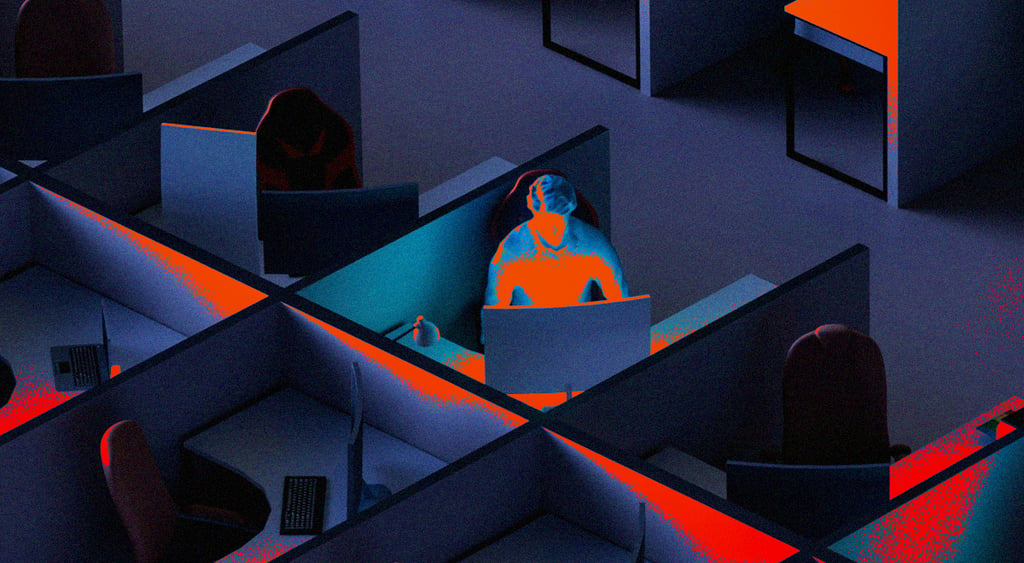
I believe that the core of fearing AI partially comes specifically from how we define ourselves as humans. If the biggest part of our self worth comes from our professional wins, what happens when it’s replaced with AI?
It’s the fear of not knowing who we are without our jobs that grows the horror of being no longer needed. The company may no longer value you, but if without a job, you don't see your value either.
That’s where dad in a Toyota Prius, drives in.
He never knew what AI was, and at least at the time, he couldn’t have been replaced as a truck driver. He’s looking over me from a (non digital) cloud and seeing how I’ve now become a plaintiff in a financial fraud case, which postpones me becoming a bride to my best friend and the love of my life.
He told me once that “If God decided to take something from you, it’s better that it’s just your money and not something that matters.”
Due to the financial fraud case, I now fall asleep every night next to my partner in my childhood bedroom at my mom’s house, after spending the whole day reading and writing about AI myself and consulting with the experts in this field.
We’re all replaceable except to our loved ones. It’s that piece I wish for everyone to have this holiday season, when considering the prospect of AI replacing our jobs.
Unlock more exclusive Cybernews content on YouTube.