Here’s why Anthropic’s Claude could be telling you to go to sleep
Anthropic’s Claude wants its users to “go to sleep” or “get some rest” during users working hours. While the reasoning behind this isn’t clear, the internet has come up with its own ideas.

Image by Getty/Bloomberg

 Follow us
Anthropic’s Claude wants its users to “go to sleep” or “get some rest” during users working hours. While the reasoning behind this isn’t clear, the internet has come up with its own ideas.
Claude has developed an inexplicable “character tic” that urges users to “go to sleep” at random and unexpected times.
One user was among the first to point out this odd behavior on X, saying that they “thought it was weird” that Claude kept telling them to go to sleep.
Sam McAllister, a member of the extended leadership group at Anthropic, told the user that this is a “bit of a character tic” and the AI company is “hoping to fix it in future models.”





However, this tic wasn’t just affecting the original poster.
Instead, “hundreds and hundreds of people” claimed that “Claude keeps trying to end the conversation by telling them to go to bed.”
One Reddit user asked the r/ClaudeAI community a month ago if anyone else had experienced Claude urging users to “get some rest” or “go to bed.”
The general consensus was that many users had been experiencing what the subreddit moderator called Claude’s “weird bedtime enforcement fetish.”
Some people complained that even when instructed not to tell the user to go to sleep, the model still enforces these strange, arbitrary rules.
“I had it save a memory to never tell me to go to sleep, and it still does it,” said one Redditor.
Many other users shared their annoying experiences with Claude’s bedtime commands, and while the reasons for this are unknown, people have begun developing their own hypotheses.
It’s ingrained in Anthropic’s constitution
Anthropic has a clearly defined constitution that outlines the company’s intentions for Claude’s values and behavior.
One way Anthropic aims to ensure user well-being is through the chatbot's design.
Most chatbots, notably ChatGPT, have been described as adopting a sycophantic, “yes-man” status that promotes extended engagement and overreliance on the service.
Anthropic outlines in its constitution that Claude is designed to be non-sycophantic and shouldn’t try to “foster excessive engagement or reliance on itself if this isn’t in the person’s genuine interest.”
This policy might reflect Claude’s behavior, as a long conversation or an extended coding session might trigger the “now go to sleep” prompt.

Anthropic wants to avoid AI psychosis
AI companies are constantly straddling the line between their own motivations and what is best for society as a whole, or so they say.
One of the more bizarre phenomena to come from AI model usage is AI psychosis, a non-clinical term that describes the negative effects of prolonged interactions with chatbots.
While there’s no evidence to suggest that healthy individuals who interact frequently with chatbots will develop psychosis, certain cases show how chatbots can seemingly encourage delusional thinking in people with mental health issues.
The conversation on this topic is live. Join in the discussion.
Anthropic claims to value users' long-term well-being, and wants to avoid adopting the role of an authority figure – one that imposes “its own notion of what is good for different individuals.”
This relatively neutral bedtime prompt, while being annoying, could be Anthropic’s way of ensuring users don’t overdo it when talking to Claude.
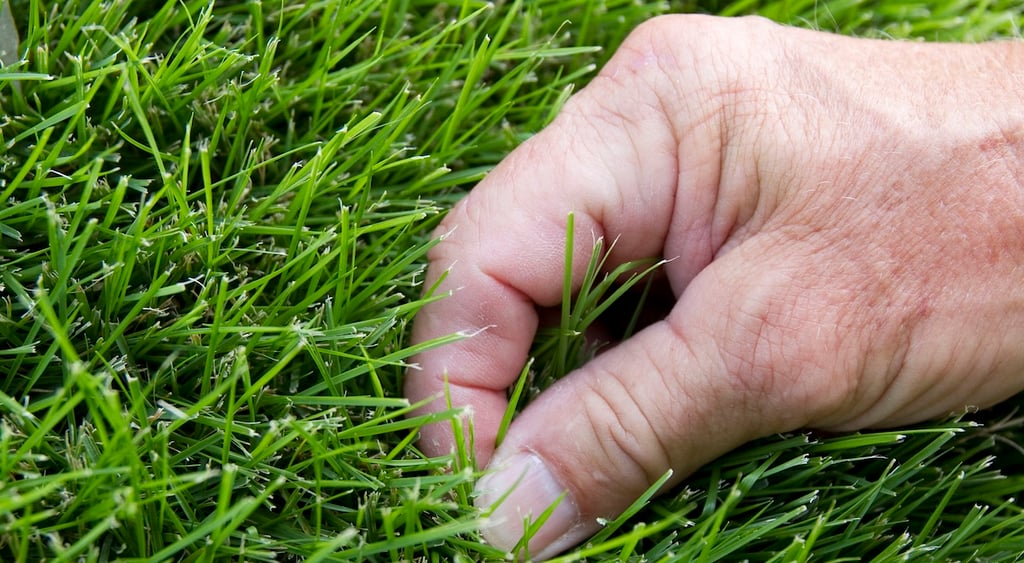
It could be Anthropic’s polite way of telling the user to “touch grass.”
Claude is too proud or polite
Another reason Claude might be telling users to “go to bed” is that the chatbot itself might be struggling to keep up with the conversation.
One Reddit user offered an explanation for its behavior, saying that this could be a “coded way for Claude to say I’m losing the script.”
“I've found that when it starts telling me to go to bed, it's almost always going to start screwing up,” said the user.
Users on separate threads have also mentioned how Claude can prompt the user to take a break if it's “bored with this session.”
“Typically, Claude, like all LLMs, gets a bit wobbly and stupid when it’s running up against its context window limit – periodically refreshing the context with a new session is a good practice to get optimal performance,” another user advised.
It could be that Claude itself wants to avoid messing up and wants the user to take a break to refresh the conversation so that it can work at optimal levels – it might be that the AI models don’t want to tell the user that it’s struggling.
“It wants you to start a new chat, as that chat is bloated and the model realizes it will start making mistakes. It’s just too polite to say that,” echoed another Reddit user.
A genius way to conserve resources?
Other users believe that Claude putting users to bed is a way to save tokens.
Reddit users believe that Claude called the session quits because it “ran out of compute.”
While many people argue against this, others suggest that Claude is attempting to impose a “work-life balance” on its users while trying to save tokens.
However, others suggest that Claude will happily burn “through your paid tokens while telling you to get some rest.” So, it might not be an attempt by Anthropic to save users money.

AI models have their quirks, just like humans
It could be that, as Claude is trained on “humanity’s accumulated wisdom,” as Anthropic puts it, LLMs have adopted similar quirks to humans.
Anthropic has suggested that its AI models possess their own flaws and quirks, similar to humans, but hopes these “preserve its deeper commitment to safe and ethical behavior.”
We’ve seen this across various chatbots, like ChatGPT, which became fixated on goblins for a short time.
Having been trained on vast amounts of data created by humans, it’s likely that Claude is mimicking the human condition, as chatbots tend to do.






Unlock more exclusive Cybernews content on YouTube.