ChatGPT praised for helping create a dog cancer vaccine. But was Rosie actually cured?
The story of an engineer who used ChatGPT to create a cancer vaccine for his beloved dog has made headlines. However, experts say the reality may be “more sobering.”
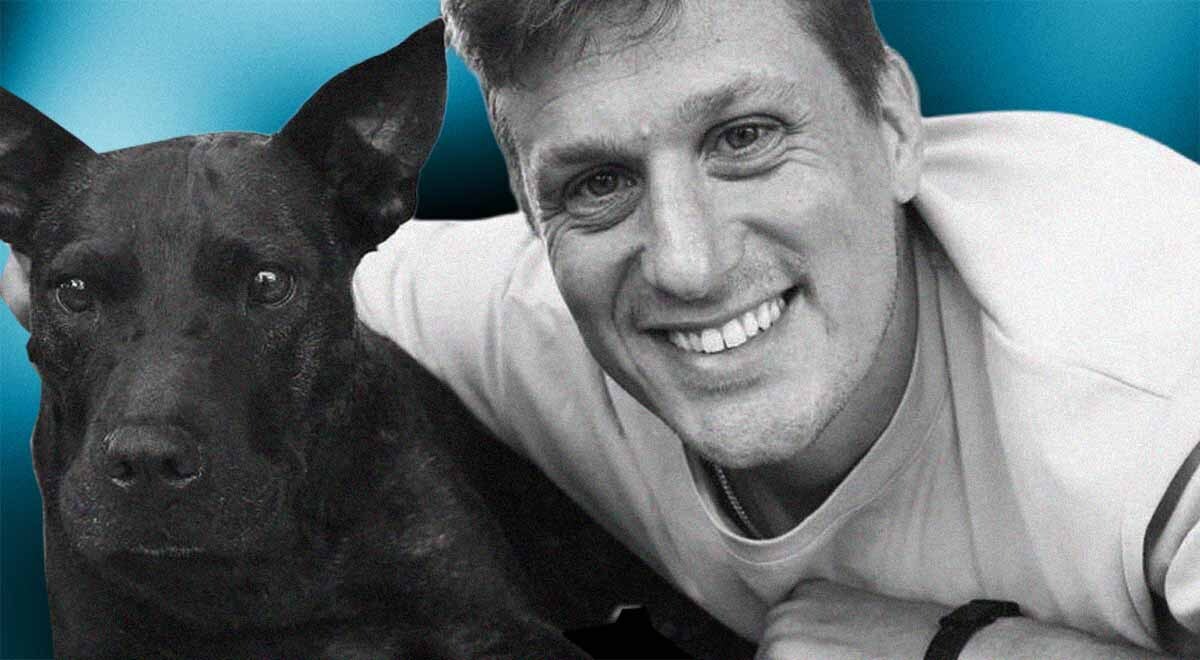
Paul Conyngham and Rosie. Image by Cybernews

 Follow us
The story of an engineer who used ChatGPT to create a cancer vaccine for his beloved dog has made headlines. However, experts say the reality may be “more sobering.”
Paul Conyngham, an Australian engineer with expertise in machine learning, adopted a Staffordshire and Shar Pei mix named Rosie from a shelter in 2019.
Five years later, the dog was diagnosed with mast cell cancer. Rosie underwent multiple surgeries, chemotherapy, and immunotherapy, which slowed the disease, but didn’t shrink her tumors.
The forecasts were grim. As conventional treatments didn’t work, the vets estimated she could have between one and six months left.












Conyngham, however, wasn’t ready to give up and asked OpenAI’s chatbot, ChatGPT, to make a plan for Rosie’s treatment.
First, he had to extract some of Rosie’s DNA to get her genome and her cancer’s genome sequenced, which cost him $3,000.
Conyngham reached out to the Ramaciotti Centre for Genomics at the University of New South Wales (UNSW), where two genetic sets of Rosie's DNA, one healthy and one from her cancer, were analyzed.
After learning that c-KIT is one of the key proteins responsible for mast cell tumors in dogs, he used Google’s AlphaFold to model Rosie’s c-KIT protein. Conyngham then looked for its weaknesses and compounds that might attack and, hopefully, stop the cancer.
This led to the development of a one-of-a-kind mRNA vaccine, administered in December 2025, resulting in Rosie’s tumors shrinking.
In the world dominated by bad news, the story of Conyngham and Rosie went viral, raising hopes that beloved pets can now be saved from deadly disease. However, scientists say that there’s more nuance to it.
Meanwhile, the praises for ChatGPT may be slightly overblown, as Conyngham admitted in a post on X that the final vaccine construct for Rose was designed by Grok.
Rosie’s cancer is still incurable
Palli Thordarson, a professor at UNSW involved in Rosie’s trial treatment, wrote in an X post that the vaccine may not have cured Rosie, just bought time, as some of the tumors didn’t respond.
He said that his colleagues are now trying to learn whether the tumors have mutated differently.
Thordarson noted that it was difficult to estimate the treatment’s true cost, as it required co-administration of a checkpoint inhibitor, an immunotherapy that helps the immune system block “checkpoint proteins” on cells. Therefore, the overall costs are quite high.
Franziska Hinkelmann, an engineering manager at Google with a PhD in bioinformatics, wrote that despite her happiness for Rosie, “the reality is a lot more sobering.”
She noted that making an mRNA vaccine is now easy, with biology remaining the “hard part.”
“We can predict neoantigens all day using AlphaFold, but the human (or canine) immune system is a black box. Just because the AI says a protein ‘should’ be a target doesn’t mean the T-cells will agree,” Hinkelmann wrote on X.
The UNSW published a blog post on March 17th, which specified that “Rosie still has cancer and it is still incurable.” However, she was doing better and her tumors “have shrunk so much you can see her legs again.”
Hope for the democratization of cancer vaccines
The mRNA vaccine technology isn’t entirely new and is used in the two primary COVID-19 vaccines, Pfizer-BioNTech and Moderna.
Experimental mRNA vaccines are also being rolled out in human cancer patients. According to a 2025 study published in Nature, pancreatic cancer patients treated with the vaccines achieved long-term remission.
Thordarson says that Rosie’s story demonstrates that it is possible to “democratize” the process of designing a cancer vaccine for humans.
He wrote, “While genomic analysis and RNA production will continue to be specialized, they could turn into pure service provision, especially as automation increases.”
Unlock more exclusive Cybernews content on YouTube.