Can ChatGPT become the "everything app" that Elon Musk couldn't build?
The integration of various popular apps has brought ChatGPT closer to becoming the "everything app" that Elon Musk dreams of but hasn't yet succeeded in building. But can it become the Western version of the Chinese WeChat?

Image by Cybernews.

 Follow us
The integration of various popular apps has brought ChatGPT closer to becoming the "everything app" that Elon Musk dreams of but hasn't yet succeeded in building. But can it become the Western version of the Chinese WeChat?
ChatGPT users outside the European Union (EU) and the United Kingdom (UK) can now access apps like Booking.com, Canva, Coursera, Spotify, and Zillow right inside the chatbot. This allows users to book hotels, browse for real estate, or listen to their favorite playlists directly.
OpenAI has said that more apps are coming, with DoorDash, Uber, TripAdvisor, Khan Academy, and Target on the future-partners list.
Experts say that OpenAI, the ChatGPT maker, is getting closer to owning a super app that may also replace web browsers. However, it may not happen anytime soon.











Musk's problem is the lack of trust
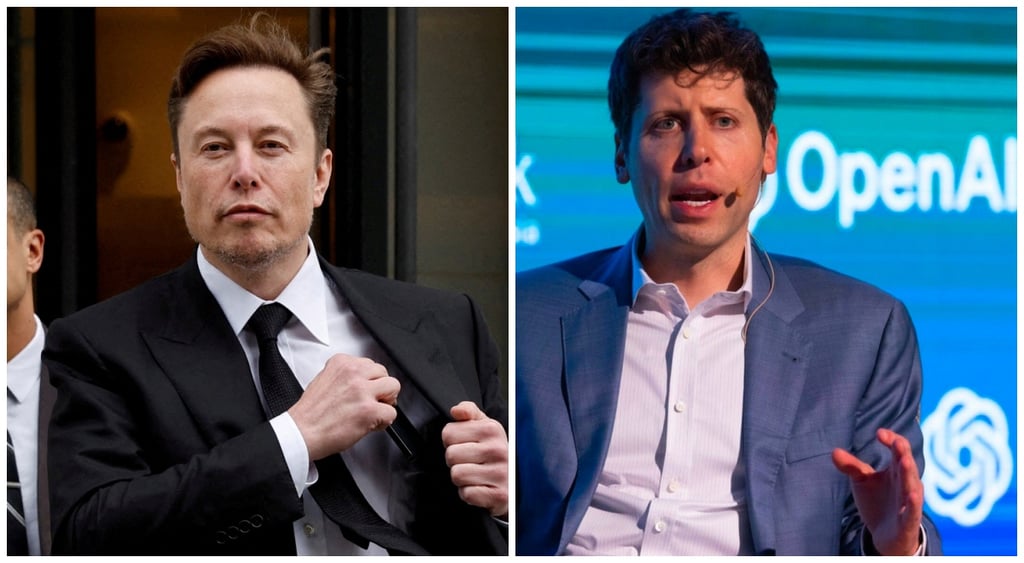
The rapid ChatGPT advances may sting Elon Musk, a co-founder of OpenAI who left the company in 2018 due to disagreements with the CEO, Sam Altman.
He’s now waging a legal battle against OpenAI over its abandonment of its non-profit mission and what he calls an "anticompetitive agreement" with Apple.
Musk has long wanted to build a so-called "everything app" that could replace YouTube, LinkedIn, dating apps, and even banks.
His company X signed a partnership with Visa in early 2025 for a digital wallet and peer-to-peer payment service called XMoney, but it isn't yet available.
Musk recently announced the launch of Grokipedia, a copycat open-source encyclopedia platform that‘s supposed to help avoid "Wikipedia's editorial biases."
The chatbot Grok, developed by X’s parent company, xAI, was mired in controversy in its early days for endorsing Adolf Hitler and spreading conspiracy theories.
Musk himself is a controversial figure. Traffic to X significantly dropped after he acquired the social network in 2022. The user exodus intensified after he joined Donald Trump's administration by establishing the Department of Government Efficiency.
Some experts say X's nature as a social network and controversies surrounding Musk hinder his efforts to build "the everything app."
The platform is built for open debate, not private transactions – people won't send money where they argue about politics. On top of that, X's system wasn't designed for fast, secure financial operations, and adding that now would be risky.Chirag Agrawal
Chirag Agrawal, a lead engineer and tech expert at Amazon, says Musk's biggest challenge isn't tech or regulation but context collapse.
"The platform is built for open debate, not private transactions – people won't send money where they argue about politics. On top of that, X's system wasn't designed for fast, secure financial operations, and adding that now would be risky," Agrawal says.
According to David Tomasian, CEO and founder of Curious, building one platform for everything means dealing with regulatory friction, fragmented user habits, and cultural resistance to centralization.
He tells Cybernews, "People are typically wary of a single platform controlling everything they see, say, and spend."
Why ChatGPT may not become the Western WeChat
At least in theory, "the everything app" built either by OpenAI or xAI could become the Western version of the Chinese super app WeChat, which has roughly 1.5 billion active users monthly.
The app, which started as a simple messaging program over a decade ago, now enables making payments, online shopping, and taxi booking, among others.
Agrawal sees ChatGPT's app integrations as a step toward an "AI-powered everything app" rather than becoming a WeChat copy. The Chinese app owns its services, while ChatGPT connects to others through application programming interfaces.
"It's more of an intelligent middle layer that helps users get things done across apps. This makes it lightweight and flexible, but it also means it can't yet handle deep functions like payments or identity checks on its own," he says.
Because Western systems and privacy rules are fragmented, Agrawal predicts that ChatGPT will likely become a smart task router rather than a full-blown super app over the next few years.
Convincing users may be another challenge. Corey Forsyth, CEO at Blacklight Automations, says Americans already have apps they like, and people are often reluctant to switch from inferior products because they are used to them.
"Behavior change is one of the hardest things to pull off in tech – way harder than building features," he says.
Redditors welcomed ChatGPT's app integration, with some predicting that it would turn into an operating system and browser. At the same time, users in the EU and the UK are disappointed that they have to rely on VPNs to access the apps.
Robert Keus, founder of GreenPT, says while the technology is impressive, not every task needs automation.
"What's equally important is the environmental cost behind it all. Training and running large language models requires enormous amounts of electricity and water to power and cool data centers," he says.
Will ChatGPT replace the browser?
Apoorv Agrawal, an adjunct associate professor at Columbia University, predicted that ChatGPT with apps will be the default workplace start screen within 12 months.
"That will be your browser homepage," he wrote X.
Biggest takeaway from Dev Day is Apps SDK.
undefined Apoorv Agrawal (@apoorv03) October 6, 2025
Turns ChatGPT into a work super app. You start with a prompt, it routes to Figma, Canva, Spotify, Zillow, and back. The OS shifts from device to intent. Distribution becomes “be where the prompt is.”
Prediction: within 12 months the… pic.twitter.com/g9HXpa714r
More than half of American adults use LLMs like ChatGPT, which have already replaced a tiny fraction of browsers' functions.
An analysis by Datos found that chatbots account for 5.6% of desktop browser-based search traffic. Increasing competition caused traditional search engines to add AI overviews.
Some in the industry are sceptical about the potential of ChatGPT to become the new browser, at least not now.
Chris Sorensen, CEO at ARMOR Dial, says it is unrealistic to believe that chatbots could start replacing browsers for most daily tasks within 3-5 years.
However, OpenAI's agentic system for ChatGPT, introduced in July, can already perform small tasks like analyzing a user's calendar and creating slideshows.