China is tightening its grip on technology and engineering global markets
The gap between China and the US, as well as the rest of the world, is widening as the Asian giant continues to dominate the majority of technology research, including generative AI, grid integrations, and other areas. The dominance is so great that China is on the verge of becoming a technology monopoly.

Image by Cybernews

 Follow us
The gap between China and the US, as well as the rest of the world, is widening as the Asian giant continues to dominate the majority of technology research, including generative AI, grid integrations, and other areas. The dominance is so great that China is on the verge of becoming a technology monopoly.
China continues to assert its dominance over critical technology research. In a study that monitored 74 technologies, China was leading in 66, while the US accounted for the remaining eight.
Additionally, the Australian Strategic Policy Institute’s (ASPI) Critical Technology Tracker this year included 10 new technologies, such as advanced computing and communication, artificial intelligence (AI), and emerging neurotechnologies “relevant to human-machine integration.” In 8 of them, China leads the way in the global share of high-impact research output.
“Four – cloud and edge computing, computer vision, generative AI, and grid integration technologies – carry a high technology monopoly risk (TMR) rating, reflecting substantial concentration of expertise within Chinese institutions,” states the report.
In recent years, dominating the AI, robot, and tech industry has been one of Beijing's top priorities. In some cases, it took the form of “Robot Olympics” games and dance-offs, with millions of viewers and tech enthusiasts having the time of their lives watching them. In reality, Xi’s government is investing heavily in China’s national AI.






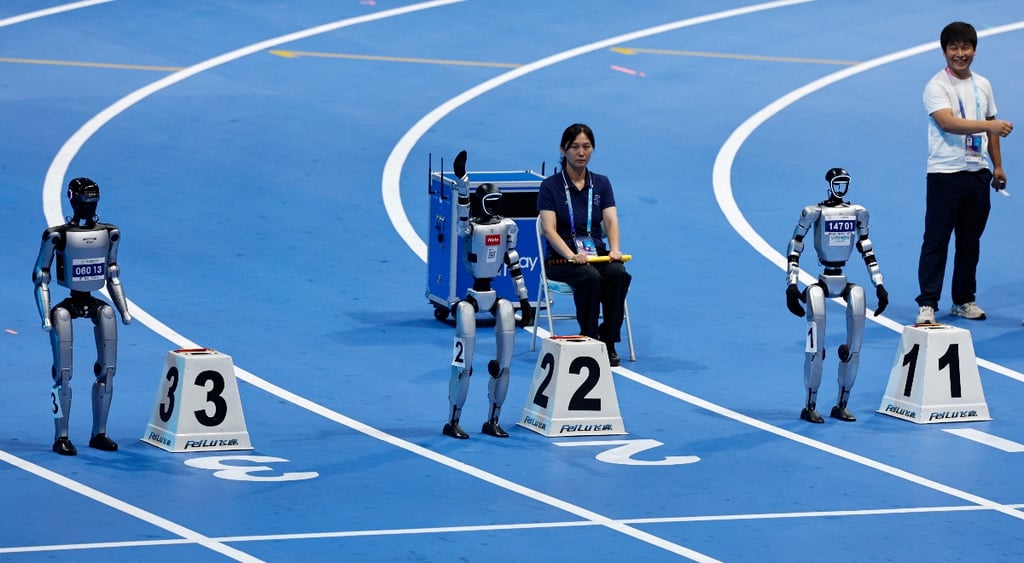
Beijing has invested hundreds of billions in AI infrastructure, including hyperscale data centers and national compute. There’s even an attempt to surpass the world’s largest semiconductor company, Nvidia – a move that could reduce the country’s dependence on Western semiconductor suppliers and impact Taiwan, where manufacturing is located.
At the same time, China’s data center network comprises 250 data centers, spread across the country, which are used to create large language models (LLMs) and support military surveillance and command systems.






And the results are already in. For example, recently DeepSeek reported spending $294,000 on training its R1 model – a much smaller sum than normally spent by US rivals.
Historical data aligns with current research ecosystem trends. The US, which has dominated tech research in the early 2000s, has seen its lead “eroded” and then been “outmatched by persistent long-term Chinese investment in fundamental research.”
In total, China now leads in 66 of the 74 technologies tracked. That’s one or a few steps away from creating a knowledge monopoly.
China’s monopoly on tech research
It is one thing to be a thought leader and set the market or industry trends for other researchers or companies. It’s another thing to build a global technology monopoly.
In this case, it’s not just one company that dominates the industry with little to no competition, but an entire country that possesses significant research capacity, access to data, and considerable control over industries, shaping the direction of entire sectors.
The ASPI report's conclusions are quite strict – if China continues to follow the same path at the same pace, it could become a leader in setting new tech standards, controlling patents, and other key factors crucial to maintaining a spot in the tech sun.
As mentioned above, this year, ASPI added 10 new technologies to the research list.
Four of them – cloud and edge computing, computer vision, generative AI, and grid integration technologies already have a high rate of technology monopoly risk (TMR). Digital twins, brain-computer interfaces, neuroprosthetics, and precision agriculture fall under the medium TMR. The fields of extended reality and geoengineering show a low chance of Chinese research monopolizing them.
Unlock more exclusive Cybernews content on YouTube.