1 in 4 Dutch workers fear AI job losses, especially in these sectors
Daily use of artificial intelligence (AI) is now the norm rather than the exception in the Netherlands. Only 8% of Dutch workers say they have never used AI in the workplace.
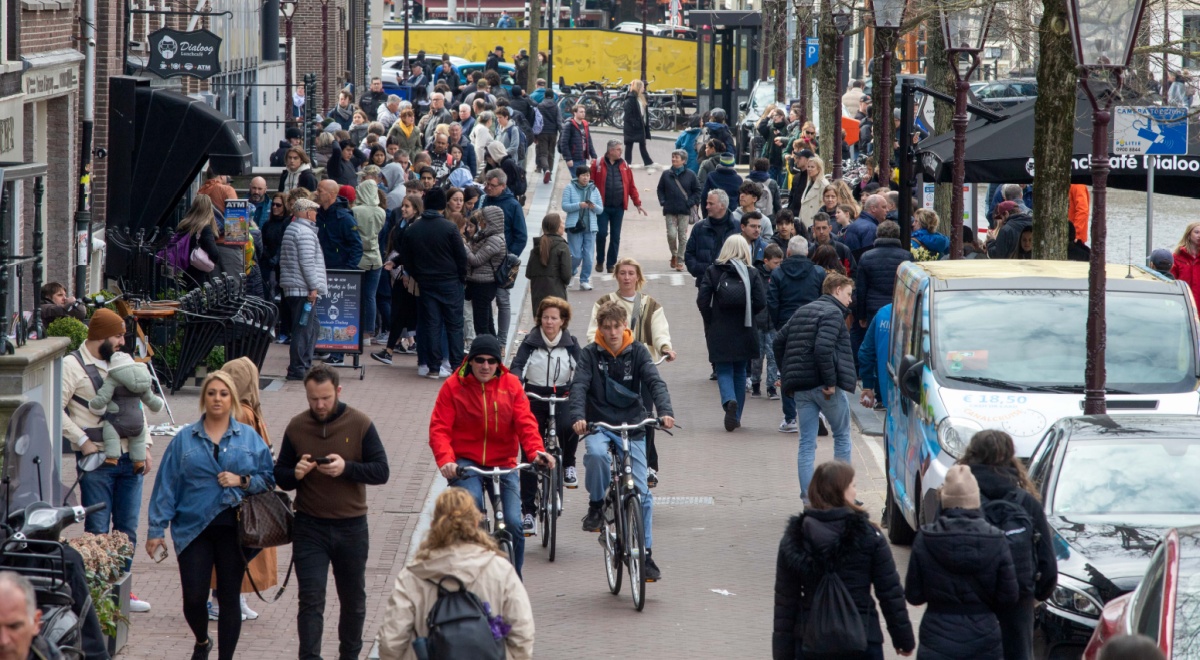
Cyclists, pedestrians on Prinsengracht in Amsterdam. Peter Boer/Bloomberg/Getty.

 Follow us
Daily use of artificial intelligence (AI) is now the norm rather than the exception in the Netherlands. Only 8% of Dutch workers say they have never used AI in the workplace.
- AI is now mainstream at work – 77% of Dutch workers use it.
- Job fears are rising – 27% think AI could replace their role.
- Mental health is taking a hit – some workers report anxiety and sleep problems.
- Many workers say employers aren't providing enough support.
Key Takeaways by nexos.ai, reviewed by Cybernews staff.
AI use amongst the Dutch working population has almost doubled in a year, from 40% in mid-2025 to 77% in May 2026. The question is no longer whether people use AI, but how they use it and how they feel about it, OpenUp argues.
According to the mental well-being platform, AI in the workplace is primarily used to gather information, conduct analysis, and perform managerial tasks. Nearly every sector uses AI, with media and communication firms on top, followed by IT, finance and insurance, and education.
Not all employees are happy with these developments.





A study shows that 1 in 5 workers (22%) experience negative feelings towards the rise of AI. Meanwhile, 11% say they have trouble sleeping because they’re worried about the possible consequences.






In addition, a quarter of the workers (27%) expect to lose their jobs because they fear AI will make their roles in their organizations obsolete. Lastly, 41% does not feel supported by their employer in the AI transition.
The Dutch trade union CNV fully understands these concerns, especially in industries such as advertising and finance.
“In those sectors, people wonder: will I still work in the same position? Or: what do I need to be able to do in terms of training to keep my job? The simpler functions and tasks, in particular, are being purchased. That is bad news for the younger employees who often start there,” CNV Union Manager Erik Maas tells Dutch news outlet RTL Nieuws in an interview.
“Companies are starting to offer support with the technical shift, but the human dimension is often overlooked,” OpenUp states. But there are several ways companies can support their workers' mental health.

For starters, firms can encourage employees to experiment with AI to boost their confidence and get more familiar with it. That way, they can build skills for the future, like strategic thinking, creative work, and human interaction. Lastly, companies can offer mental well-being support so workers know how to cope with mental fatigue.
Recently, a study by Statistics Netherlands (CBS) found that approximately two-thirds of Dutch firms are experiencing staff shortages. A year ago, they mainly focused on creating a more attractive work environment for potential employees. Nowadays, most of them are turning to AI support, robotics, or other automation solutions to address the issue.
The risk of losing your job because you’re being replaced by AI is very real. In recent months, numerous companies have announced layoffs because of this, including Amazon, Cloudflare, Oracle, and Meta.
Unlock more exclusive Cybernews content on YouTube.