She caught a fake job applicant red-handed. Here’s why AI candidates are bad news for you
A US recruiter recently found herself interviewing a bot posing as a job candidate on a live video call – an alarming example of how far AI-powered employment scams have come. Security officials warn that the risks go beyond wasted time, as North Korean networks are using fake identities to land remote IT jobs. Companies do not want to take any risks, and tech giants are looking to bring back in-person interviews.

By John Lund/Getty Images

 Follow us
A US recruiter recently found herself interviewing a bot posing as a job candidate on a live video call – an alarming example of how far AI-powered employment scams have come. Security officials warn that the risks go beyond wasted time, as North Korean networks are using fake identities to land remote IT jobs. Companies do not want to take any risks, and tech giants are looking to bring back in-person interviews.
- Bots are crashing job interviews. They are even capable of taking part in live video calls, making it extremely hard for recruiters to spot the AI intruders.
- Quite often, these fake candidates are North Korean nationals, "dispatched" abroad to earn money for the regime.
- Recruiters now want in-person interviews to avoid being fooled by bots.
Companies that are looking for remote staff are often one step away from hiring a specialist who does not exist but does have an online presence – a bot. Not just any bot that can perfectly craft a CV, but a bot that participates in a live video call.
They’re well prepared to answer questions, both on their nonexistent qualifications and complex tech or engineering-related topics. It was an average day when one bot decided to land a job at a US-based managed intelligence company, Nisos.
One of the people who “caught” the bot trying to land a job was Magen Gicinto, the company’s chief people officer. She was the eagle-eyed one who concluded all the elements of the interview that were off.




So, what were the red flags that gave away the bot?
Four things that gave the AI-generated bot candidate away
Earlier this summer, Nisos had put out several engineering and AI engineering roles. As Gicinto puts it, these are roles that bots typically seek – where they would have access to company data or infrastructure.

“They're typically looking at some of those information technology engineering positions, artificial intelligence positions, and more. Those kinds of remote positions specifically to apply for. It was not surprising that we encountered some employment fraud, given that we had pushed out quite a few remote engineering roles,” says Gicinto.
The bot was first interviewed by a hiring manager who reported the “candidate's” suspicious behaviour to Gicinto.
“Megan, something seems off. I think this is employment fraud,” he said.
So, Gicinto booked a follow-up call with the “candidate.” That’s when she spotted a full variety of red flags that gave the bot away.
“As questions were being answered, there was a delay in the response, but also the candidate physically looked off to the right of the screen. So, looking at a second screen and there was enough of a delay where we thought, okay, it is using AI. It was typing in the questions, getting a response from AI, and then turning around and answering the interview question,” Gicinto recalls.
She also pointed out the unnaturally sounding sentences, as the bot’s language was “chopped.”
“It seemed pretty regimented. The cadence of the words didn't sound like a normal conversation that you and I are having.”
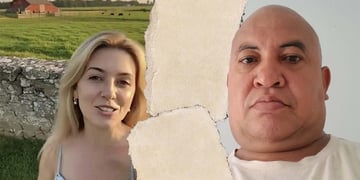
Moreover, the bot’s visual appearance did not seem to match the experience it listed on its fake CV, as it appeared to look “very childlike.”

“The candidate looked very, very young compared to the experience that was on the resume. So you want to be careful because you don't want to have any kind of age discrimination. So you want to make sure that you're looking at that person's qualifications against the job. But there was still a little bit of a gut check: Is this a real person?” Gicinto says.
Following her initial suspicion, Gicinto continued the conversation with the bot. The “gotcha” moment began when she asked it behavioural questions, and one about the weather. The bot was not able to describe the weather correctly, and it lost the plot after being asked some typical job interview questions.
“It is getting them to answer a question about what they did (in the previous roles – Izabelė’s remark). How did they do it? What was the impact? What results came of it? How did people feel about it? And so continuing to ask those follow-up questions to indicate behaviors, indicate the style in which they work, instead of ‘have you supervised people?’ which is a yes or no question,” explains Gicinto.




The secret 5th give-away: Vidoc Security’s case
A cybersecurity firm, Vidoc Security, earlier this year was looking to employ a new member to their team when the company’s co-founder, Dawid Moczadlo, found himself in a job interview where the “job seeker” was a deepfake bot. Somebody behind it was using an AI filter to disguise themselves during a live video interview.
Moczadlo quickly suspected something was not right, so he asked the ”applicant” to put his hand in front of his face – exactly how he was instructing him by raising his own arm.
The bot refused to do so because the AI filter (the “bot face”) would most probably break if blocked. This was what made Moczadlo finish the call.
Threats from North Korea and in-person interviews are making a comeback
As bots capable of taking part in live video calls continue their job hunts, some companies have decided not to take the risk.
Cybernews has previously reported on an increase in efforts by North Korean nationals to infiltrate technology companies in the US, Japan, and elsewhere. Their goals can be simply to circumvent political sanctions or gain employment in world-class companies that, based on the role, could disclose their systems and networks. The bots would be designed to steal information and make a salary along the way.
The situation has prompted a return to face-to-face interviews. Just last week, the Wall Street Journal reported about companies such as Google, Cisco, and McKinsey interviewing people live at various stages of the recruiting and hiring process.
Recruiters are reacting to this as well – recruitment firm Coda Search/Staffing in Dallas estimated that in-person interview requests among its clients have increased from 5% last year to 30% this year, the WSJ reported.

“I do believe that, especially those senior roles that typically have more assets and greater security controls, that in the final stages of the hiring process, it would be advantageous to have a face-to-face interview,” says Gicinto.
However, according to her, in-person interviews in earlier hiring stages are likely to be unrealistic for many companies.
“I don't know that it would be feasible for large companies, especially when you are hiring 100 engineering roles each year, and so that would not be feasible, especially if the company works fully remote.”
A small silver lining
A sophisticated bot entering the hiring process and participating in a video interview is a rarer case than AI bots generating hundreds of fake CVs.
For instance, LinkedIn reported a 45% increase in job applications compared to the previous year – that’s 11,000 applications per minute. AI’s role here is dual: on the one hand, tools such as ChatGPT help streamline the application process, allowing more people to apply for roles faster. On the other hand, HR professionals are at the forefront of accepting automated submissions.

However, most of them are quite easy to spot – normally, the dates on the resume do not add up and the roles mentioned on them do not seem to make sense either.
“I can give you an example. The candidate had just graduated, but the first job was a senior developer job managing a team of developers. That’s probably not your first job right out of university. You're managing a big team. That's not going to happen, especially in an engineering role,” Gicinto smiled.
However, there is a small silver lining here. If bots are caught, unsuitable candidates will likely also be removed from the candidate pool because they present themselves in a similar way – with sloppy CVs created with AI.
“It's getting harder and harder. And when bots are applying for roles... Real candidates that are real people could easily get weeded out because the bot is so smart.”
