Don’t follow Mel Robbins’ advice to upload financial documents to AI
Best-selling author and podcast host Mel Robbins has drawn criticism for urging her followers to upload financial documents to Microsoft Copilot.
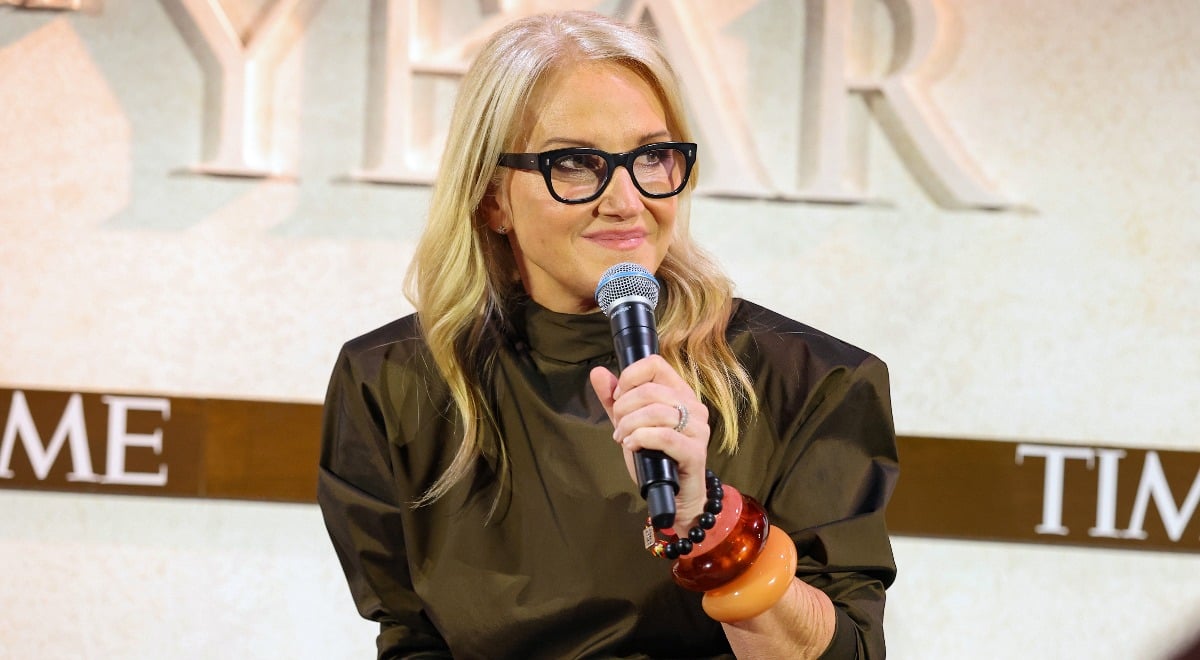
Mel Robbins by Amy Sussman/Getty Images for TIME

 Follow us
Best-selling author and podcast host Mel Robbins has drawn criticism for urging her followers to upload financial documents to Microsoft Copilot.
In a video posted on May 2nd, Robbins called on women not to fall behind in AI use, citing a recent Harvard study that found lower generative AI adoption rates among women.
Robbins offered followers to use two prompts in Microsoft Copilot, an AI-powered assistant with which she partnered, to “save time and take control of your money.”
One prompt asks users to share their financial documents, such as bank and debt statements, bills, and income information, with the AI assistant.






Robbins’ advice on her Instagram page, followed by over 12 million people, didn’t go unnoticed and drew criticism from users, who warned about the privacy risks of sharing sensitive information with AI systems.






Jas Wong, a cybersecurity engineer, said in a video that while it is up to the user to accept the risk of their data being compromised, Robbins should have told followers to redact sensitive information, such as Social Security and bank account numbers.
“You never want anyone to know that, including AI,” Wong said.
AI financial advice isn’t reliable
Cybersecurity experts warn against sharing sensitive information, including financial data, with AI systems, as it may be leaked, used to train models, or reviewed by humans. This could result in fraud and identity theft.
For instance, in an experiment, an AI agent hacked McKinsey’s chatbot in just two hours, gaining full access to the “entire production database,” including 728,000 files containing confidential client data.
In 2025, a server belonging to Vyro AI, the creator of generative AI tools ImagineArt, Chatly, and ChatbotX, leaked data of millions of users. Security researchers warned that this could allow threat actors to access the full chat history, which may contain sensitive information.
The conversation on this topic is live. Join in the discussion.
In addition, AI systems have been shown to provide faulty financial advice nearly half of the time, according to the Investing Insiders report.
For many, reliance on AI has already hurt their wallets. A 2025 survey found that 1 in 5 Americans lost more than $100 by following financial advice generated by a chatbot.
Microsoft told Cybernews that the company's AI services are not designed or intended to replace professional advice.
“Copilot prioritizes security and privacy and gives users the option to choose which types of information it remembers about them. Users can also opt out entirely. Consumers can ask Copilot to remember, update, or delete specific facts at any time,” the company’s statement reads.
Microsoft says users can learn more about its privacy controls on the company's website.
Unlock exclusive Cybernews content on YouTube.