Musk wants another million satellites. Scientists say they would ruin the night sky
SpaceX’s plan to fill the orbit with an additional million satellites acting as data centers would ruin the night sky for everyone, scientists warn. And that’s only one of the risks.
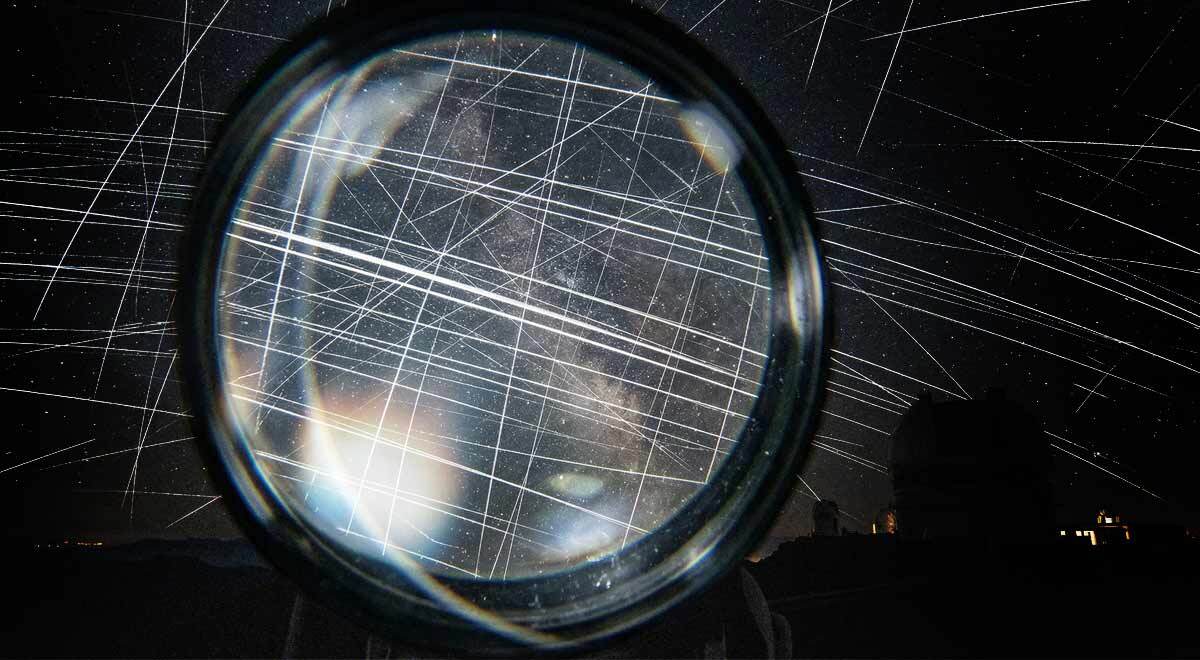
Image by Cybernews

 Follow us
SpaceX’s plan to fill the orbit with an additional million satellites acting as data centers would ruin the night sky for everyone, scientists warn. And that’s only one of the risks.
Elon Musk’s SpaceX applied to the United States Federal Communications Commission (FCC) in January to launch a million more SpaceX satellites into Earth’s orbit.
The company claims that the satellites are the most cost-effective and energy-efficient way to meet the growing demand for artificial intelligence (AI) computing power.
If approved, they would be added to the current constellation of over 10,000 satellites, which previously raised concerns about sky congestion.












In a recent article published in The Conversation, scientists Samantha Lawler, Aaron Boley, and Hanno Rein warn that Musk’s plans raise the risk of ruining the night sky for everyone on Earth.
They note that the human eye can see fewer than 4,500 stars in an unpolluted night sky.
Therefore, if SpaceX proceeds with its plans, the stars we are able to see at night would be completely overwhelmed by artificial satellites. The whole world would be affected.
In addition, scientists argue that “re-entries’ of satellites – when they fall back to Earth – cause atmospheric pollution. Because they do not fully burn up in the process, debris falling on the ground raises the risk of injury and death.
Debris from the SpaceX Starlink satellite re-entering the Earth was spotted in the sky above Saskatoon, Canada, in 2025.
In recent years, SpaceX’s junk reportedly crashed into farmland in the Canadian province of Saskatchewan and into a sheep paddock in the Snowy Mountains region of Australia.
Scientists write in The Conversation that increasing satellite density also raises the risk of collisions in orbit. They emphasize that using “the atmosphere as a satellite crematorium” may be altering the atmosphere in ways not yet understood.
The threat to astronomy
The Royal Astronomical Society (RAS) in the UK has recently released a statement voicing concern about California-based company Reflect Orbital’s plans to use a constellation of 50,000 satellites with mirrors to reflect sunlight onto Earth at night.
The company aims to use mirrors to reflect light onto ground-based solar power plants.
“Each beam would be four times brighter than the full Moon and would also contaminate areas outside the beam,” the RAS’s statement reads.
Such mirrors would not only impact astronomical observations but would also damage the night sky, pose the risk of nocturnal ecosystems’ collapse, and affect humans, the RAS says.
Unlock more exclusive Cybernews content on YouTube.