Moody markets on edge: What if the AI bubble pops like the dot-com?
Having spent over a decade in business journalism, I love nothing more than moody stock markets. But no matter how immature or reactive we may perceive them to be, our economic well-being still depends on the mood they wake up in next.
By Cybernews

 Follow us
Having spent over a decade in business journalism, I love nothing more than moody stock markets. But no matter how immature or reactive we may perceive them to be, our economic well-being still depends on the mood they wake up in next.
Sam Altman’s publicly expressed thoughts on the future of AI, as well as a gloomy report from MIT, stirred the market this week, further fueling questions about the potential burst of the AI bubble.
There are quite a few worrying signs similar to what we saw twenty years ago. However, there are also at least a few fundamental differences that might keep this economic horror at bay.






Why markets are moody this week
So here’s what happened recently. Sam Altman, the OpenAI CEO, had a dinner with reporters and allegedly repeated the word “bubble” three times in 15 seconds. He believes we are in the AI bubble.
“Are we in a phase where investors as a whole are overexcited about AI? My opinion is yes,” he reportedly said.
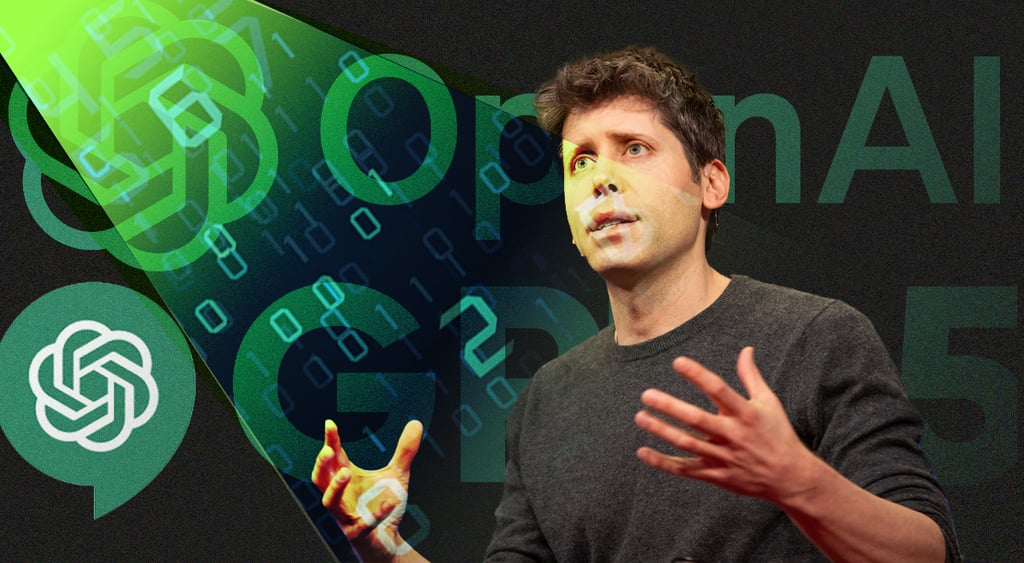
Judging from what he said, OpenAI will keep aggressively investing in infrastructure, meaning the demand for computing power to continue developing LLM models and meeting the market’s demand for AI usage will keep going up.
But all the “AI bubble” talk upset investors. The mood only worsened when the MIT market report said 95% of companies see no returns from generative AI. It means that companies rush to implement AI because of the fast revenue growth promise; however, because of factors such as flawed enterprise integration, they see no to little measurable impact.
Companies slowly find out that AI pilot programs are not magic beans. No wonder investors are upset.
Market capitalization surpasses dot-com levels
Nvidia, Microsoft, Amazon, Meta, Alphabet, and Broadcom are the top six AI stocks, representing 23% of the S&P 500 index.
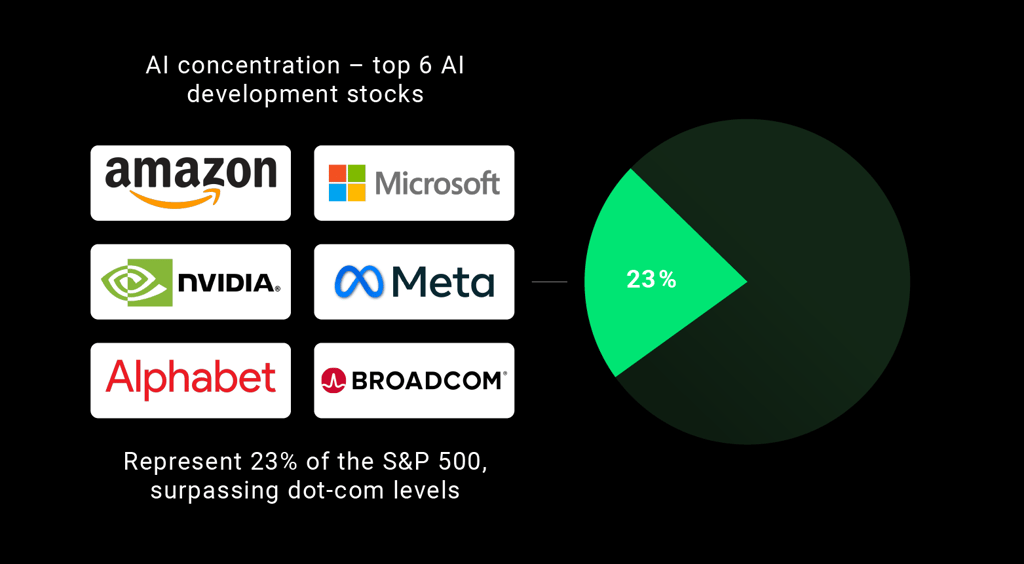
If we rewind 20+ years to the dot-com bubble, the top six internet stocks made up 15% of the S&P 500 at the peak of the boom.
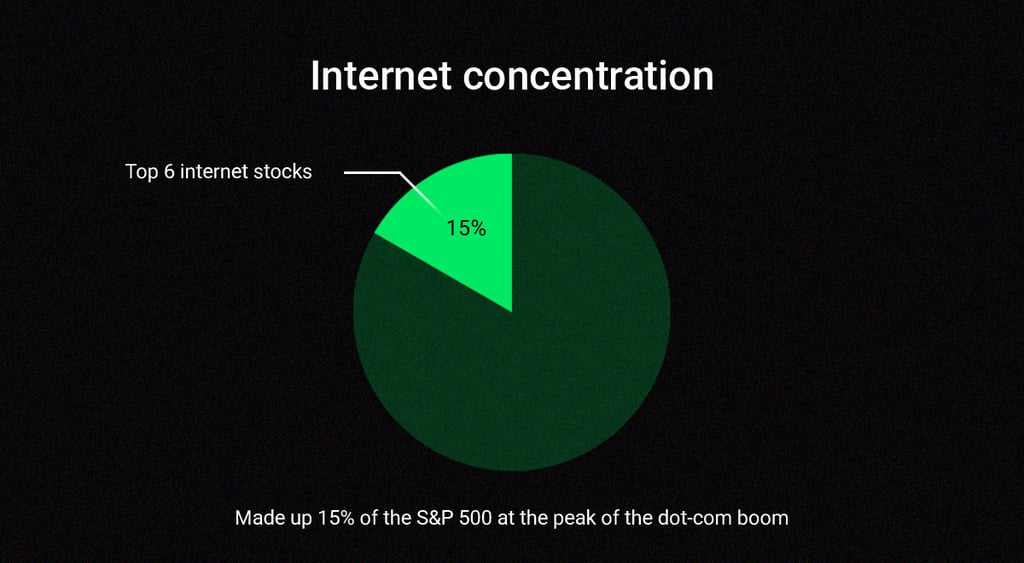
This means that the AI hype — market values representing what is expected of companies rather than their real asset value — has surpassed the dot-com levels.
Nvidia, after all, is the first $4 trillion company. It has around $125 billion in total assets, meaning its market value is approximately 32 times higher than its actual worth today.
Since stock valuation represents the hopes for the future rather than the present day, it’s only natural that it can change every day, depending on the general investor sentiment that can also be influenced rather easily.
One big blow to Nvidia was the release of China’s DeepSeek model, which spooked the markets with its bold claims that it cost only a fraction of its rivals. Since Nvidia’s chips are crucial for AI development, or so investors thought, markets freaked out upon being suggested that you might not actually need so much processing power to train AI models.
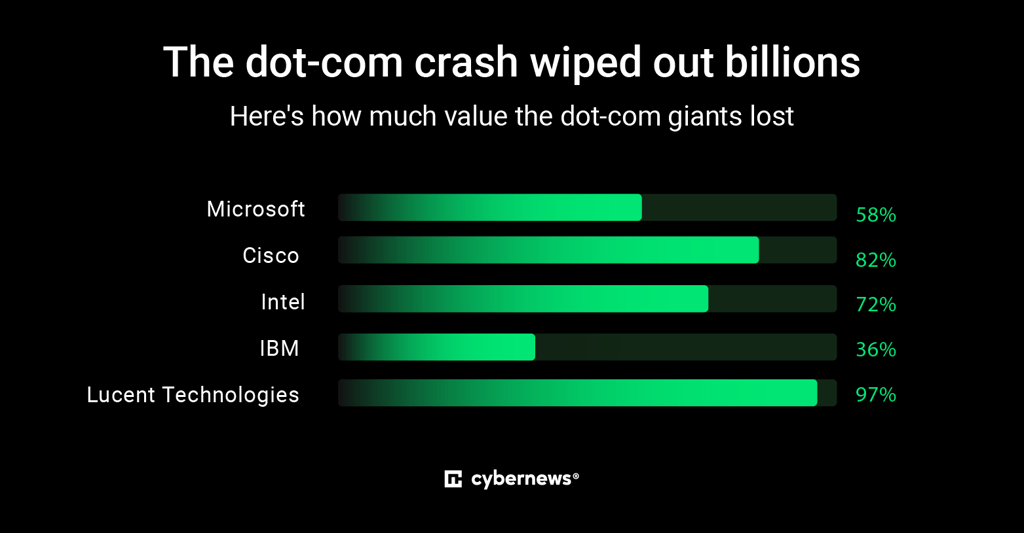
How is AI hype different from the dot-com hype?
Since this is an op-ed, I will now give you my two cents on what is happening.
Compared to the current state of AI innovation, the dot-com hype feels like a random TikTok challenge that gets everyone excited but fades away quickly.
AI, all hype aside, is way more revolutionary. Real AI-assisted discoveries cut through the noise, showcasing it’s the technology worth investing in. For example, the MIT scientists used AI to design two new antibiotics that could kill drug-resistant gonorrhea and MRSA. This could potentially mark the start of a second golden age in antibiotic discovery.
Also, at least from where I am standing, it seems that there is far more skepticism around AI than there ever was about the internet back in the ‘90s. We hear constant warnings about the rise of sentient machines, AI leading to the collapse of the job market and disrupting societies, and endless ethical debates about how to (not) use AI. The conversation around AI seems to be more mature.
Many opportunistic start-ups, building their businesses on hype but offering no real value, will not survive. Various announcements and technological breakthroughs might wipe some value off the big players. But they are in this for the long run, so they can take a blow here and there.
AI happens to be a risky investment. However, such investments also tend to be more profitable if the stars align.



