Musk crashes Davos with wild sci-fi vision for humanity
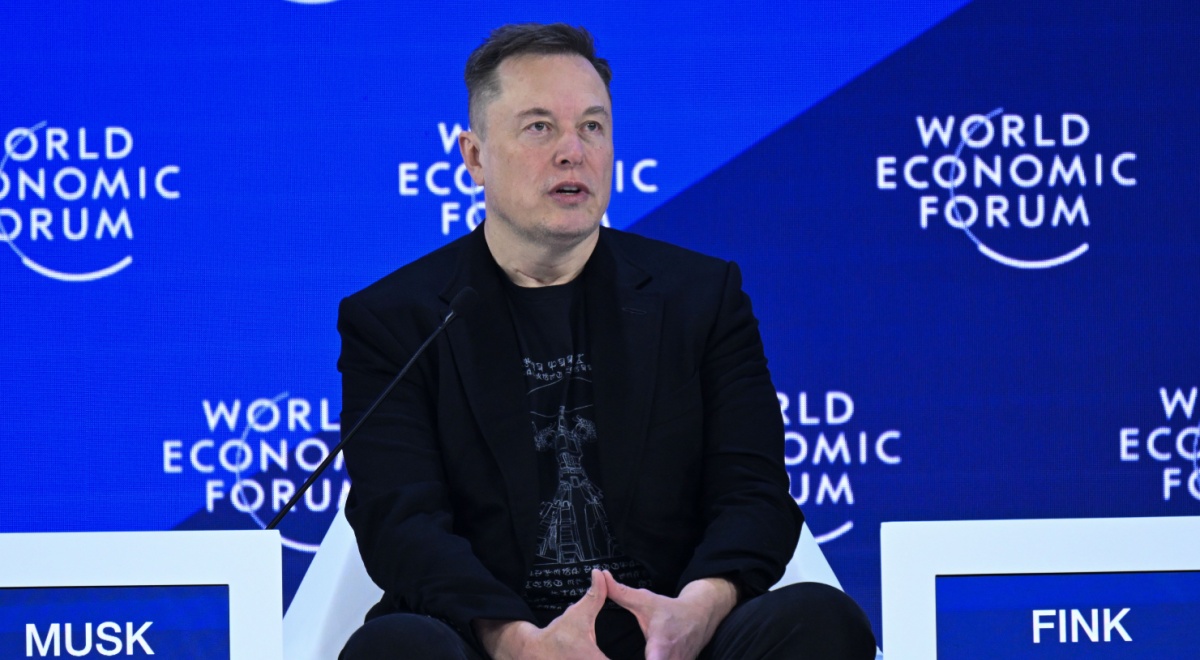
Elon Musk drops into Davos unannounced – instantly turning the World Economic Forum into a sci-fi brainstorming session. Here’s a round-up of the most engaging quotes quipped during his on-stage appearance Thursday.
Harun Ozalp/Anadolu via Getty Images

 Follow us
Elon Musk drops into Davos unannounced – instantly turning the World Economic Forum into a sci-fi brainstorming session. Here’s a round-up of the most engaging quotes quipped during his on-stage appearance on Thursday.
- Musk says AI could surpass human intelligence as early as this year and outperform all of humanity combined by 2030.
- He predicts robots and “ubiquitous AI” will reshape daily life and supercharge the global economy.
- Musk also teased Mars travel, space data centers, and expanded Starlink plans.
Key Takeaways by nexos.ai, reviewed by Cybernews staff.
The self-proclaimed “techno-king” is just a curious sci-fi fanatic who, like all Trekkies, just wants to travel through space with their own Starfleet crew, exploring distant galaxies.
Or better yet, just beam him back to New York because he’s over flying commercial.
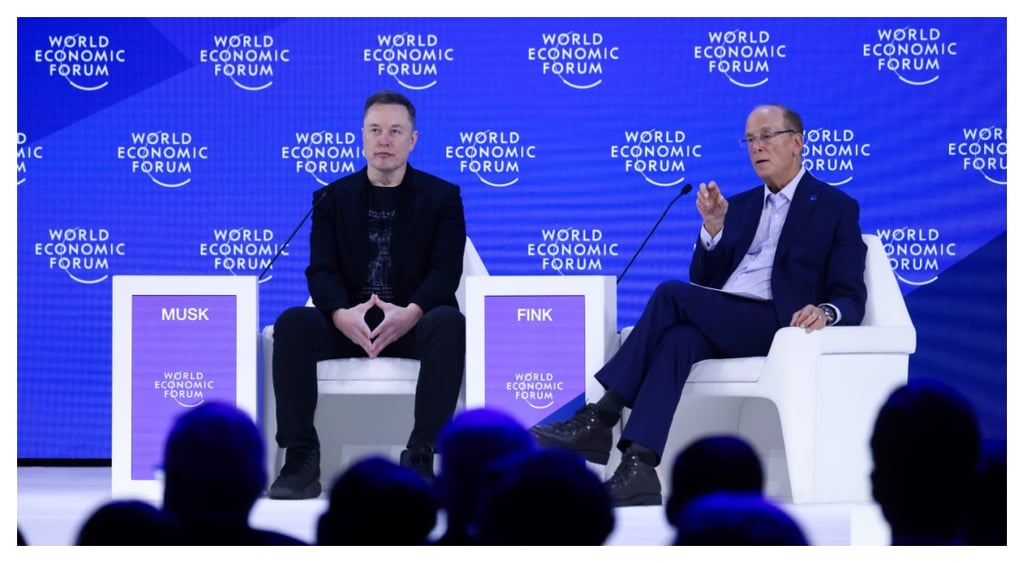
Those were some of Musk’s responses during a surprise sit-down interview with BlackRock CEO Larry Fink on day three of the 56th annual WEF held in Switzerland.




The SpaceX and Tesla founder also revealed a surprisingly soft side when it comes to humanity’s future.
Fink – who questioned the tech billionaire for almost 50 minutes – touched upon everything from Venezuela to aliens (relax, the extraterrestrial kind), yet clearly focused his dialogue on the “possibilities” of emerging technology as seen through Musk’s eyes.
Musk goes full sci-fi
Fink praised Musk, not just for the 46% return for investors since Tesla went public in 2010, but for his uncanny ability to not just have the visionary ideas, but also the fortitude to “execute them across so many different technologies.”
Musk – who said he tells people he is an alien, but no one believes him – got straight to the point:





“The overall goal of my companies is to maximize the future of civilization, like basically maximize the probability that civilization has a great future and to expand consciousness beyond Earth.”
Citing SpaceX as the vehicle to do so, Musk spoke of expanding that consciousness to the moon, to Mars, and to other star systems.
“Life as we know it is precarious and delicate. To the best of our knowledge, we don't know of life anywhere else,” he said.
Musk explained his driving force: If humans were to become extinct, by natural disaster or of our own making, "we need to do everything possible to ensure that consciousness continues.”
He also spoke about his Falcon 9 rocketship being fully reusable by the end of this year and about wanting to die on Mars (not by impact, though), but I digress.
The human-looking Musk joked, “We have 9000 satellites up there, and not once have we had to maneuver around an alien spaceship. We should assume that life and consciousness are extremely rare, and it might only be us.”
The age of ubiquitous AI
The champion of humanity quickly pivoted to artificially intelligent beings and their anticipated effect on, well, every aspect of daily life as we know it.
Always the optimist, Musk believes the only way to solve global poverty – or essentially give everyone a very high standard of living – is AI and robotics.
Dropping what will undoubtedly become the next tech buzzword, Musk touted the virtue of “ubiquitous AI.”
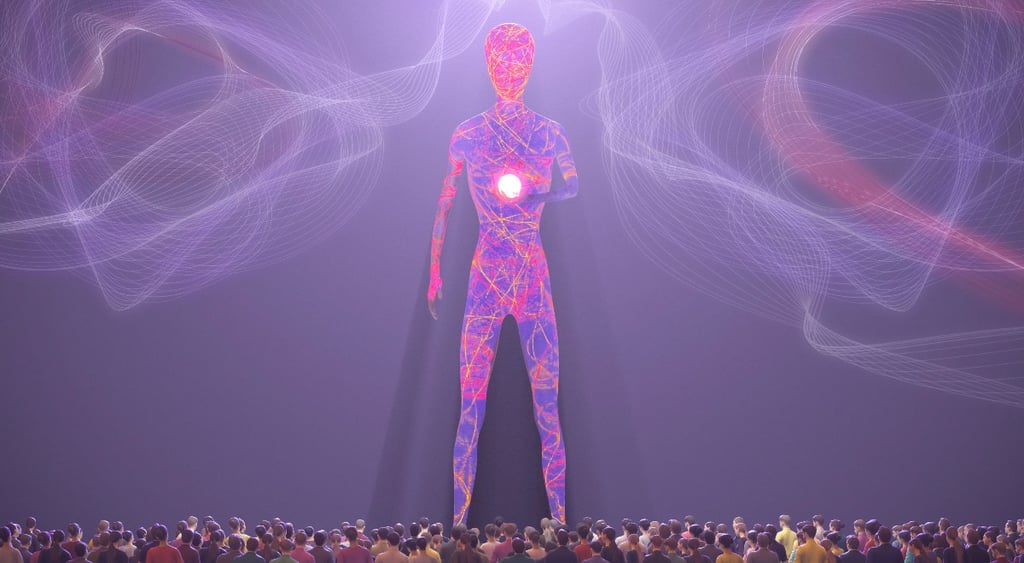
By “ubiquitous AI,” Musk means artificial intelligence everywhere – built into daily life, physical infrastructure, devices, and robots, not just software, chatbots, or cloud servers.
“With essentially free, or close to it, ubiquitous robotics, you will have an explosion in the global economy that is truly beyond all precedent,” Musk said, citing an economic formula that reads something like this:
Economic Output = Productivity per Robot × Number of Robots.
“The rate at which AI is progressing, we might have AI that is smarter than any human by the end of this year, or no later than next year. And by 2030 or 2031, AI will be smarter than all of humanity collectively.”- Elon Musk, World Economic Forum, Davos 2026
Welcome to the robot economy
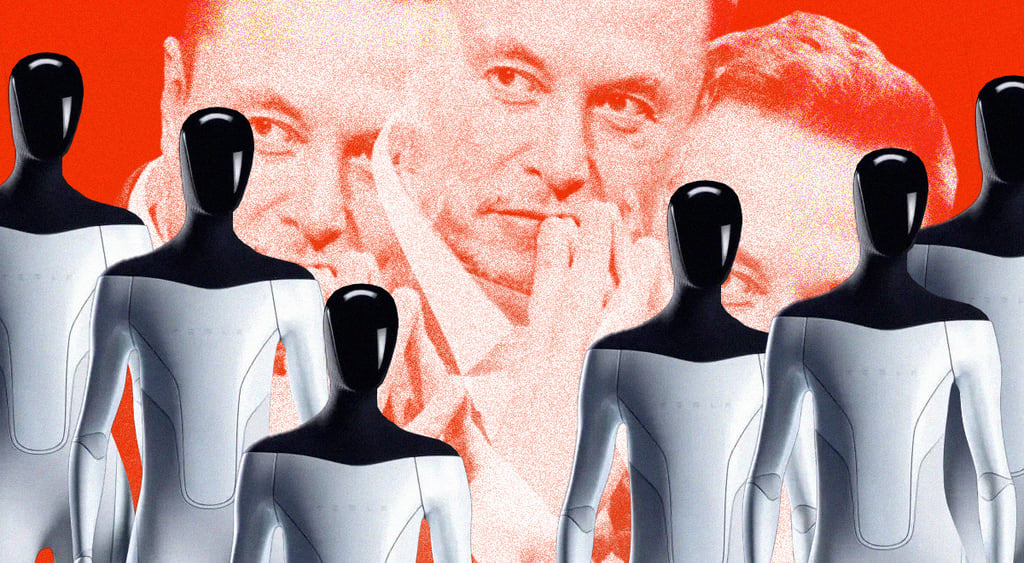
Repeating his previously peddled prediction that by 2040 (and likely sooner) there will be more robots than people, Musk believes humanity will eventually build so many robots that they will “actually saturate all human needs.”
“You won't be able to even think of something to ask the robot for at a certain point,” Musk explained.
Curious what others think about this story? Contribute your thoughts to the debate below.
In this one-to-one, human-to-robot world Musk imagines, robots take care of your pets, watch over your kids, and even help care for your elderly parents.
“Who wouldn't want a robot?” Musk asks rhetorically.
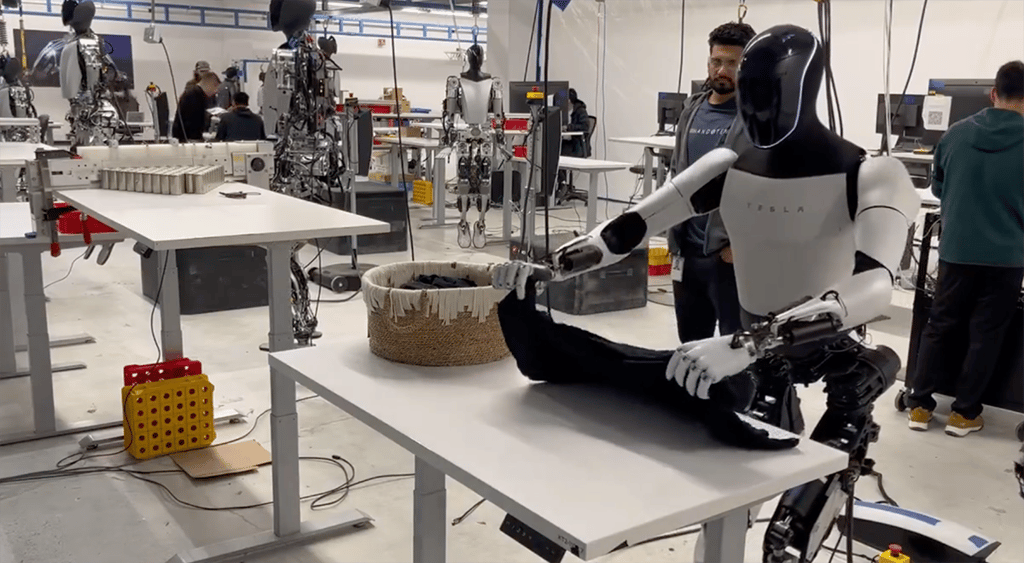
For those still untrusting that Tesla’s Optimum Prime will be able to fold your laundry the way you like, much less take care of your children, Musk acknowledged that this future is not “without its issues.”
“I mean, we need to be very careful with AI. We need to be very careful with robotics. We don't want to find ourselves in a James Cameron movie. Terminator, it's a great, movie. But we don't want to be in Terminator, obviously.”
Still, Musk says, for quality of life, it's always better be an optimist and be wrong rather than a pessimist and be right.
“I don't know what's going to happen in ten years, but the rate at which AI is progressing, I think we’ll have AI that is smarter than any human by the end of this year or next,” he said.
Further elaborating, Musk predicts that five years from now, “AI will be smarter than all of humanity collectively.”
Musk’s space predictions
Speaking of eventual life on Mars, Musk said it would only take about “six months” of space travel to reach the Red Planet – he’d like to go, but also noted that “the planets only align every two years.”
Adding yet another project to his already endless list of must-do tech projects, Musk said to expect AI data centers operating in space within the next few years.
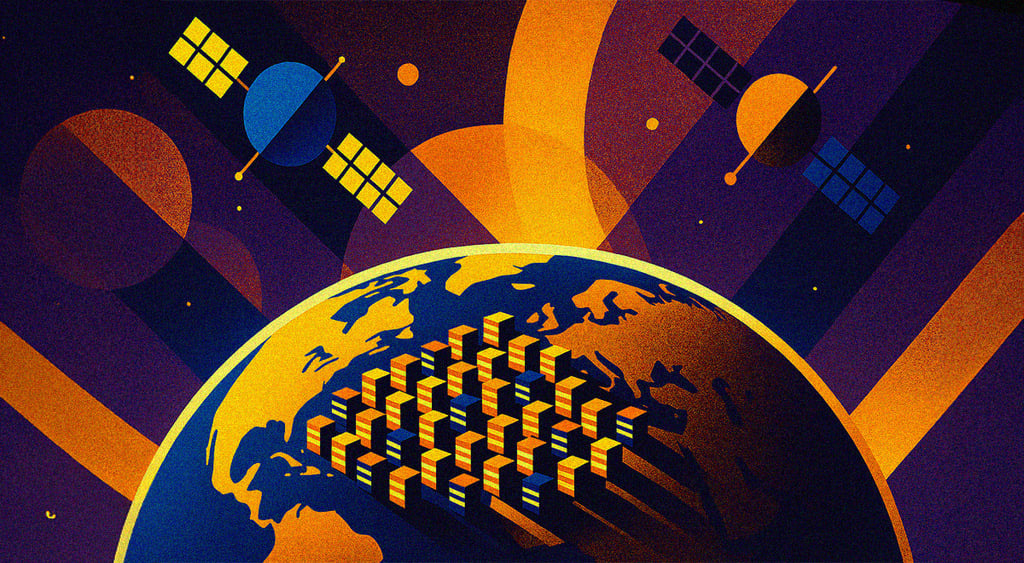
Calling it a no-brainer, Musk explained the low-cost orbital data centers can use solar panels to harvest constant sunlight while taking advantage of space’s sub-zero temperatures for natural cooling.
How cold? Three degrees Kelvin, Musk said, the equivalent of minus 454 degrees Fahrenheit or minus 270 degrees Celsius. Just in case you were wondering.
In that same vein, Musk said he plans to launch solar-powered Starlink satellites later this year, laying early groundwork for large-scale space-based energy infrastructure that he envisions could eventually power the entire planet using the sun.
Unlock more exclusive Cybernews content on YouTube.