Massive scam campaign lures CometAI users with fake downloads - don't fall for it
From fake domains and download links to AI sidebar attacks, researchers warn Perplexity’s CometAI browser has become ground zero for several new malicious attack campaigns.

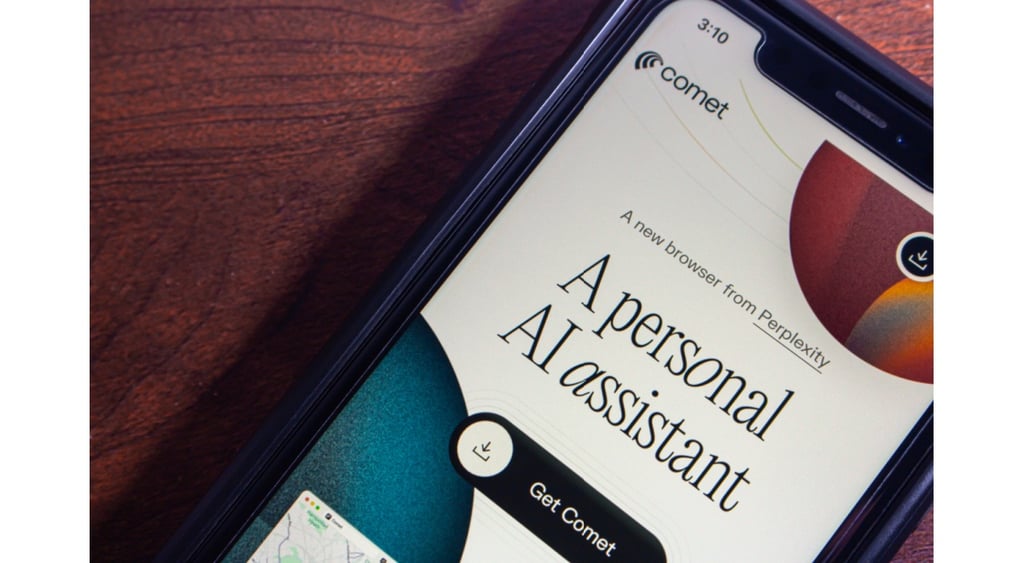
Image by Cybernews.

 Follow us
From fake domains and download links to AI sidebar attacks, Perplexity’s CometAI browser has become ground zero for malicious attack campaigns.
Cybercriminals are quickly capitalizing on consumers' interest in the recently launched AI browser, new research by the PreCrime Labs at BforeAI shows.
Perplexity, a San Francisco-based start-up and creator of its own AI-powered search engine, introduced the Comet browser to the public in July, making it free to the public earlier this month.
Since the CometAI launch, BforeAI says multiple security researchers have identified vulnerabilities in the Comet browser, including a new report by SquareX on AI browser spoofing, also released Thursday, affecting both Comet and OpenAI's brand new Atlas browser.






According to the SquareX research, users can be tricked into visiting malicious websites. Once on the site, they unknowingly perform actions such as “running data exfiltration commands and installing backdoors,” often allowing the attackers persistent remote access to their devices or systems.
In August, Guardio Labs identified what it called a “Scamlexity” attack, where the researchers found scammers could trick the Comet browser into making fraudulent purchases by auto-filling users' credit card numbers on fake shopping sites.






Gabrielle Hempel, Security Operations Strategist at Exabeam says these incidents are a like a warning shot for the early days of agentic browsing.
“The main issue here is that agentic-AI browsers introduce an entirely new attack surface,” Hempel explains.
“For the industry, it’s going to be important to define security standards for these browsers,” Hempel says, posing questions such as “What constitutes an acceptable risk profile?” “How are agents audited?” and “What logging and traceability is required when an agent executes actions for a user?"
Malicious domains, downloads, and mobile apps
Since the launch, malicious actors have been running a “coordinated campaign of domain squatting, fraudulent mobile applications, and deceptive advertising,” all to target potential users wanting to try the CometAI browser themselves, the BforeAI research warns.
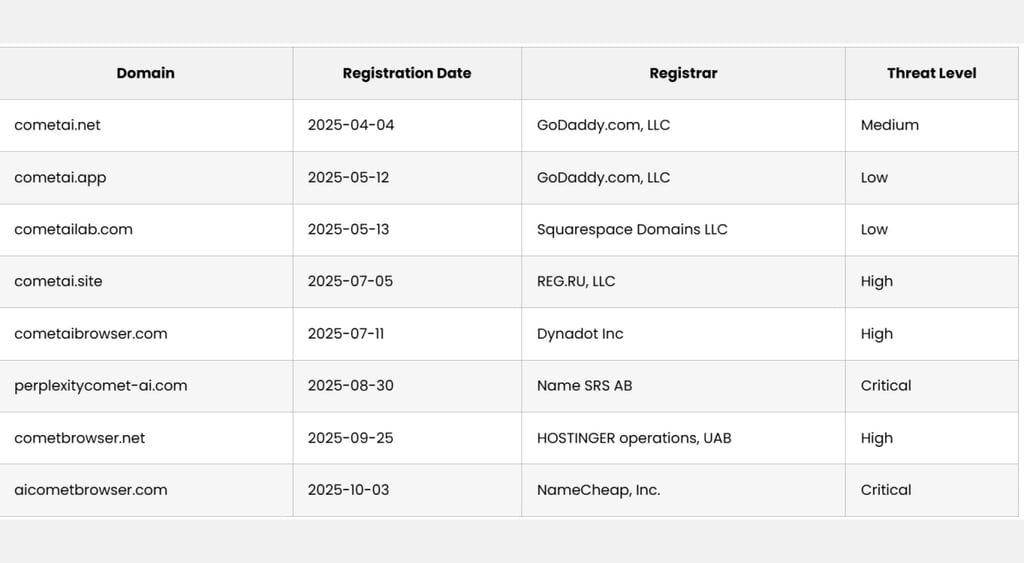
The researchers say that after examining more than 40 suspicious domains and URLs, they discovered at least 13 domains clearly impersonating the AI company and its new browser, with over half of the domain names registered just after the product's release, and malicious activity picking up the most steam starting in August.
Additionally, two critical-level mobile app threats were found available for download on the Google Play Store. The fake ads, found across Google and social media, were found to promote counterfeit websites offering malicious Comet downloads.
Categorized from low to critical, many of the false domains, such as "cometbrowser.net" and "aicometbrowser.com," were found filed with popular domain registrars, including HOSTINGER, NameCheap, Squarespace, and GoDaddy, which had one domain ( cometai.net ) parked for a whopping $9,999.
According to the analysis, several domains were registered internationally (Russia, Sweden), and even more were found using WHOIS privacy to mask the owners.
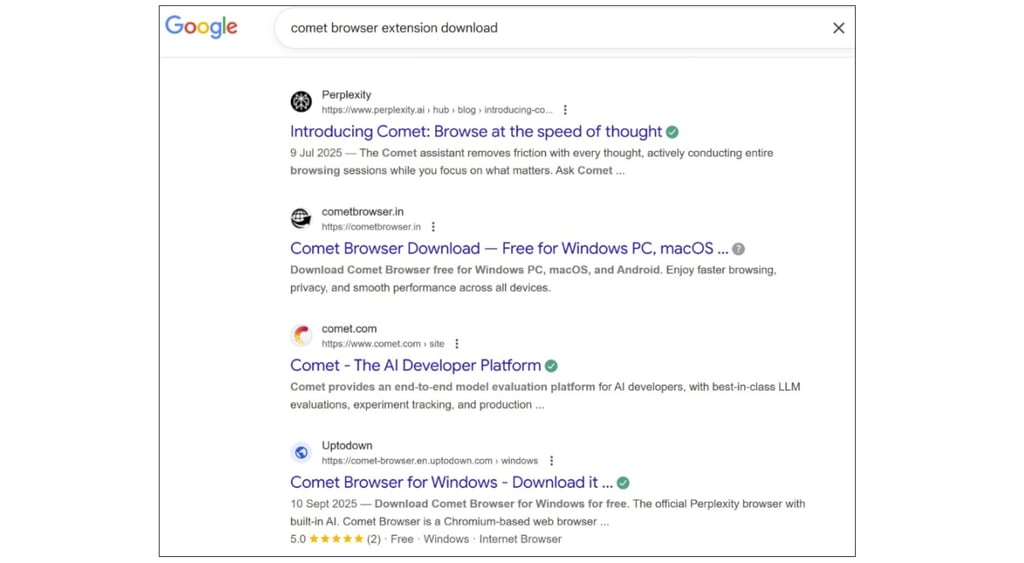
Many of the fraudulent sites were said to have used targeted keyword variations for search engine optimization (SEO), causing the copycats to appear high up in search engine results.
"The use of international registrars, privacy protection services, and parking pages suggests coordination among threat actors," BforeAI said.
BforeAI recommends that users only download the Comet browser from official Perplexity channels, verify URLs carefully, and avoid clicking on ads claiming to offer the download.
The researchers also remind users to enable ad blockers and use antivirus software to help protect devices and to report any suspicious apps to the app stores they appear in.
The research also notes that “the direct trademark infringement” should be a major concern for the AI start-up, as many of the domains and mobile apps had used the words Perplexity and CometAI in their names, “representing clear attempts to deceive users into believing they are accessing official Perplexity services.”
Unlock more exclusive Cybernews content on YouTube.