How prevalent are AI-powered productivity tracking tools in the workplace?
Productivity tools are increasingly common in the modern workplace. The allure is clear. AI monitors employees across a multitude of different data points, honing in on inefficiencies and unlocking the kind of productivity gains that may have passed human managers by.
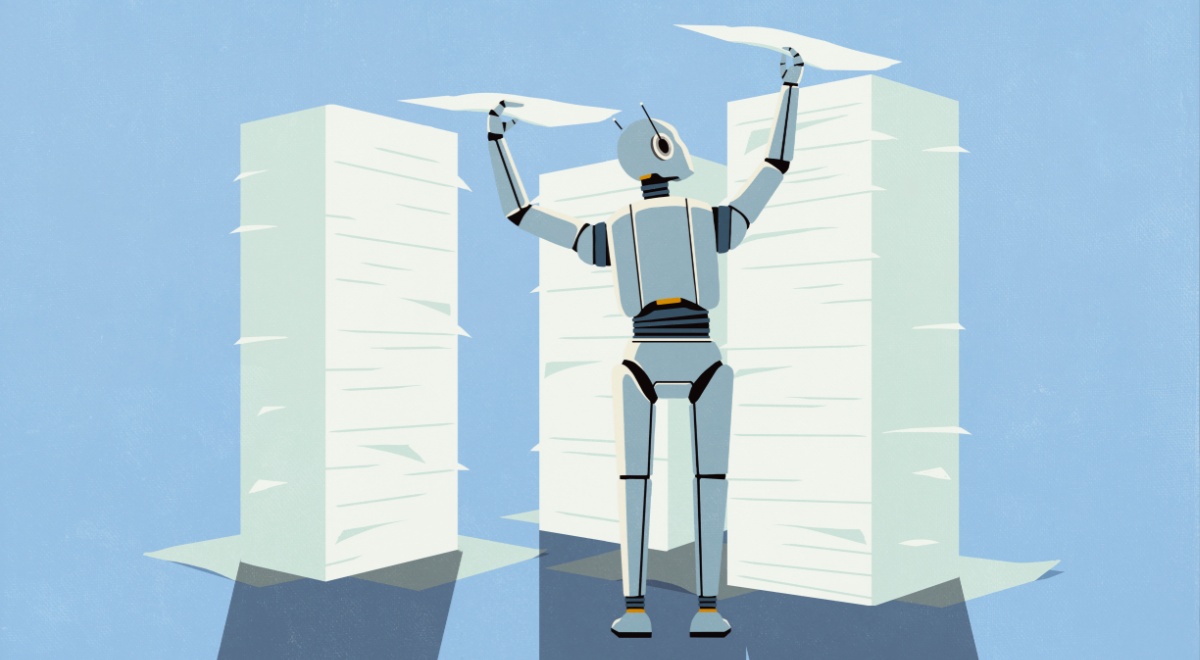
Humanoid robot placing paper documents on tall stacks. Image by Malte Mueller/ Getty Images.

 Follow us
Productivity tools are increasingly common in the modern workplace. The allure is clear. AI monitors employees across a multitude of different data points, honing in on inefficiencies and unlocking the kind of productivity gains that may have passed human managers by.
Of course, the flipside of that is a Taylorist nightmare of surveillance and subversion where our every move is monitored by an omnipotent and unaccountable technology.
A recent parliamentary inquiry in Australia offers an insight into the current state of workplace monitoring. The committee examined current surveillance practices across a range of industries, revealing that monitoring is not only widespread but also often done without workers' knowledge or consent.
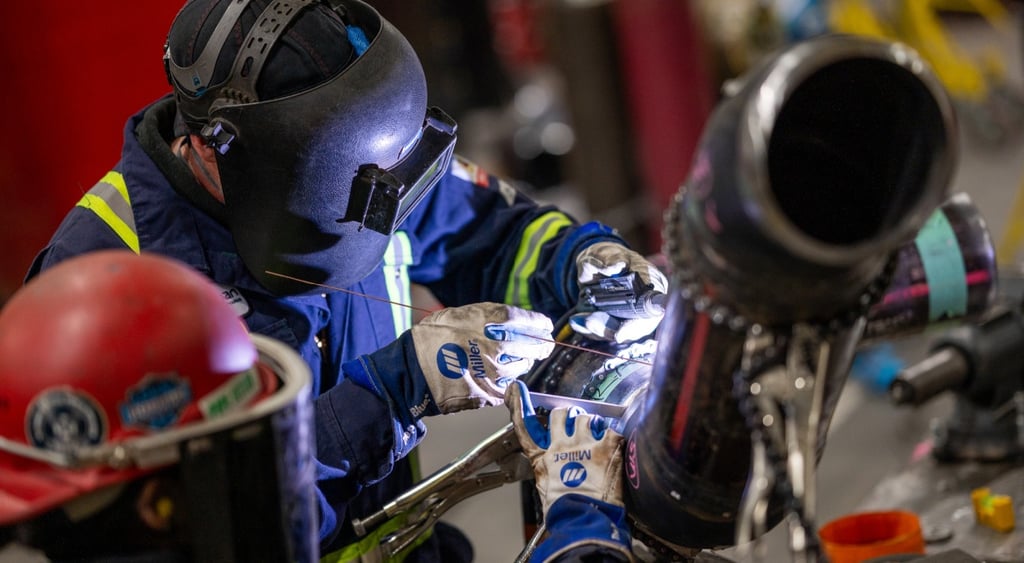
The committee revealed that finance workers were having their location tracked; nurses’ biometric data was being collected; and factory workers' task completion times were being monitored. Remote workers were also constantly monitored, with AI tracking everything from keystrokes to facial expressions to infer levels of effort and even their emotional state.





An unhealthy situation
There are obvious privacy and cybersecurity challenges when employers collect this amount of data on their workforce, but the Australian committee found that the erosion of trust was arguably more damaging. They noted that employees often felt powerless and that employment laws offered scant protection from what they felt was excessive surveillance.
Supporters of workplace surveillance typically frame their initiatives as either improving productivity or preventing theft. While the latter point is fairly defensible, the first is on much shakier ground.






Research from the Massachusetts Institute of Technology examined how digital surveillance affects remote workers and reached an unequivocal conclusion: simply deploying monitoring software does not enhance productivity.
Instead, what matters is the quality of management and the transparency of decision-making. For instance, when managers explain why they make decisions regarding surveillance and justify the fairness of those decisions, productivity remains stable.
When surveillance is introduced arbitrarily and without justification, productivity nosedives. Indeed, when there’s no debate or disclosure, the performance of the best employees falls by around 17%. There was also a corresponding drop in employee engagement and morale.
Negative impact
These findings were replicated in the Australian inquiry, which associated worker surveillance with stress, burnout, and a reduction in motivation and engagement. This isn’t caused by the technology per se, but rather the power asymmetry its deployment reveals.

Managers can easily fall into the trap of measuring what’s available rather than what’s effective. So they examine keystrokes and mouse movements rather than the quality of output.
This was also evident in a study of surveillance in Chinese workplaces from Central South University. The deployment of AI-based tools in a way that made work easier and truly augmented employees boosted support and productivity growth. When the technology was deployed as a cost-cutting measure, however, those improvements vanished.
This distinction between viewing the technology in a strategic way versus as a cost-cutting tool is important. When organizations view it strategically, they look at things like infrastructure, data governance, and staff training. When the tech is perceived as a cost-cutting measure, those support investments are often skipped.
A long process
It’s important to note that these changes tend to unfold over time. Research from the Kellogg School of Management looked at various deployments of AI in the workplace and found that the effects of AI surveillance unfold over years rather than months.

The researchers found that it’s how the technology is deployed that counts, whether it’s the training data used or the stakeholders that were consulted. The choices companies make compound over time in what the researchers refer to as an “inequality cascade.” If workers are excluded from training programs or denied access to certain tools that could make them more productive, the cumulative disadvantage stacks up over time.
Even when the technology is deployed with generally benign intentions, the value derived from it depends heavily on how it's implemented.
Stanford research shows that many of us could benefit from AI support at work, especially in the production of routine and mundane tasks, but this isn’t how AI is often introduced. Instead, AI is often deployed for the benefit of managers rather than employees, and is seen by workers as a burden that gets in the way of their productivity.
At a crossroads
It’s clear that AI-based surveillance can be useful, but it needs to focus on supporting employees rather than spying on them. It’s only when it’s used in this way that productivity improves, but if it’s seen as spying, not only does productivity flatline, but trust and motivation vanish.
The Australian inquiry recommended that organizations thinking of deploying surveillance tools consult employees before doing so and be transparent in both the motivations and the means of surveillance. They should also be careful not to collect certain forms of data, such as biometric data.
The technology behind workplace tracking may be sophisticated, but the principles at stake are simple. We’re in an age where most organizations laud the value of their people. Now is the time to live up to that promise and not treat employees like a series of data points.
Unlock more exclusive Cybernews content on YouTube.