Why did OpenAI’s Sora crash and burn?
The AI video generator was meant to be a major platform for OpenAI and was behind a $1 billion deal. So what went wrong?
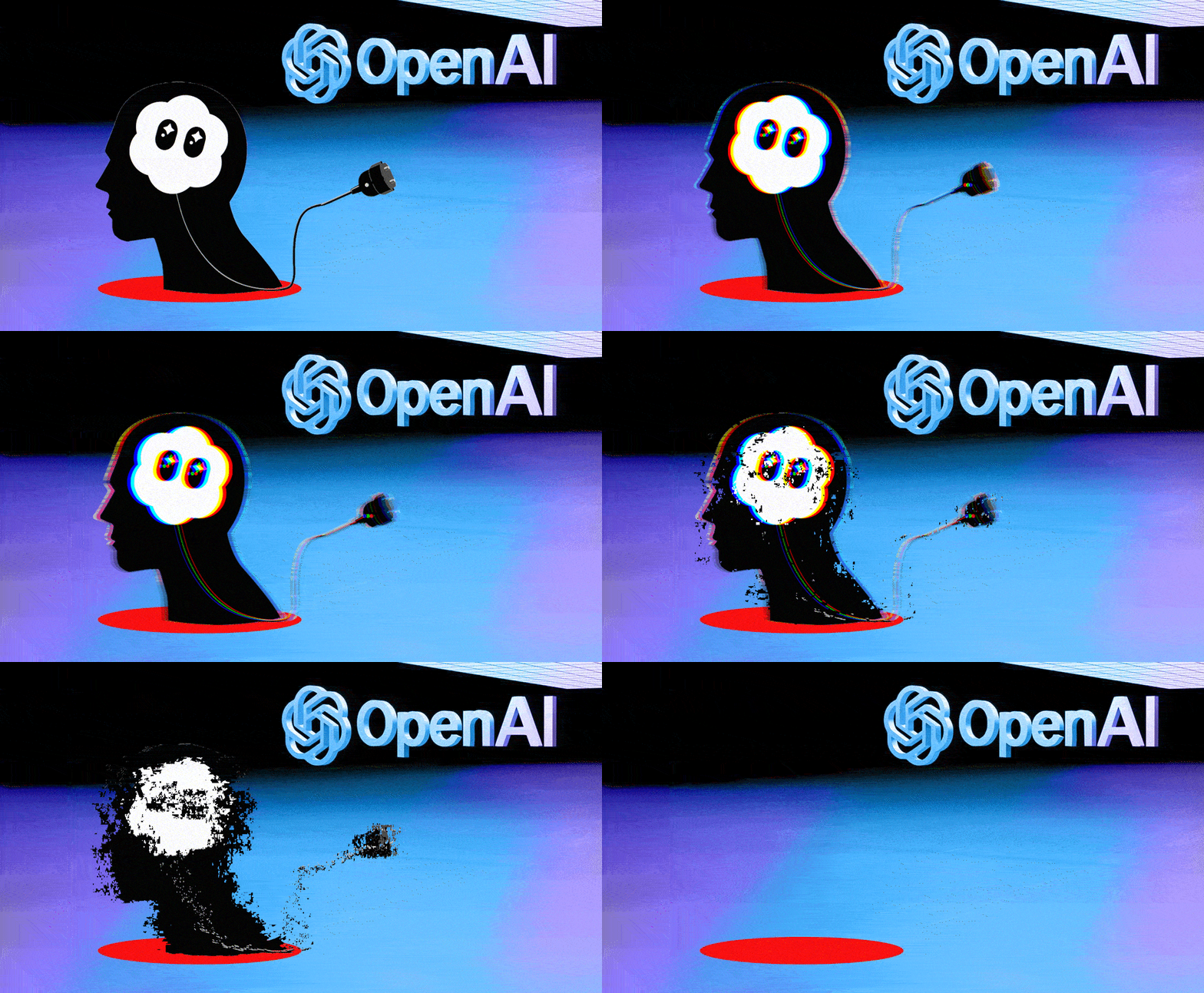
Sora off. By Cybernews

 Follow us
The AI video generator was meant to be a major platform for OpenAI and was behind a $1 billion deal. So what went wrong?
- Sora's video inference cost OpenAI an estimated $15 million a day, making it economically unsustainable.
- OpenAI consolidated its sprawling app portfolio into a single ChatGPT/Codex superapp to regain focus.
- Sora made it too easy to generate copyrighted, misleading, or brand-sensitive video at scale.
- Rights holders, talent agencies, and celebrity estates forced increasingly restrictive guardrails on the product.
- Tightening regulations on AI-generated content turned viral Sora clips into legal liabilities.
- Mounting costs, legal risks, and reputational pressure killed not just the app, but OpenAI's video ambitions entirely.
Key Takeaways by nexos.ai, reviewed by Cybernews staff.
In February 2024, OpenAI unveiled its text-to-video model, Sora, and made it open to users by the end of the year. By September 2025, a standalone app for the model, including a TikTok-style social media layer, became available to users to generate their own videos and share them with the world.
The video model was so incredible that Disney agreed to invest $1 billion in December 2025, with the movie studio offering some of its most iconic characters for the model to use.
Sora was riding high – until it wasn’t. OpenAI has canned the video-making app, the Disney agreement, and the entire concept of AI video generation within the firm. What went wrong?




Crash and burn
A panoply of reasons has been given for OpenAI's decision to cancel its plans for Sora. All of them come down to cost – but in different forms.
Take the monetary cost first. OpenAI was estimated to be spending $15 million a day on inference to enable users to produce videos, Forbes reported in late 2025. It’s little wonder that the head of Sora, Bill Peebles, admitted on social media last year that “the economics are completely unsustainable.”
Beyond that, OpenAI as a company is also looking to realign its workforce and investment to champion successes where it can make a difference, rather than trying to do a billion things badly where it only ends up being an also-ran.
The company spent most of 2025 launching a series of apps, including Sora and its browser, Atlas, which have not necessarily succeeded in cutting through to the general public.
In recent weeks, the firm has reshaped its vision by unifying ChatGPT and Codex into a superapp, while simultaneously focusing on attracting more lucrative engineering and business customers.
Keep it simple, stupid
“We realized we were spreading our efforts across too many apps and stacks, and that we need to simplify our efforts,” OpenAI’s chief of applications, Fidji Simo, said in an internal note reported first by the Wall Street Journal.
“That fragmentation has been slowing us down and making it harder to hit the quality bar we want.”
That might explain why OpenAI got rid of the Sora app. But it doesn’t necessarily explain why they also plan to get rid of video generation entirely within the company’s capabilities. Partly that may be because of the staggering cost of inference, which could have been $5.4 billion a year, according to Forbes’s estimates.
But there may be another reason behind the sharp shift to get rid of a product that was the impetus behind a massive billion-dollar deal with Disney.






Reputational risks
Beyond the actual upfront costs, there was a potentially even bigger cost building up for OpenAI: the reputational one. Sora was never just an expensive toy for making short clips. It was also a machine for producing potentially copyrighted, brand-sensitive, and easily misleading videos at scale.
When OpenAI launched the standalone app, it was already having to promise rights holders more control, revenue sharing, and the ability to block or authorize use of their characters – an early admission that the product could create as much legal and PR trouble as entertainment.
The Creative Artists Agency, which represents Hollywood talent, warned Sora posed a “significant risk” to creators’ rights.
Some individual rightsholders cowed OpenAI into erecting guardrails around their images. The estate of Martin Luther King threatened OpenAI into submission when it came to not creating videos of his likeness. And at the same time, governments were moving towards stricter rules on AI-made media: Spain proposed fines of up to €35 million or 7% of global turnover for failures to label AI-generated content properly.
In that environment, every viral Sora clip became an argument for why the product was too dangerous to keep scaling – and might have put paid to the idea in totality.
Unlock more exclusive Cybernews content on YouTube