Best AI tools for predictive maintenance
Being behind major reports like The Mother of All Breaches and RockYou2024, our in-house cybersecurity experts and journalists provide unbiased, real-world testing and in-depth analysis.
We maintain complete transparency by openly sharing our testing methodologies with our audience.
Learn more
This guide reviews the best AI tools for predictive maintenance to help reduce unplanned downtime, extend asset life, and control maintenance costs before failures happen. Together with the Cybernews research team, I tested several predictive maintenance tools and AI capabilities, focusing on how they actually work on real assets and data.
Along the way, I address questions and concerns about what predictive maintenance software actually does beyond basic condition monitoring, how AI differs from traditional preventive schedules, and which platforms are practical for mid-sized operations rather than only large enterprise deployments.
Keep reading for a full breakdown of what predictive maintenance software actually does and which AI capabilities are worth it. I also cover real-world examples across different industries and provide a practical checklist for picking the best AI-based predictive maintenance in 2026.
Best AI tools for predictive maintenance – shortlist
- Limble – best AI tool for predictive maintenance
- MaintainX – best AI for on-site work order management
- UpKeep – best AI CMMS for asset lifecycle management
- Verizon Connect – best AI platform for fleet and mobile asset operations
- Fiix – best AI solution for industrial automation and enterprise maintenance
Best AI tools for predictive maintenance compared
Compare my top picks of computerized maintenance management system (CMMS) AI for predictive maintenance in this overview table:
| Tool | Overall rating | Standout AI features | Starting price (billed monthly) | Free version | Best for |
| Limble | AI-powered builder generates maintenance schedules from asset manuals | Custom pricing | ❌ No | Predictive maintenance across manufacturing, facilities, and utilities | |
| MaintainX | AI assistant trained on OEM manuals and work order history | $20.00/user/month | ✅ Yes, free tier | On-site work management and team communication | |
| UpKeep | Nova AI assistant for autonomous asset insights and work order automation | $20.00/user/month | ✅ Yes, free trial | Asset lifecycle management | |
| Verizon Connect | Real-time GPS tracking with AI-powered predictive vehicle maintenance alerts | Custom pricing | ❌ No | Fleet operations and logistics | |
| Fiix | Fiix Foresight AI with work order insights, parts forecaster, and asset health reports | $45.00/user/month | ✅ Yes, free tier | Industrial automations and enterprise site reliability |
5 best AI tools for predictive maintenance – detailed list
Let’s dive deeper into detailed reviews that will provide you with more insights regarding which AI tool best suits your organization.
1. Limble – overall best AI tool for predictive maintenance
| Overall rating: | |
| Standout feature: | AI-generated work order recommendations based on real-time asset health data |
| Starting price: | Custom pricing |
| Best for: | Maintenance teams across manufacturing, facilities, and utilities that want AI-driven predictions |
Limble is a highly rated CMMS that balances ease of use with practical AI features, making it ideal for maintenance teams in manufacturing, facilities, and utilities industries. Its intuitive design allows technicians to adopt it quickly, with many teams seeing ROI within days, unlike more complex platforms that require months.
Key AI features. Limble’s AI-powered PM Builder creates preventive maintenance tasks from asset manuals based on type, usage, and environment. Duplicate request detection prevents repeated work orders, while Model Context Protocol uses real-time sensor data and historical records to flag anomalies early.
User experience. Limble is consistently praised for usability, and I think its reputation is well-earned. The mobile app is well-designed, dashboards are clean, and AI features integrate directly into workflows. Onboarding is straightforward, though advanced integrations and multi-site management require the Enterprise plan.
Pricing. Limble pricing is custom and not publicly listed. Standard plans cover core work order and asset management. Premium adds offline mobile access, parts management, and API support.
2. MaintainX – best CMMS for frontline maintenance teams
| Overall rating: | |
| Standout feature: | Mobile-first work order management built for on-site technician workflows |
| Starting price: | Free or from $20.00/user/month for premium features |
| Best for: | Small to mid-sized operations that need a straightforward work order and communication platform their technicians will actually use |
MaintainX is a mobile-first CMMS designed for frontline maintenance teams. The platform merges work order tracking with AI insights, predicting potential failures and scheduling tasks so technicians address issues before equipment breaks down.
Key AI features. MaintainX flags equipment behavior that deviates from normal patterns and then alerts teams for inspection. Its anomaly detection monitors work order inputs, helping technicians identify issues before they escalate. AI also predicts work order completion times based on historical data, allowing teams to plan and balance workloads more accurately. IoT sensor integrations, including MachineMetrics, AssetWatch, and Kepware, are available on the Enterprise plan.
User experience. The mobile app provides the main experience, displaying work orders, asset data, and AI recommendations in an intuitive interface. Meanwhile, I found the web app to be functional but secondary. I recommend MaintainX for teams that need to move quickly from spreadsheets or pen-and-paper to an automated system.
Pricing. MaintainX offers a free Basic plan for small teams. Paid plans start at $20.00/user/month, adding unlimited repeating work orders and procedure attachments. The Premium unlocks predictive maintenance features, parts inventory, cost tracking, and open API access.
3. UpKeep – best asset operations CMMS
| Overall rating: | |
| Standout feature: | Nova AI assistant that surfaces asset insights and operational recommendations in plain language |
| Starting price: | $20.00/user/month |
| Best for: | Asset-heavy organizations that want a modern CMMS with AI built-in |
Like MaintainX, UpKeep is a mobile-first CMMS with a robust AI, making it ideal for asset-heavy organizations that need both predictive and preventive maintenance. Its Nova AI assistant not only suggests next steps but can automatically generate work orders and assign technicians based on availability and skills.
Key AI features. Nova AI runs on a user-configured schedule, reviewing data, surfacing priorities, and queuing recommended actions in an inbox for team review and approval. It generates predictive maintenance recommendations, creates work orders, and assigns technicians based on skills, availability, and workload. Additional features include AI-recommended assignments, voice-to-text work orders, auto-generated PM checklists, and photo-based parts identification. Higher-tier plans support ERP, sensor, and third-party integrations.
User experience. I like UpKeep because it’s polished and intuitive. The interface is clean, onboarding is quick, and Nova is easy to use on both web and mobile. Despite its simplicity, the platform offers granular control over asset procurement, resource management, and preventive maintenance scheduling.
Pricing. The Essential plan starts at $20.00/user/month, covering core work order management. The Premium plan adds Nova AI, PM scheduling, inventory management, analytics history, and advanced predictive maintenance tools. However, Nova's autonomous actions and UpKeep Studio are reserved for the Professional plan.
4. Verizon Connect – best GPS-based CMMS solution

| Overall rating: | |
| Standout feature: | Real-time GPS and engine diagnostics integration across large vehicle fleets |
| Starting price: | Custom pricing |
| Best for: | Logistics operators, field service companies, and fleet-dependent businesses managing large numbers of mobile assets |
Verizon Connect is designed for organizations with mobile assets, including trucking, logistics, and field service operations that depend on vehicle uptime. Its Operational Insights feature uses generative AI to surface patterns and anomalies that fleet managers might never detect manually.
Key AI features. Operational Insights analyzes fleet data to highlight trends and anomalies in safety, efficiency, and productivity. It can predict which vehicle part is likely to fail next by identifying patterns across massive datasets. The platform also leverages AI dashcams for real-time driver behavior detection, and emerging AI capabilities aim to automate tasks such as route optimization.
User experience. I find Verizon Connect to be powerful, but it comes with a steep learning curve. The dashboard is dense, with tracking GPS, engine diagnostics, fuel usage, driver scores, and maintenance alerts in one interface. I think teams moving from simpler CMMS or fleet tools will need dedicated time to understand and fully leverage the platform.
Pricing. Verizon Connect no longer publishes pricing on its official website, and businesses must contact the vendor directly for a custom quote based on fleet size and required features.
5. Fiix – best AI-powered CMMS to centralize work orders, assets, and inventory
| Overall rating: | |
| Standout feature: | Hierarchical asset and maintenance structure built for complex industrial environments |
| Starting price: | Free or from $45.00/user/month for premium features |
| Best for: | Large industrial operations and enterprises with complex asset hierarchies |
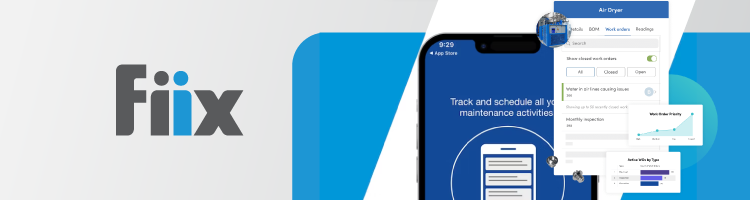
Fiix is designed for industrial environments with layered asset structures, strict regulatory requirements, and high costs when equipment fails unexpectedly. Its AI engine, Fiix Foresight, utilizes work order history, parts data, and asset performance records without requiring external sensor infrastructure.
Key AI features. Fiix Foresight, available with the Professional plan, provides three main insights: it flags risky work orders, forecasts parts needed for upcoming maintenance, and tracks asset maintenance trends to spot deviations. The platform also integrates with IoT devices and third-party systems, allowing sensor data to enhance predictive maintenance and give teams a more complete view of asset health.
User experience. Fiix is powerful, but I thought it was demanding to set up. Its hierarchical structure supports multi-site operations and large asset inventories, requiring a dedicated specialist for implementation. The interface is functional but not intuitive or modern, though experienced maintenance teams may value the depth of control and analytics.
Pricing. The free plan supports small teams with up to 25 active preventive maintenance tasks. While the entry plan Basic costs $45.00/user/month, you will need to go for the Professional plan at $75.00/user/month to unlock AI integrations, including Fiix Foresight.
Understanding predictive maintenance software
Predictive maintenance software uses sensor data, maintenance records, and machine learning models to estimate when equipment might fail, allowing maintenance teams to use these predictions to maintain equipment before breakdowns occur.
Instead of waiting for failures or following fixed schedules, the software analyzes real-time and historical data to detect patterns that signal declining performance. It then generates alerts or work order recommendations so teams can act early.
These platforms rely on several types of operational data:
- IoT sensor data. Sensors monitor vibration, temperature, pressure, flow rate, and other indicators of asset health.
- Usage and run-time data. Operating hours, load levels, and duty cycles help the system interpret sensor anomalies.
- Maintenance history and failure records. Past work orders, repairs, and documented failures help machine learning models identify early warning signals.
Most predictive maintenance platforms integrate with a computerized maintenance management system (CMMS) or asset management platform. Predictions and recommended work orders go directly into that system, allowing teams to act without changing their existing workflows.
Why is predictive maintenance important?
Unplanned downtime creates major operational and financial risks. Equipment failures interrupt production, increase labor costs, and can create safety hazards when critical assets stop working unexpectedly.
Here’s how predictive maintenance can solve common issues:
| Problem | Solution |
| Equipment failures often occur without warning, which disrupts production schedules and creates safety risks. | Predictive maintenance systems monitor equipment conditions and flag early signs of deterioration, which gives teams time to schedule repairs before failures occur. |
| Many maintenance teams operate reactively and respond only after equipment breaks. This approach leads to overtime labor, rushed parts purchases, and operational delays. | Predictive tools identify risk patterns early, which helps teams shift from reactive “firefighting” to planned maintenance. |
| Calendar-based maintenance schedules often lead to unnecessary servicing and inefficient spare parts usage | Condition-based maintenance triggers work only when data indicates a problem, which reduces unnecessary interventions and improves spare parts planning. |
Scheduling repairs based on real-time asset data prevents unexpected stoppages and reduces emergency interventions.
Preventative vs predictive maintenance
Most organizations combine both preventative and predictive maintenance. Preventive maintenance follows fixed schedules based on time or usage. Teams may service a pump every three months or replace a filter every 5000 operating hours, even if the equipment shows no signs of wear. A facility might also lubricate conveyor bearings every month or inspect a boiler on a quarterly schedule.
This approach reduces failures compared to reactive maintenance. However, it also creates unnecessary work and may miss problems that develop between service intervals.
Predictive maintenance triggers work based on sensor readings and usage patterns, not predetermined calendar dates. Sensor readings, usage patterns, and analytics models track equipment health and estimate failure risk. For example, vibration sensors may detect abnormal movement in a motor, or temperature sensors may flag overheating in a compressor.
When the data signals indicate risk, the system triggers maintenance tasks. This approach reduces both unnecessary servicing and unexpected breakdowns.
Advantages of AI in predictive maintenance
Predictive maintenance helps with production through the following:
More accurate failure predictions
Identifying early signals reduces false alarms and helps teams avoid unexpected downtime. Machine learning models detect subtle changes in vibration, temperature, electrical current, and other signals long before traditional alarms trigger. For example, a bearing may show slight shifts in its vibration pattern weeks before failure.
Dynamic, data-driven scheduling
AI platforms recommend maintenance timing based on asset health and operational context. Instead of relying on fixed calendars, the system evaluates risk levels and production schedules. For instance, if a compressor shows early wear but a planned shutdown is approaching, maintenance can wait for that window.
Better root-cause insights
AI models highlight the operating conditions linked to failures. Frequent start-stop cycles, sustained overload, or extreme temperatures often appear as risk factors. These insights help teams address underlying operational issues rather than repeatedly repairing the same components.
Scalable monitoring across fleets
Large facilities may run hundreds of assets across multiple sites. AI systems monitor sensor data at scale and rank assets by risk level. Maintenance teams can focus on equipment that needs attention instead of reviewing every data stream. By integrating AI into maintenance, you can also detect emerging trends across the fleet and improve inventory planning and resource allocation.
Improved safety and compliance
Unexpected equipment failures can create safety hazards and regulatory issues. Predictive maintenance reduces sudden breakdowns and provides a documented record of asset monitoring and maintenance activity. These records help organizations demonstrate compliance during inspections and support incident investigations when failures occur.
How can AI be used in predictive maintenance?
AI helps with different aspects of predictive maintenance:
Sensor data analysis and anomaly detection
Operators managing hundreds of wind turbines or machines cannot monitor every sensor manually. AI can continuously analyze data, establishing baselines for normal behavior and flagging subtle deviations, such as a gradual rise in gearbox temperature, before thresholds are breached.
Remaining useful life (RUL) estimation
Refineries and plants with numerous pumps can use RUL models to predict how long each unit will operate under current conditions. These insights help teams plan spare parts inventory, schedule maintenance, and coordinate shutdowns more efficiently than relying on fixed manufacturer timelines.
Failure mode prediction and classification
In facilities like paper mills, AI distinguishes between issues such as bearing imbalance, shaft misalignment, or lubrication failure using vibration patterns. Technicians arrive with the right parts and diagnosis, reducing downtime caused by trial-and-error fixes.
Work order recommendation and prioritization
Platforms like MaintainX, UpKeep, and Fiix rank AI-generated work orders by asset criticality, expected failure cost, and parts availability. A hospital facilities team, for example, receives a prioritized queue instead of manually filtering dozens of sensor alerts.
Generative AI for diagnostics and reporting
Generative AI converts complex outputs into clear, easy-to-understand summaries. They explain what the data indicates, why it matters, and what action to take, making predictive insights accessible to all team members, not just data specialists.
Examples of AI in predictive maintenance
For examples of how AI can be integrated into predictive maintenance, review this list of hypothetical scenarios:
- Manufacturing line motors. Motors on a production line are equipped with vibration and temperature sensors. Over several weeks, AI detects gradual shifts in vibration frequency and rising bearing temperatures, signaling early-stage degradation. Based on these trends, it predicts failure within two to three weeks and automatically generates a work order.
- Vehicle fleets. Telematics data from trucks – including brake pressure, engine load, and mileage – feed into an AI-powered fleet platform. By analyzing patterns across multiple vehicles, the model identifies accelerated brake wear on specific routes. Instead of waiting for driver-reported issues or scheduled service intervals, affected vehicles are flagged for inspection.
- Utilities and energy equipment. Transformers are monitored using temperature, load, and dissolved gas analysis data. AI identifies anomalies in gas composition months before traditional alarms would trigger, indicating potential insulation degradation.
- Facilities and HVAC. Chillers and air handling units are tracked through runtime, energy consumption, and refrigerant pressure readings. AI detects efficiency drops and flags the unit for inspection before occupants experience discomfort.
In each of these cases, teams can address issues as soon as anomalies appear, timing work during low-activity periods to avoid production delays and ensure maintenance logs are complete.
How to choose the best predictive maintenance software
Not every predictive maintenance platform is built for every use case. Carefully review this checklist before committing to a tool:
- Asset and industry fit. Ensure the platform supports your assets, whether you have rotating equipment, vehicle fleets, electrical infrastructure, or building systems. Check that the vendor has reference customers in similar industries.
- Data sources and integrations. A platform is only as effective as the data it can access. Check connectivity with sensors, PLCs, SCADA systems, telematics hardware, ERP, and CMMS.
- AI capabilities and transparency. Confirm which AI features are included, such as anomaly detection, RUL estimation, failure mode classification, or GenAI summaries. Explainability is essential, meaning engineers and managers need to understand why issues are flagged.
- Ease of use for maintenance teams. Technicians may be reluctant to adopt a platform that’s difficult to use. Evaluate dashboards, alert workflows, mobile support, and how well the tool fits daily operations.
- Scalability and deployment. Ensure the platform can grow as your assets, sites, or categories expand. Check cloud, on-premises, or hybrid deployment options, particularly if connectivity or data residency is a concern.
- Security, compliance, and data ownership. Cloud-based data raises questions about ownership, storage, and protection. Confirm that your tool of choice meets compliance requirements for regulated industries.
- Pricing and ROI. Licensing models vary widely, with some platforms charging per asset, others per user, and others per site. Compare costs to expected usage and request case studies showing downtime reduction and cost savings.
Bottom line: which predictive maintenance AI tools should you choose?
Each AI-powered CMMS offers different strengths, so organizations should match features to their operations, whether managing vehicles, factory equipment, or multi-site facilities.
Limble is great if you want practical AI-driven predictive maintenance with fast onboarding and IoT sensor integration across manufacturing, facilities, or utilities. On the other hand, MaintainX is best if your priority is getting frontline technicians acting on AI recommendations quickly through a mobile-first work order platform. I also recommend UpKeep if you want a modern CMMS with Nova AI built in to automate work orders, technician assignments, and asset lifecycle management.
Let’s not forget Verizon Connect, which is great if your assets move and you need real-time GPS, engine diagnostics, and AI-powered maintenance alerts across a large fleet. Or Fiix, which I can recommend if your asset hierarchies are complex and you need enterprise-grade CMMS with native ML-driven work order and parts forecasting across multiple sites.
Before finalizing your choice, consider this:
- If unplanned plant equipment downtime is your biggest challenge, prioritize Limble or Fiix for their industrial asset depth and native AI insights
- If your team struggles with communication, documentation, and acting on data, pairing a CMMS like MaintainX or UpKeep with generative AI will deliver the most immediate operational improvement.
- If fleet reliability is the core problem, Verizon Connect is the clear fit
When it comes to picking a CMMS, the most obvious trade-off is specialization vs accessibility. Dedicated industrial platforms offer deeper predictive models but demand more setup. Meanwhile, CMMS tools with AI features are easier to adopt but may not match the analytical depth that complex manufacturing requires.
Interested in AI tools? Check out our guides on the best AI app builders and the best AI for coding.
FAQ
What is the difference between predictive maintenance software and a traditional CMMS?
A CMMS manages work orders, schedules, and asset records. Predictive maintenance software adds AI-driven failure forecasting on top, telling your team when to act rather than just tracking what was done.
How much data do I need before AI-based predictive maintenance becomes effective?
Most platforms need several months of sensor and failure history to build reliable models. Some vendors offer pre-trained models for common asset types that can deliver value faster with less historical data.
Can small or mid-sized facilities realistically benefit from AI predictive maintenance?
Yes, especially with cloud-based platforms priced per asset or per user. Tools like MaintainX are specifically designed for smaller operations without dedicated data science or enterprise IT resources.
How do I measure ROI from predictive maintenance tools and AI models?
Look at track reductions in unplanned downtime, emergency work orders, and overtime labor costs. Compare spare parts spent before and after implementation, and factor in any production output recovered from previously disrupted schedules.
Is cloud-based predictive maintenance software safe for sensitive operational data?
Yes, reputable vendors use encryption, role-based access controls, and compliance certifications to protect operational data. Review each vendor's data ownership terms carefully, particularly if your industry is subject to specific regulatory requirements.